Mechanical review
Check material coverage, bed depth, angle, vibration, abrasion, access and safe maintenance clearance.
Installation and service
Good sensor physics can still fail at a poor measurement point. We connect model selection with mechanical access, flow behaviour, electrical design, commissioning and lifecycle support.
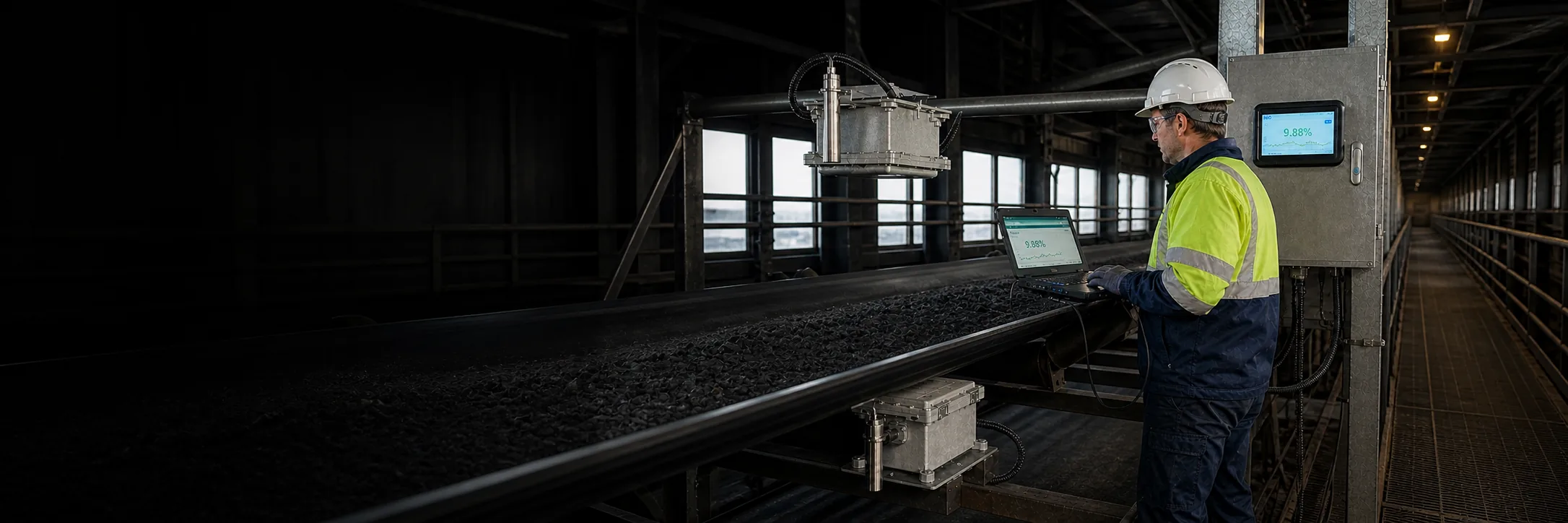
Installation and service
Good sensor physics can still fail at a poor measurement point. We connect model selection with mechanical access, flow behaviour, electrical design, commissioning and lifecycle support.
Check material coverage, bed depth, angle, vibration, abrasion, access and safe maintenance clearance.
Define power, shielding, 4–20 mA or RS485 communications, PLC scaling, alarms and data ownership.
Verify installation, collect paired samples, tune the calibration and train operations and maintenance teams.
Installation by measurement route
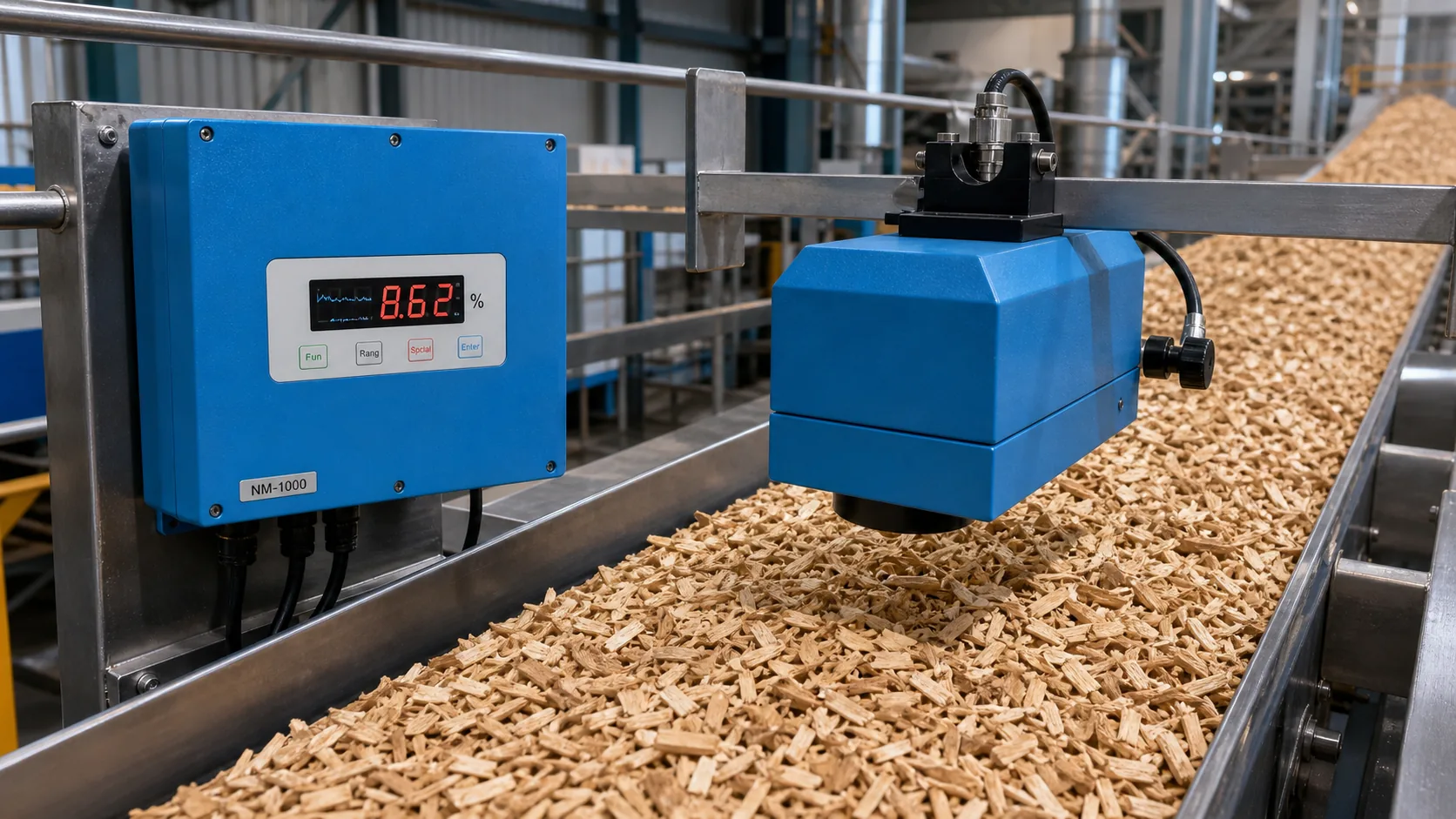
A surface sensor, a flush contact sensor and a transmission pair require different access, protection, geometry and acceptance checks. The site review fixes those details before fabrication or wiring begins.
Surface route
Keep stand-off distance, angle, field of view, ambient light and window access stable.
Explore the route →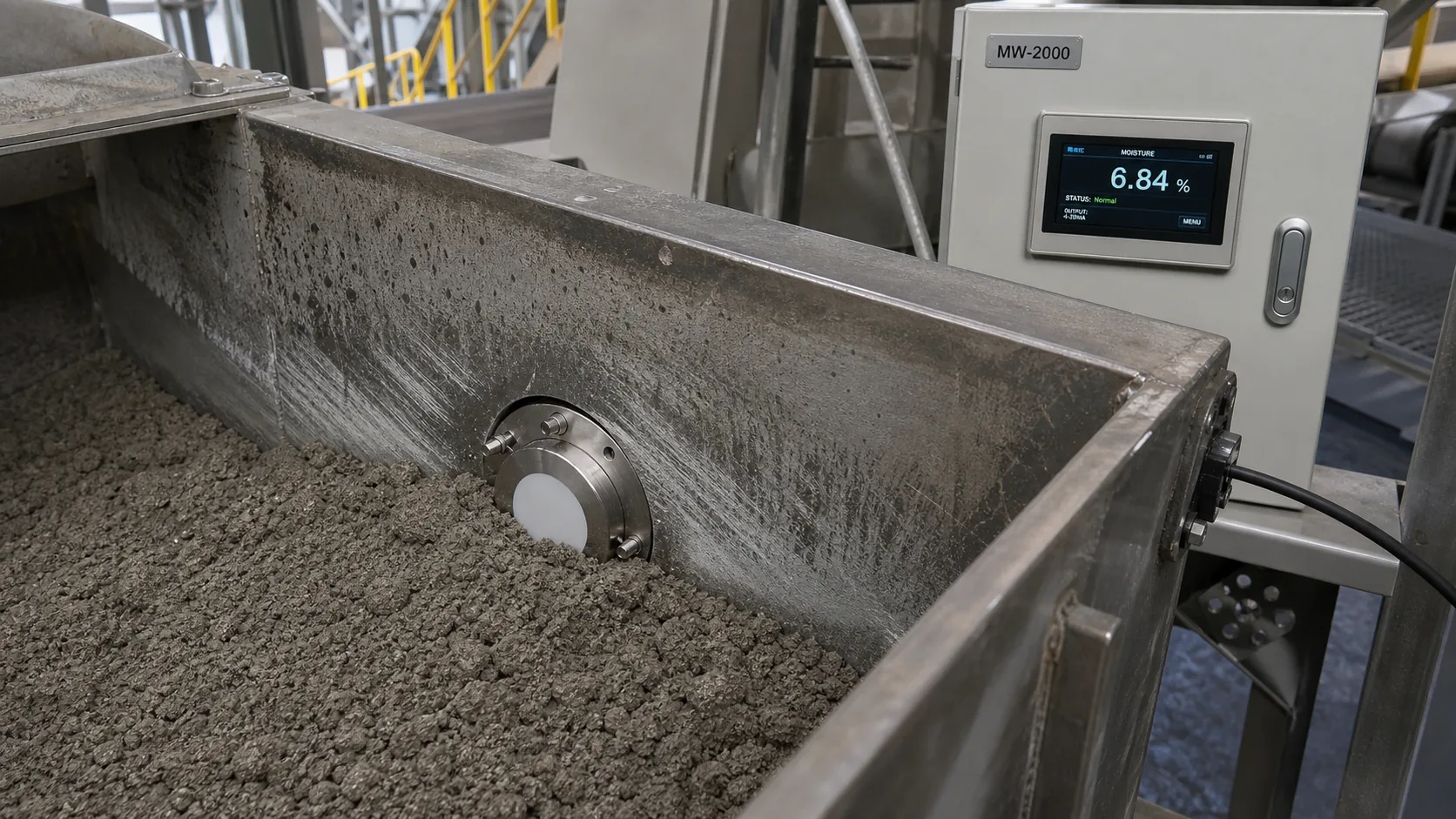
Contact route
Confirm material contact, wear protection, build-up risk, sealing and safe removal.
Explore the route →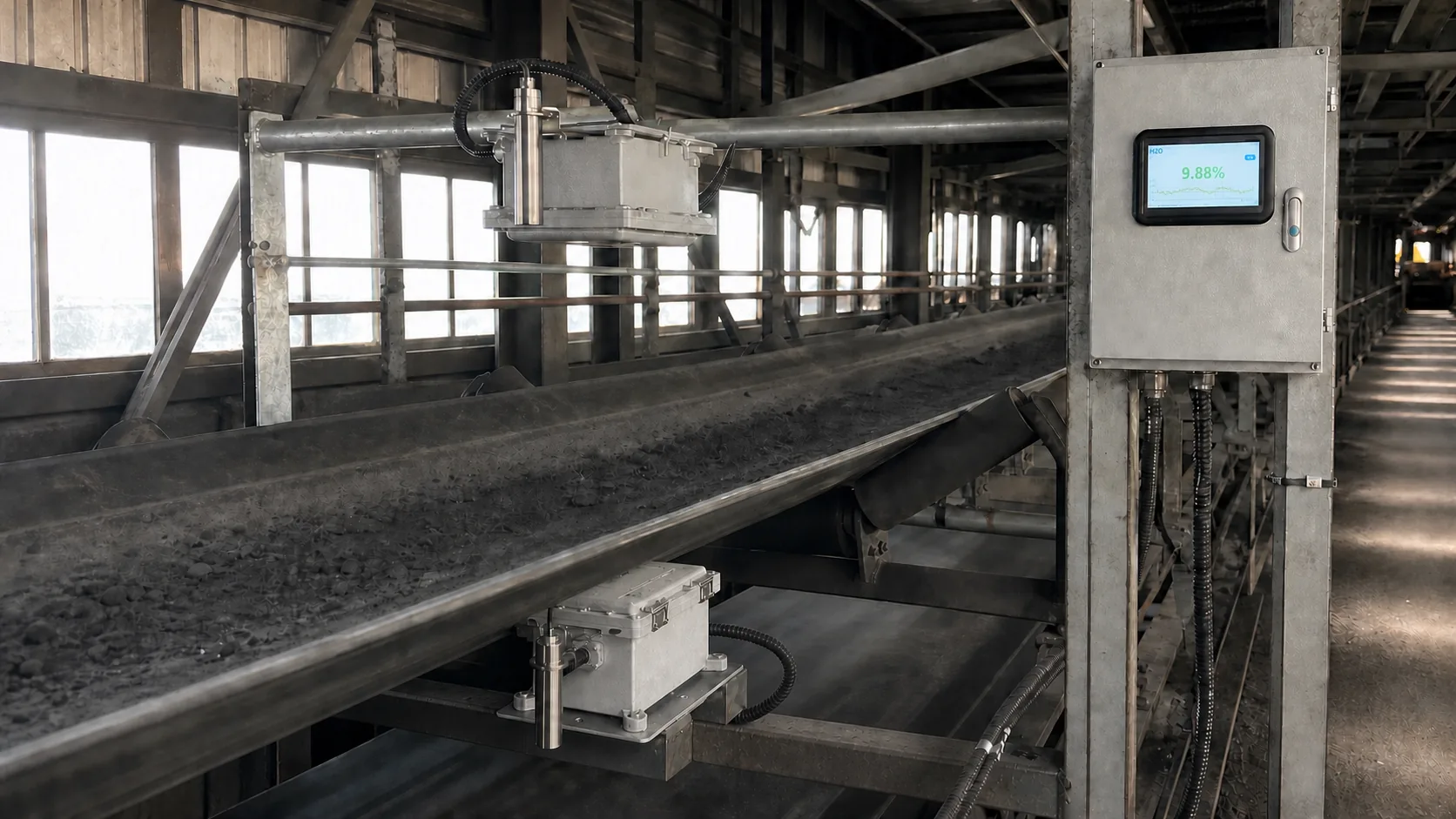
Transmission route
Fix transmitter-receiver alignment, bed-depth window, empty-path state, guarding and reference-sample position.
Explore the route →Site feasibility
The measurement point must keep the sensor exposed to representative material while remaining safe to inspect and maintain. Line drawings, operating photos and a short video of normal and abnormal flow are often more valuable than a nominal conveyor width alone. The review also follows the sample path, cable route and distance to the control cabinet.
Record dimensions, flow direction, bed-depth range, speed, vibration, dust, temperature, washdown and operator access during normal production.
Agree the mounting structure, product-contact boundary, power, cable route, signal destination, guarding and responsibility for every site modification.
Check alignment and material coverage, simulate status and alarm signals, collect paired samples and record the final geometry with photographs and drawings.
Train operators to recognise valid readings and maintenance staff to inspect windows, wear faces, fasteners, cables, cooling and accumulated material.
Site handover package
Project scope defines site labour, travel, commissioning attendance, warranty coverage, spare parts and service response for the selected location.
Before the site review
Installation failure modes
Segregation, empty belt, bridging or intermittent contact can make a mechanically sound position unsuitable.
Liners, windows, guards and wear plates must protect the equipment without changing the intended optical or microwave path.
A sensor that cannot be cleaned, checked or replaced safely will lose availability even when the initial reading is good.
Share a few process details and our application team will recommend a suitable technology, installation concept and validation plan.