Moisture measurement insights
Practical moisture knowledge for better production decisions
Compare measurement methods, build credible tests and apply moisture data to real production—from incoming material to process control and quality verification.

Latest insights
Start with the questions that decide a moisture project
Technical guidance for measurement selection, laboratory comparison, application engineering and production use.
01 · Online & laboratory
Online & laboratory
Understand why online and laboratory results differ, then design sampling and timing so the two methods can be compared fairly.
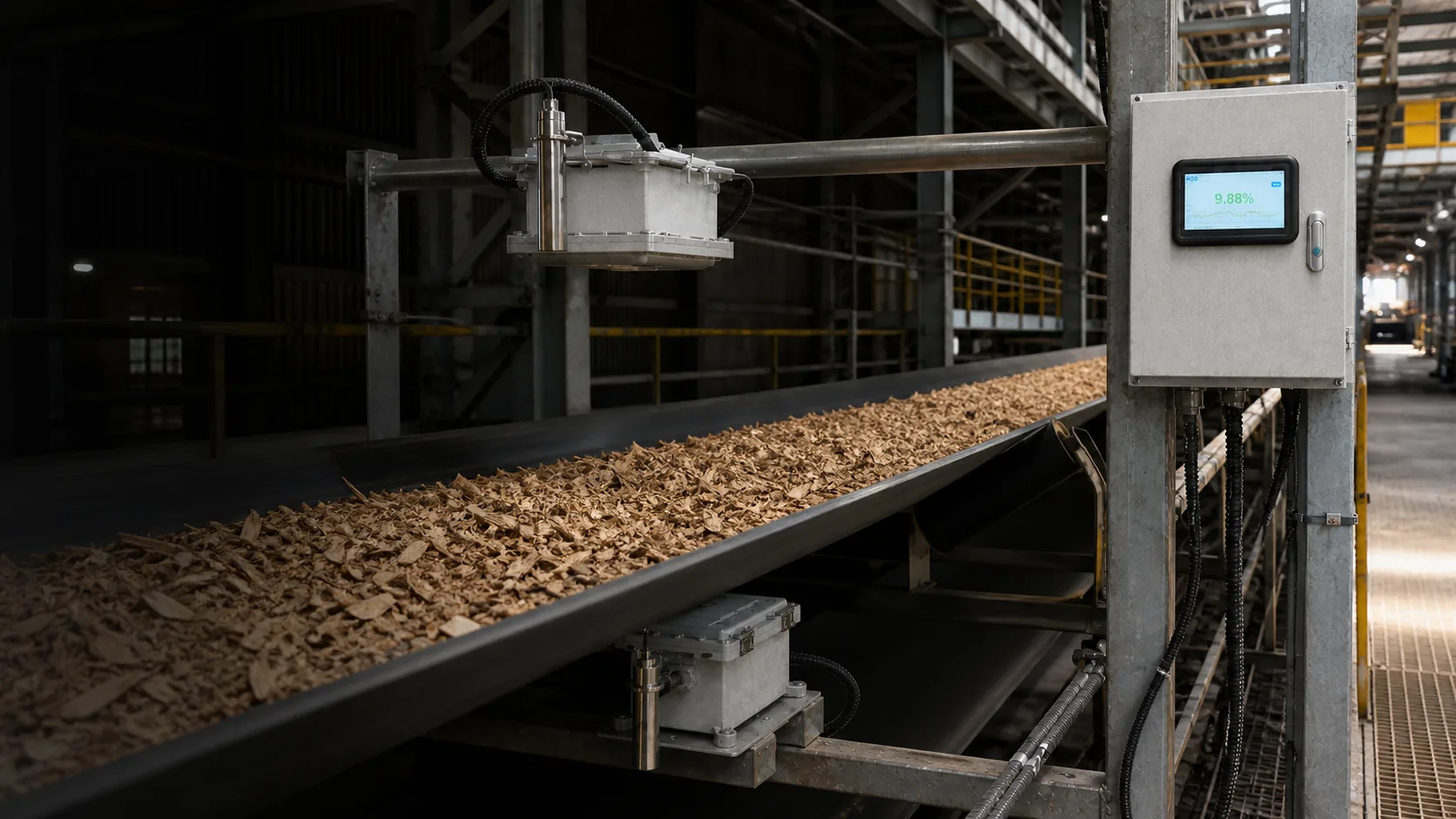
Eight reasons online and laboratory moisture results disagree
A difference is not automatically sensor error. It may come from comparing different material, different times, different moisture definitions or conditions outside the verified application range.
Online & laboratory
Prepare a comparison that the production team can trust
Define sample timing, reference handling, operating range and acceptance criteria before collecting paired data.
Open validation checklist02 · Measurement technology
Measurement technology
Compare surface, contact and transmission measurement routes against the material volume, geometry and process variation that matter.
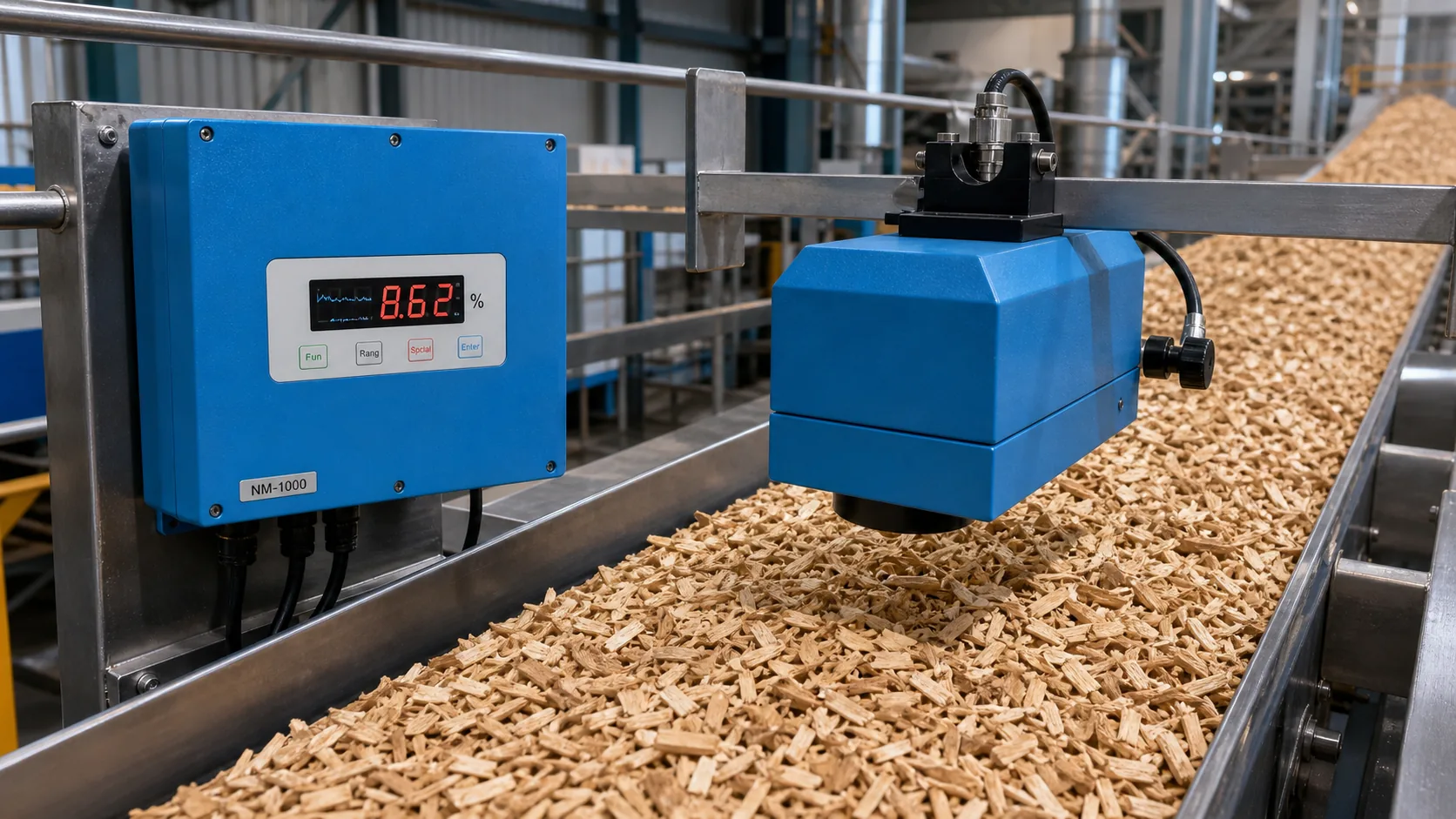
Wet-basis vs dry-basis moisture: why the percentages differ
The same material can have two correct moisture percentages because wet basis divides water by total wet mass, while dry basis divides water by dry-solids mass. Every calibration and acceptance criterion must name the basis.
Surface moisture and bulk moisture: define the value before selecting a sensor
Two instruments can both display moisture percentage while responding to different material volumes. The correct choice starts with the process decision, not the display unit.
NIR, contact microwave or transmission microwave: how to choose
The three routes solve different combinations of measurement depth, material access, wear, flow stability and installation space.
Why density, bed depth, distance and temperature change moisture readings
Compensation is not a claim that an instrument is unaffected. It is a controlled way to include influential variables inside the tested application range.

How the measurement point determines representativeness
Good sensor physics cannot repair a point that observes only an edge stream, dead zone or unrepresentative surface.
NIR surface moisture measurement: where it works and what changes the result
NIR can provide fast, non-contact observation of a representative surface. The project succeeds when that surface matches the production decision and optical conditions remain inside the verified range.
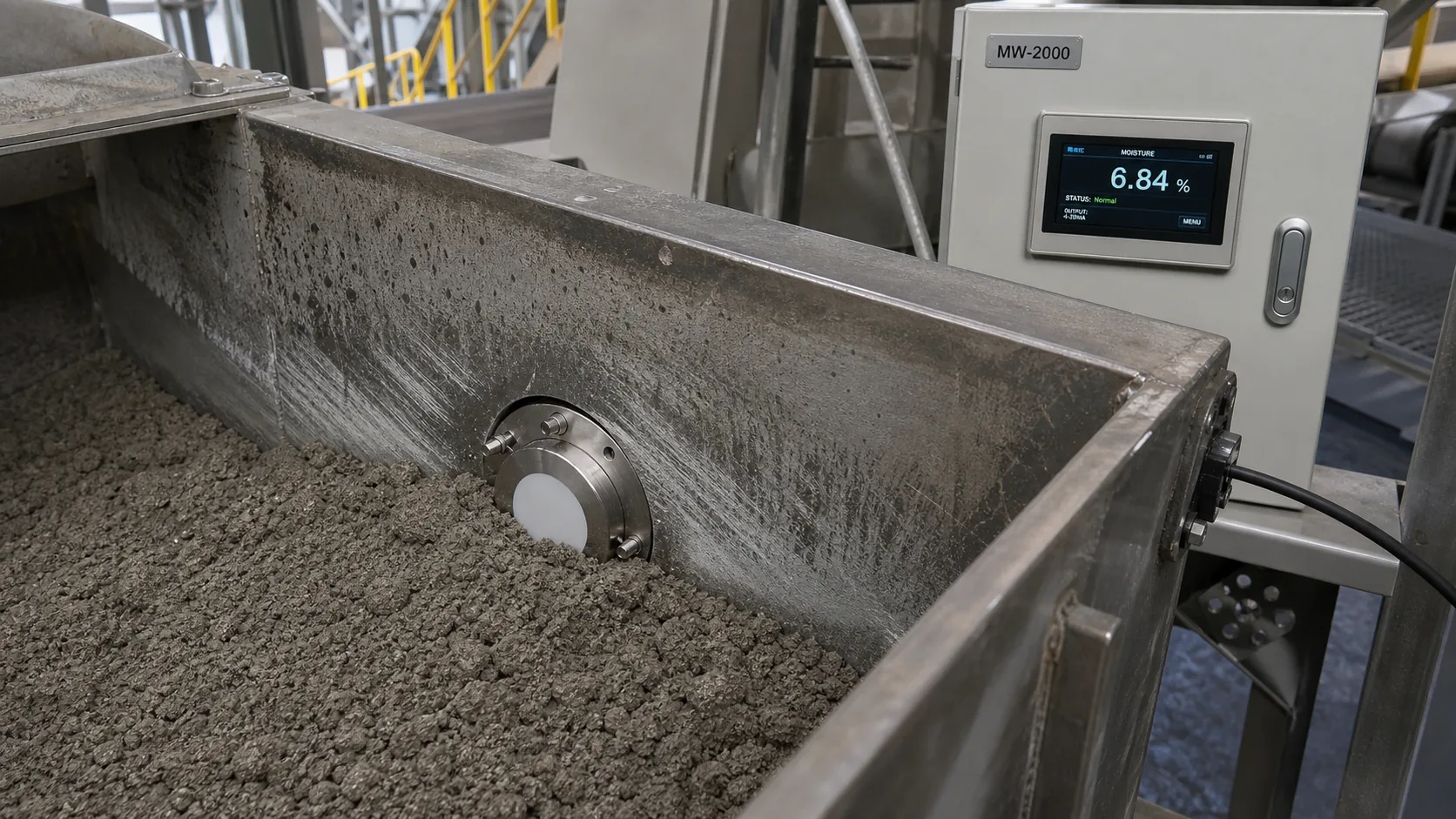
Contact microwave moisture measurement in mixers, chutes and process vessels
A contact microwave sensor measures the material interacting with its process face. Stable contact and a representative location matter as much as the sensing principle.
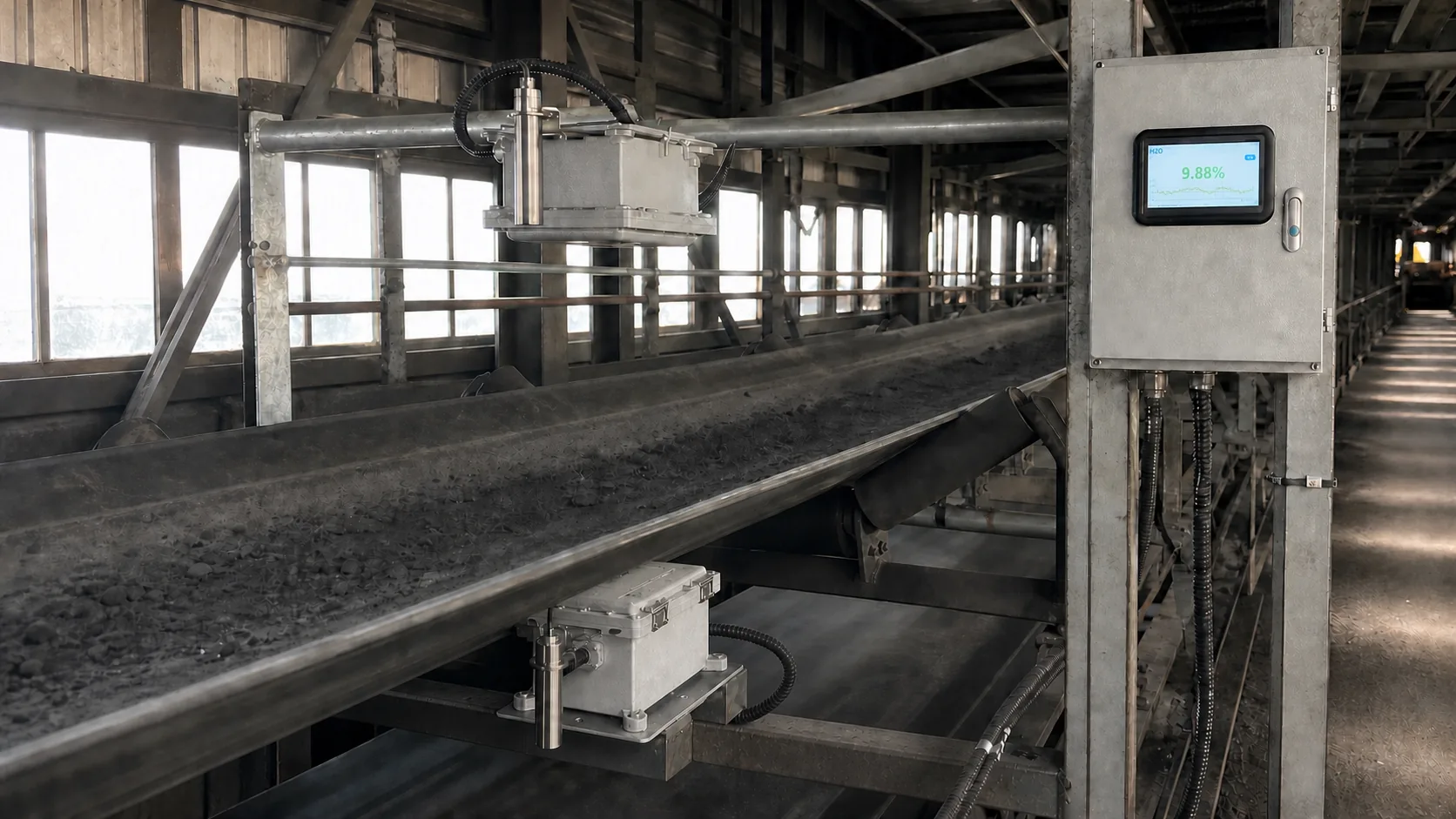
Transmission microwave moisture measurement across beds, bales, loads and boards
Transmission microwave observes material along a path between two sides of the measurement zone. It can cover more volume than a surface point, but the complete path and load geometry must be controlled and validated.
From moisture sensor to PLC and MES: design the complete data chain
A moisture number is only useful when its engineering unit, validity, time basis and responsibility survive every step from sensor to business record.
Measurement technology
Turn the technology reading into a route shortlist
Use the screening tool to compare the observed moisture volume, installation geometry and process constraints.
Start technology screening03 · Calibration and validation
Calibration and validation
Build the reference method, calibration dataset, acceptance test and ongoing verification needed for defensible moisture data.
How to compare an online moisture system with laboratory results
A comparison test is a sampling and validation study, not a sequence of unrelated spot checks. Define the measurement question, pair the right material and preserve independence before calculating performance.
How to select a laboratory reference method for an online moisture system
The online system learns a relationship to a defined reference result. It cannot correct an unsuitable, inconsistent or poorly controlled laboratory method.
Representative sampling: connect the laboratory sample to the online value
A laboratory result is useful only when the sample represents the material volume and time associated with the online reading.
Design a calibration dataset that covers real production
A calibration built from convenient middle-range samples can look excellent and still fail at the operating limits that matter most.
Calibration is not validation: what independent validation should test
Model fit describes the data used to build a relationship. Validation asks whether that relationship works on new material under intended conditions.
Accuracy, bias, repeatability and uncertainty: use the right performance language
A single accuracy claim cannot describe reference variation, sampling mismatch, repeatability and changing material conditions.
When to revalidate or recalibrate an online moisture system
A calibration remains credible only while the measurement conditions stay inside its approved evidence range.
Calibration and validation
Carry the quality guidance into a validation plan
Use the checklist to organise reference methods, sampling, datasets, acceptance criteria and revalidation records.
Open validation checklist04 · Production applications
Production applications
Apply moisture measurement to conveyors, mixers, incoming loads and continuous products with process-specific installation and control guidance.
Conveyor online moisture measurement: complete engineering checklist
A belt application connects material flow, mechanical installation, measurement physics, reference sampling and data integration.
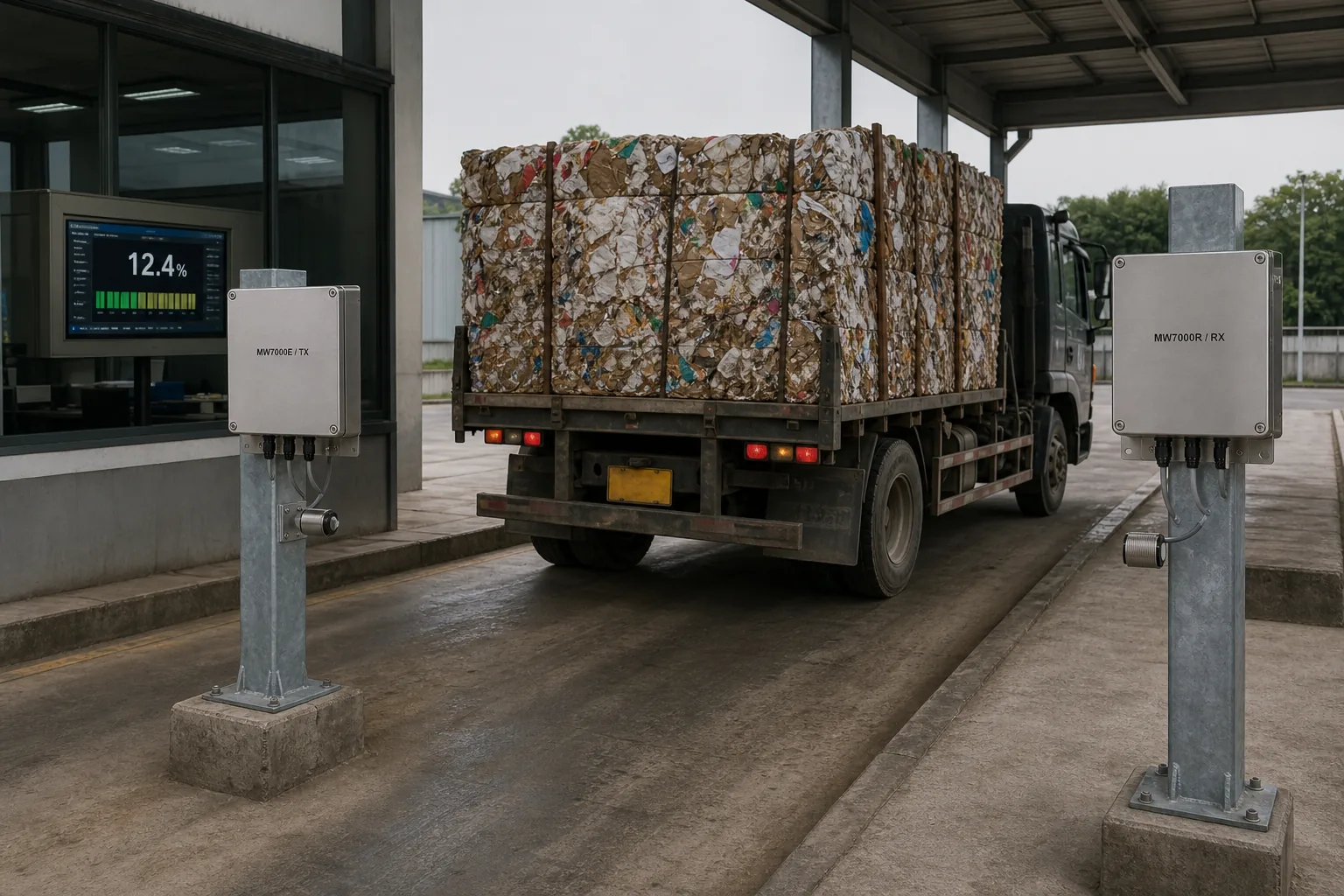
Bale and truck moisture scanning: why coverage and multiple positions matter
Large loads are rarely homogeneous. A single point can miss wet pockets, edge effects or loading patterns that influence quality and settlement.
Online moisture sensor installation and commissioning: a site-ready workflow
Installation is not a bracket task. Mechanical geometry, process coverage, electrical integrity, data mapping and reference sampling must be commissioned as one measurement system.
Mixer moisture control: connect the sensor window to water addition and batch release
Mixer control works when the sensor, cycle state and water-addition logic refer to the same material condition. A stable number at the wrong cycle stage is not a useful control value.
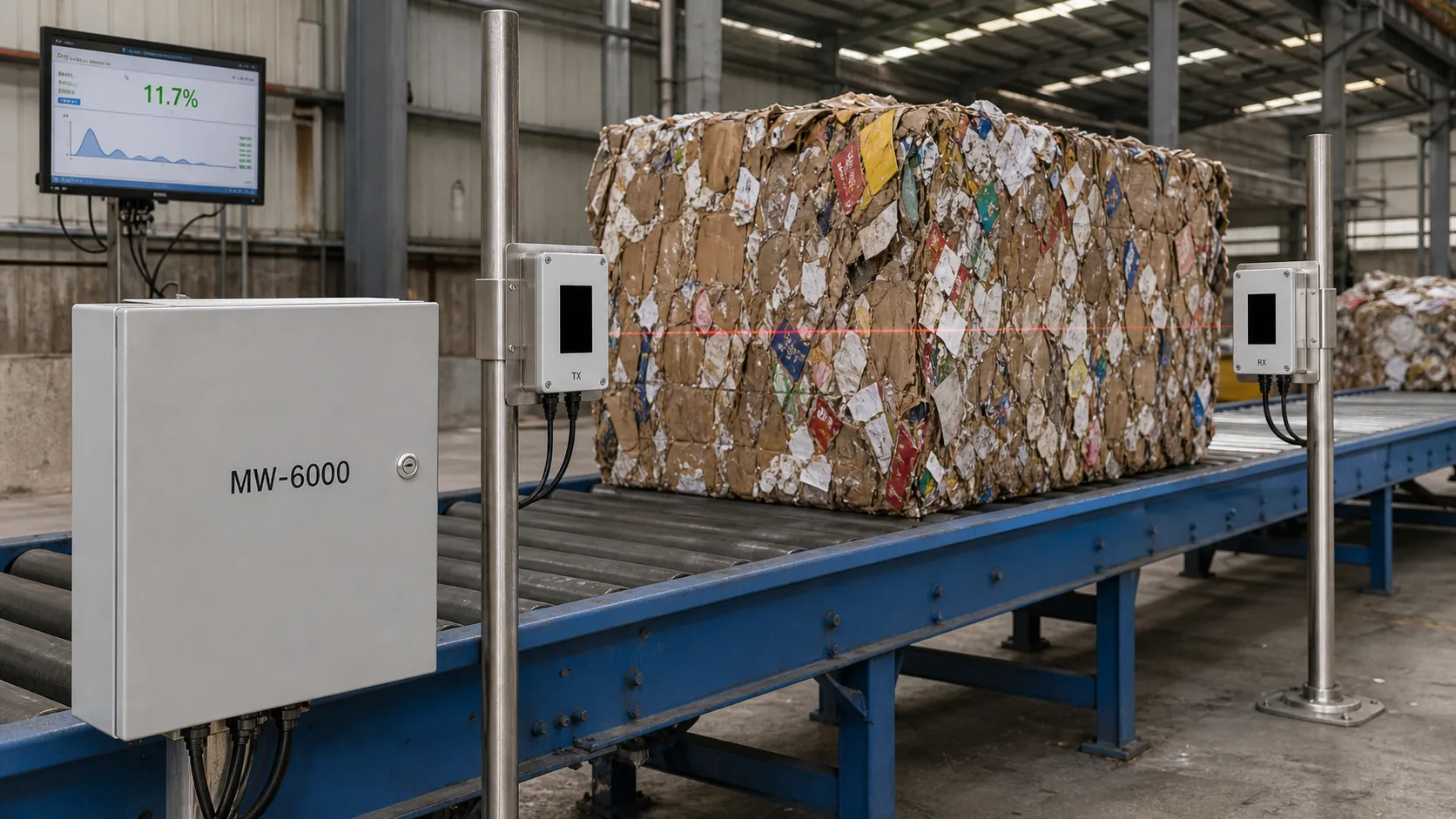
Bale moisture inspection: design coverage, spacing and reference sampling
A bale is a compressed, heterogeneous load. Moisture inspection must distinguish the measured path from the unmeasured core, edges and gaps, then align reference sampling with the same coverage.
Truckload moisture inspection: make multiple sections represent the incoming load
One cross-section cannot automatically represent an entire truck. A receiving system needs defined vehicle geometry, section coverage, reference sampling and rules for incomplete or abnormal loads.
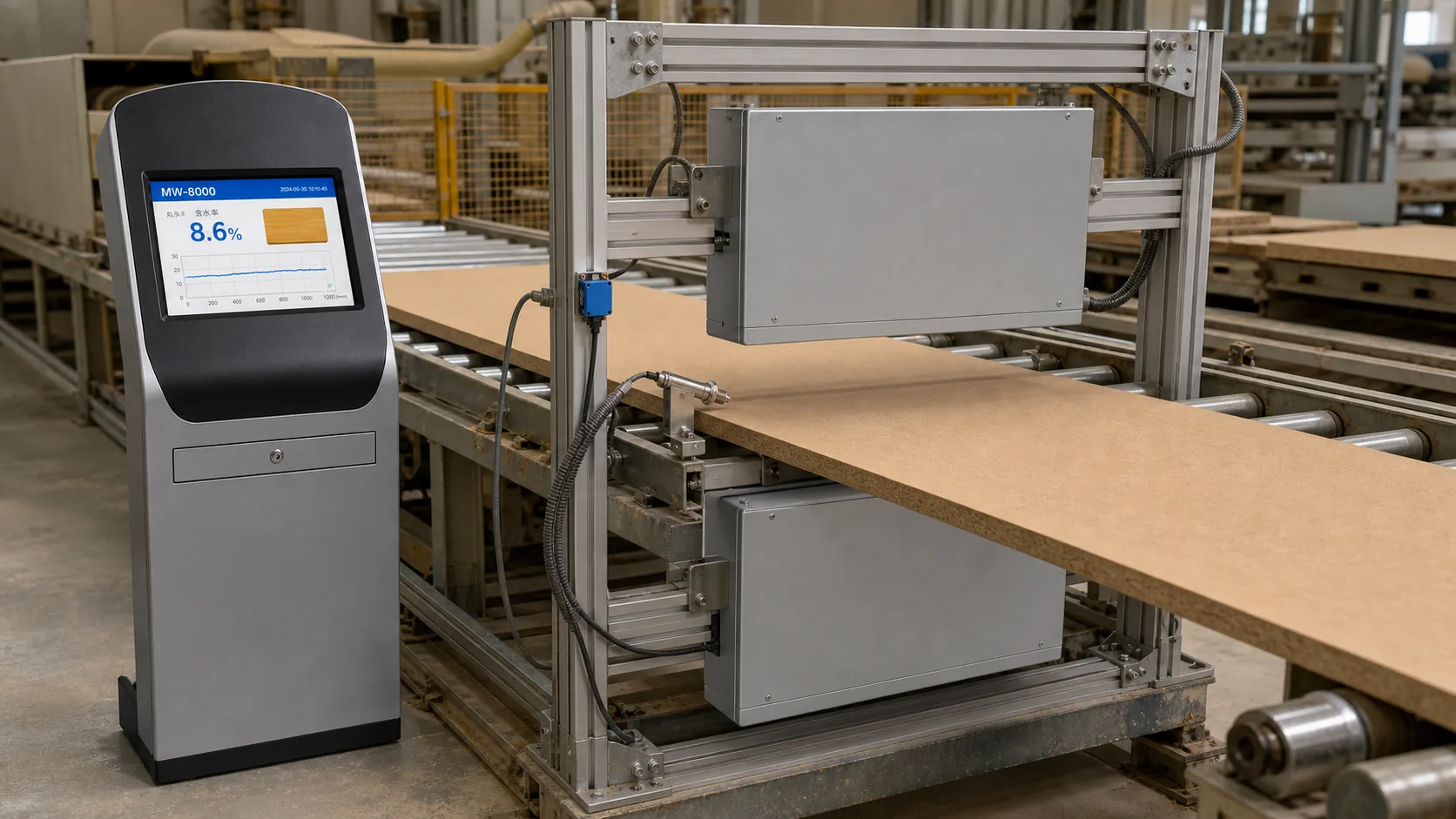
Board and sheet moisture scanning: control across width, thickness and product identity
A board line creates continuous product but quality decisions apply to identifiable sheets, rolls or sections. The measurement system must connect cross-width coverage and time to product identity.
Closed-loop moisture control: move safely from trending to automatic action
Automatic control should be the last step of a staged project. The measurement, process response and failure modes must be understood before moisture data are allowed to move an actuator.

Aggregate and sand moisture measurement for batching and concrete production
Aggregate moisture changes the effective water entering a batch. The useful measurement point is the one that represents material at dosing time and can be connected to an approved correction rule.
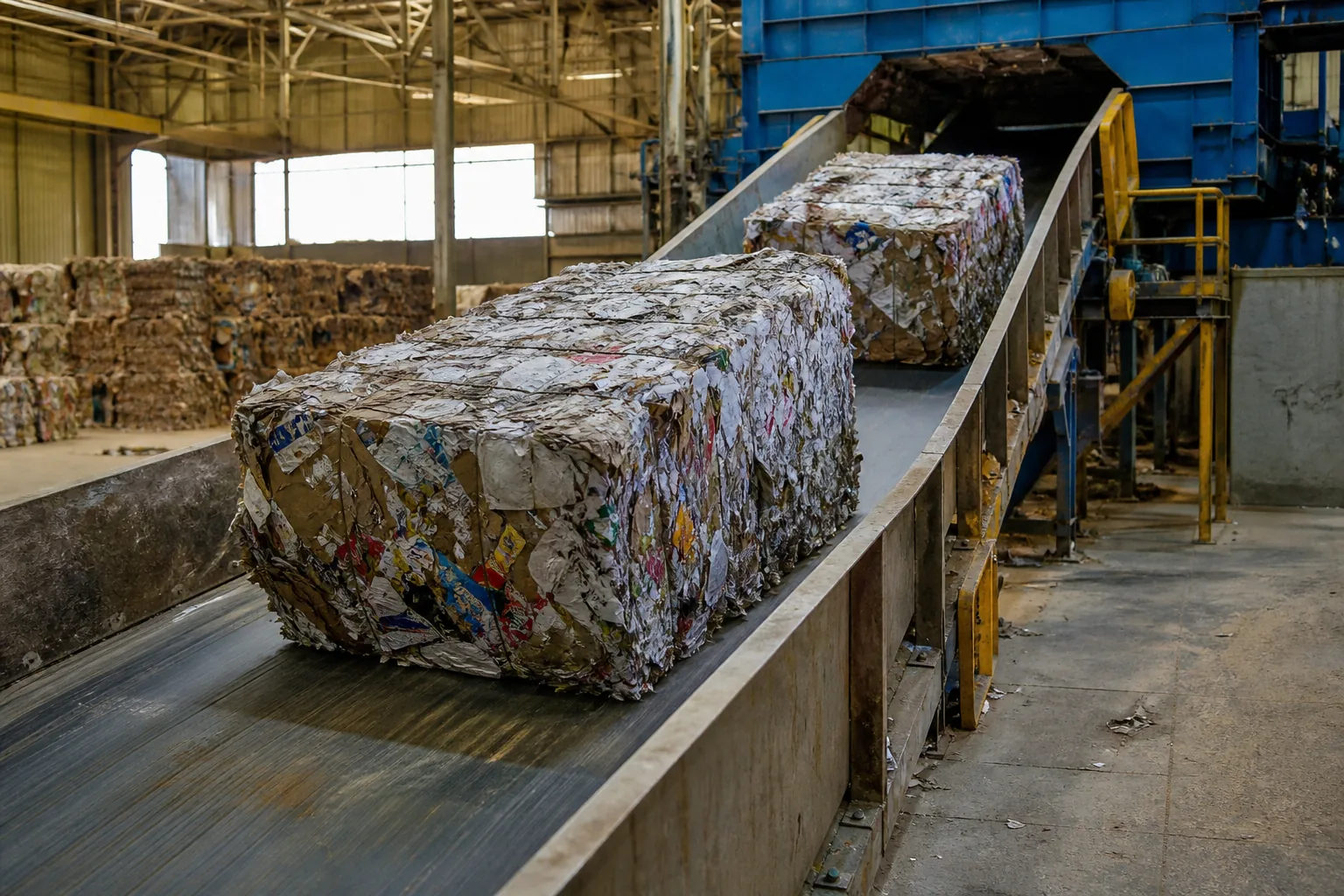
Recycled paper moisture at receiving: from bale variability to supplier decisions
Recovered-paper bales vary by grade, source, compression and internal distribution. Receiving decisions need coverage and reference sampling that reveal this variability without turning one scan into an unsupported settlement claim.
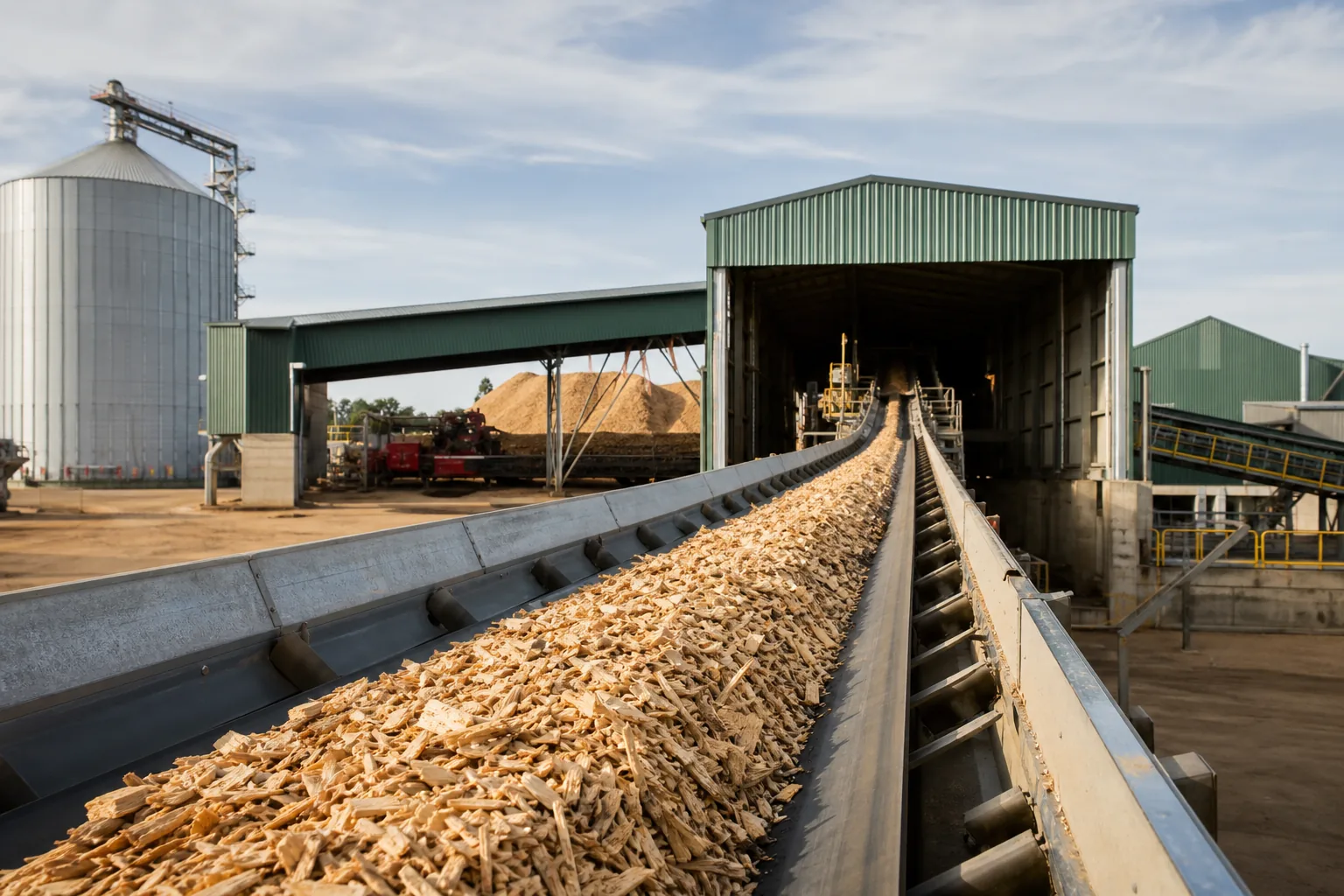
Biomass moisture measurement for receiving, drying and energy decisions
Biomass moisture affects delivered dry matter, storage behaviour and energy balance. The measurement route must match the load form and the business question rather than applying one sensor geometry to every biomass stream.

Wood and engineered-panel moisture control from furnish to finished board
A panel plant may need different moisture views before drying, after blending, in the formed mat and on the finished board. One point cannot answer every stage.

Bulk mineral moisture measurement on conveyors and incoming loads
Bulk minerals combine severe mechanical conditions with changing load geometry. Reliable moisture data require stable coverage, protected installation and validation across density and size distributions.
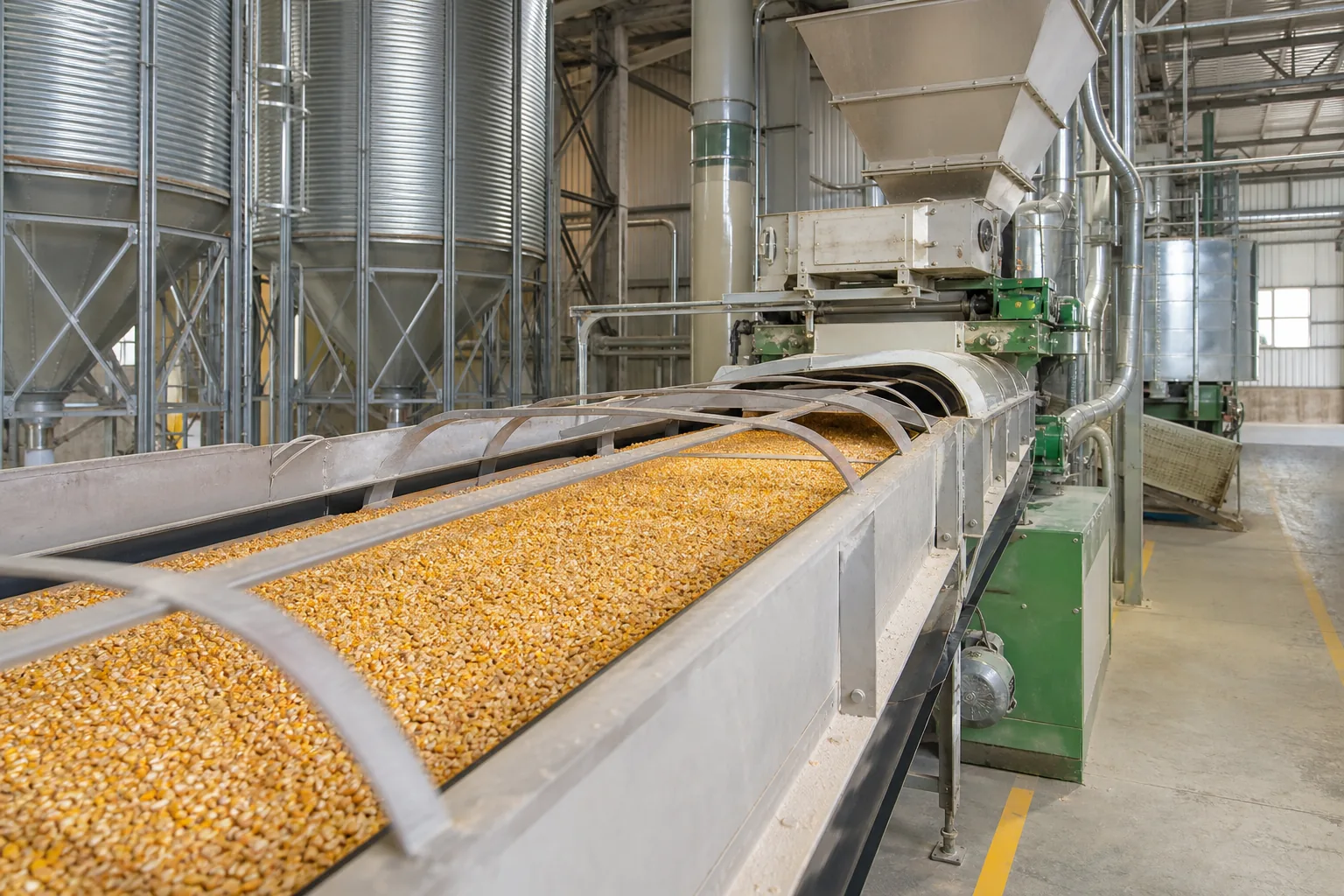
Grain and feed moisture measurement from receiving to drying and blending
Grain and feed plants handle changing crops, suppliers, formulations and process stages. A useful online system separates material groups and links each reading to the reference and decision at that stage.

Food powder and ingredient moisture measurement in drying and blending
Food powders can look uniform while formulation, oil, particle size and temperature alter the sensor relationship. Hygienic access and material grouping belong in the measurement plan.

Chemical and industrial powder moisture measurement in dryers, chutes and blenders
Industrial powders vary in composition and handling behaviour. Technology selection must follow the required measurement volume, installation safety and the material properties represented in calibration.
Editorial standard
Engineering guidance built around evidence and operating conditions
Articles distinguish general measurement principles from model-specific performance. Reference methods, sampling conditions, application limits and authoritative sources remain visible so readers can judge where each conclusion applies.
Planning tools
Turn the guidance into a project-ready brief
Technology selector
Turn five application conditions into a viable measurement route
Complete the seven inputs, compare the screened route, then record the evidence listed beside the result. The output narrows the engineering review; it does not select a model or approve production use.
Start technology screeningValidation checklist
Check every link from reference method to routine verification
Use the checklist during project planning and print or save the completed view for review with engineering and quality teams.
Open validation checklistValidation toolkit
Use controlled templates from application review to ongoing verification
Use the four CSV files in order. For every row complete value, owner, status and notes; resolve missing mandatory evidence before moving to the next file, then retain the reviewed version with the project record.
Download validation templatesFrom planning to project
Apply the tool outputs to your real material and process
Bring the route shortlist, validation checklist and project files into one application review with the operating conditions that matter.
- 01Route shortlist
- 02Validation scope
- 03Project inputs
Tell us what you measure, where it moves and how the result will be used
Share a few process details and our application team will recommend a suitable technology, installation concept and validation plan.