Material
What is measured, and how do composition, particle size and surface condition change?
Measurement technology
Moisture is not one universal measurement task. Surface condition, penetration depth, density, temperature, flow and installation geometry determine which route can produce a useful process signal.
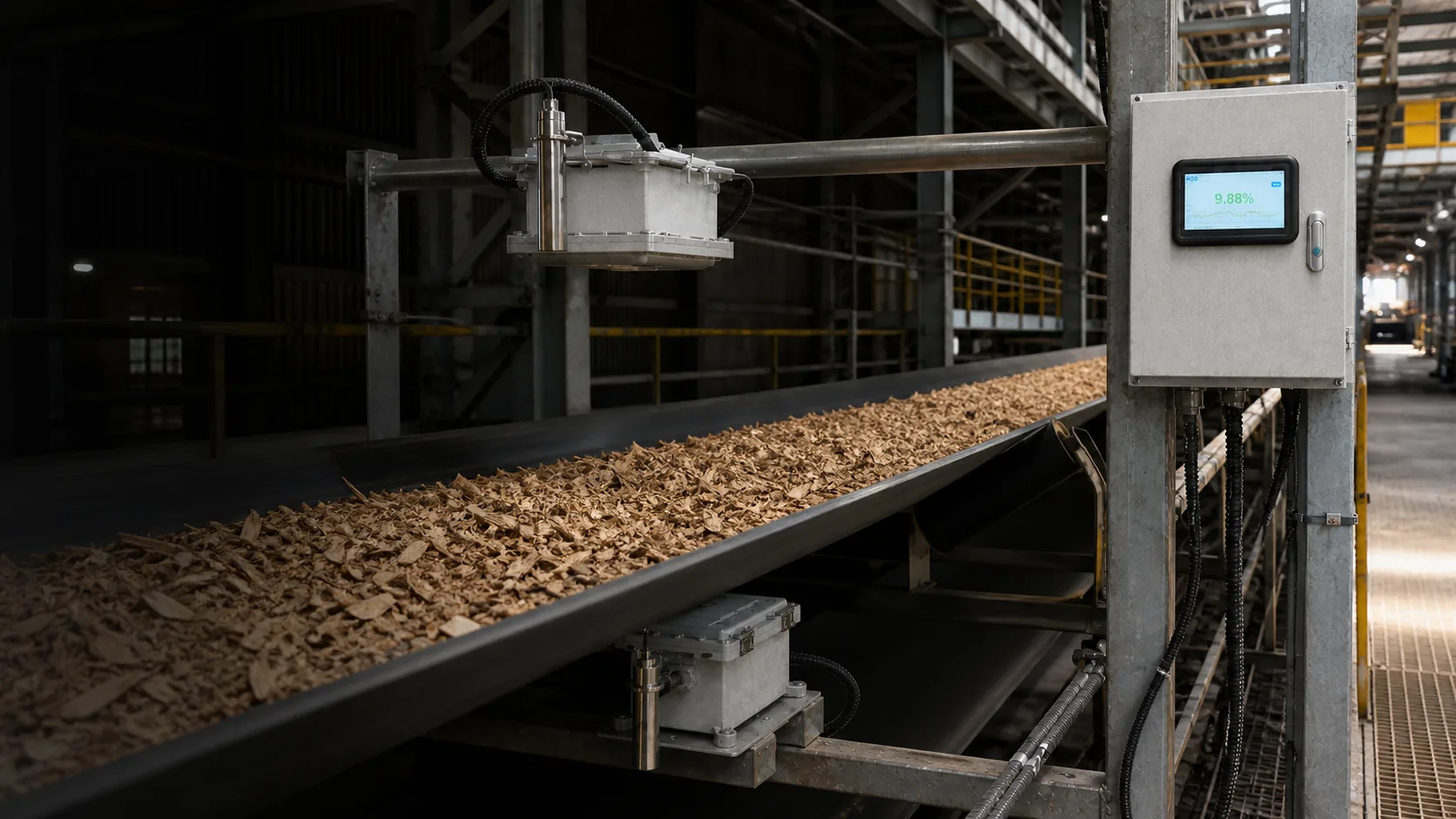
Measurement technology
Start with the material and the decision the result must support. A model number comes later.
What is measured, and how do composition, particle size and surface condition change?
Do you need a surface indication, a local process value or a larger-volume result?
Is the material moving on a belt, inside a mixer, as a bale, across a truck or as a continuous board?
How much do density, depth, temperature, distance, speed and formulation vary?
Will the value support trending, alarms, closed-loop control, grading or commercial settlement?
Measurement technology
The routes can complement each other, but they do not measure the same volume or respond to the same sources of variation.
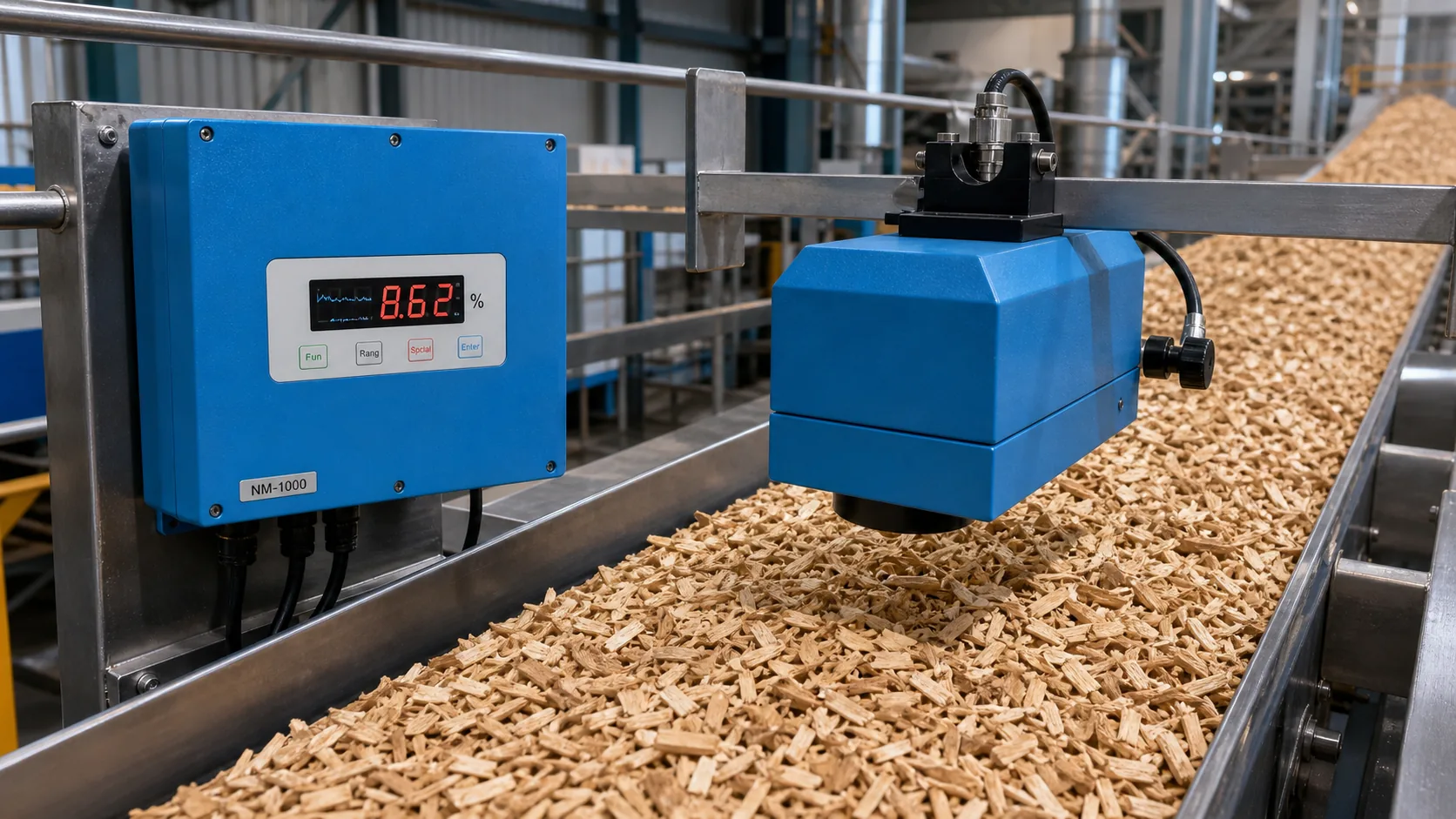
Surface · Non-contact
A fast optical route for stable moving surfaces. It is sensitive to the material surface, so colour, texture, particle size, coating, dust and measurement distance belong in the application review.
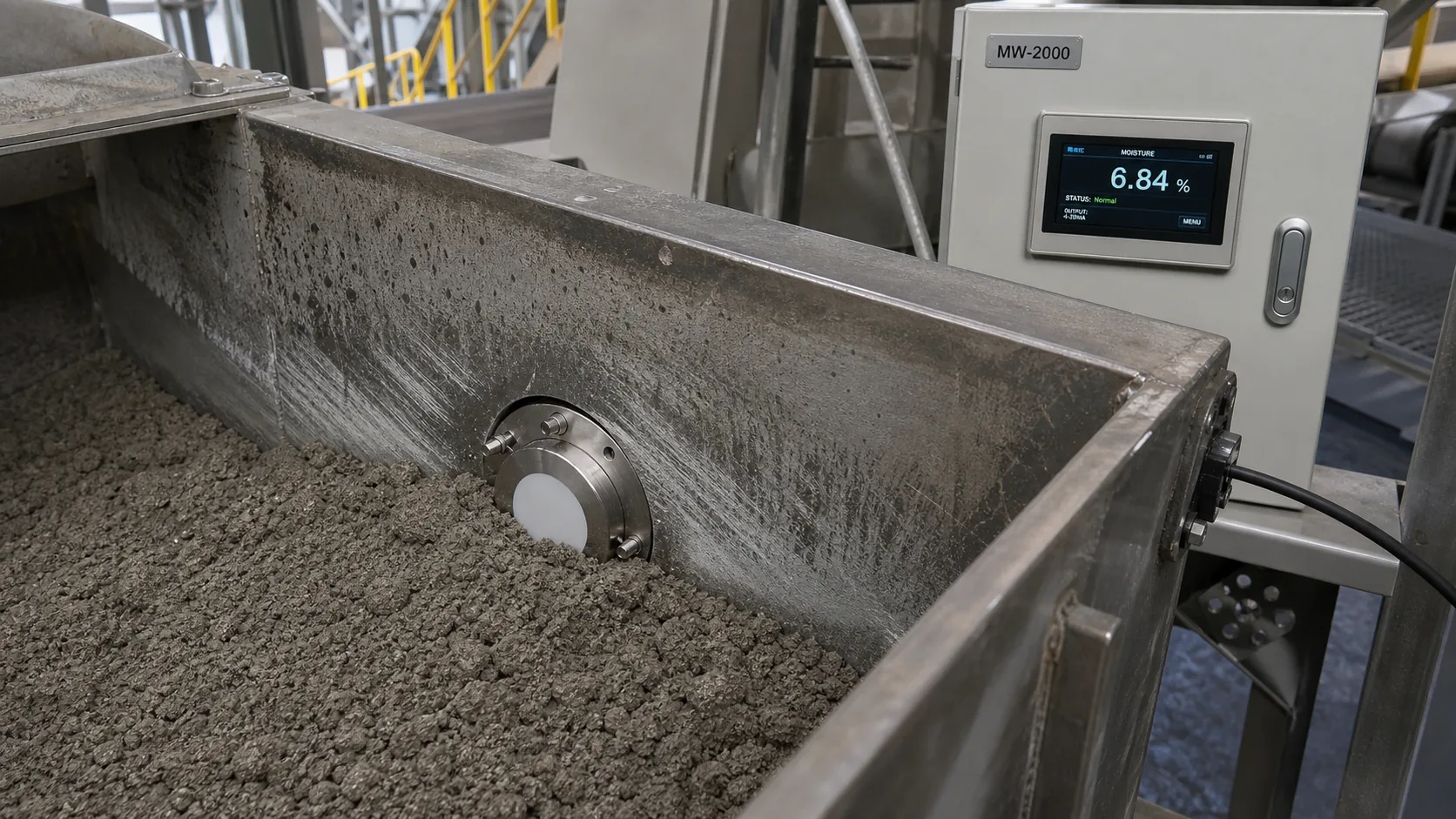
Process · Flush mounted
A flush-mounted sensor reads material flowing through a mixer, chute or vessel. Stable contact, representative flow, wear protection, build-up and maintenance access shape the result.
Bulk · Through material
A transmitter and receiver measure across a material path. The larger measurement volume can suit beds, bales, loads and boards, while density, depth, distance, temperature and geometry still require engineering control.
Measurement technology
Technology selection is not only a comparison of sensor physics. The material, installation and validation plan must be designed together.
Match surface, local or through-material response to the process decision.
Changes can alter microwave response and the amount of material inside the measurement path.
Material and electronics temperature ranges belong in calibration and validation coverage.
Keep optical distance, transmission path and material coverage controlled and measurable.
Formulation, colour, texture, particle size, supplier and season can change the relationship.
The online value can only be evaluated against a defined, representative reference result.
No technology is universally best; application evidence determines the final route.
Technology selector
Complete the seven inputs, compare the screened route, then record the evidence listed beside the result. The output narrows the engineering review; it does not select a model or approve production use.
All blog articles
Two instruments can both display moisture percentage while responding to different material volumes. The correct choice starts with the process decision, not the display unit.
The three routes solve different combinations of measurement depth, material access, wear, flow stability and installation space.
Compensation is not a claim that an instrument is unaffected. It is a controlled way to include influential variables inside the tested application range.
Complete knowledge centre
Compare measurement routes, sampling, calibration, validation and production-control guidance.
Quality and validation
Once a viable measurement route is identified, confirm the reference method, sampling plan, calibration range and acceptance conditions before treating a live value as a control result.
Share a few process details and our application team will recommend a suitable technology, installation concept and validation plan.