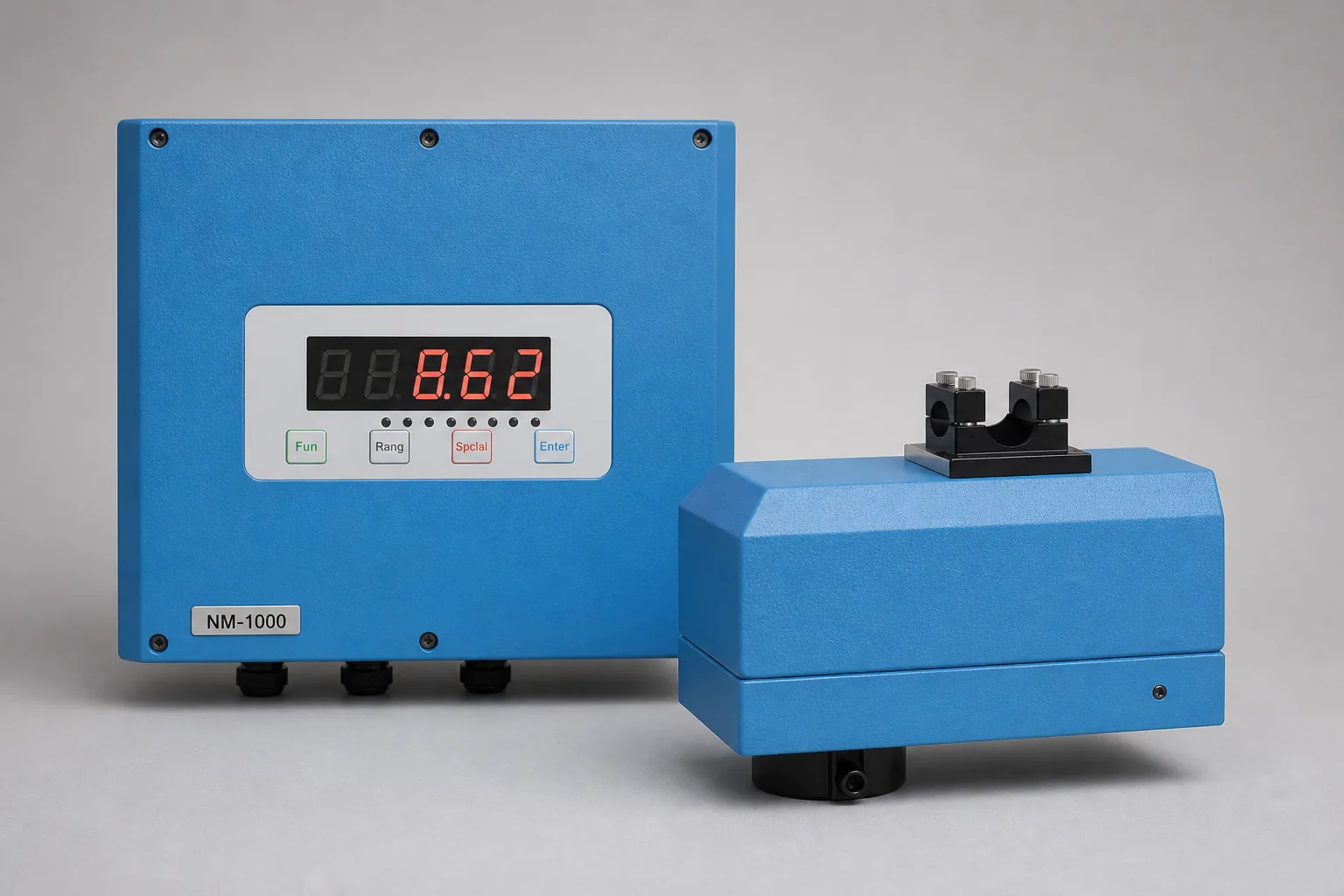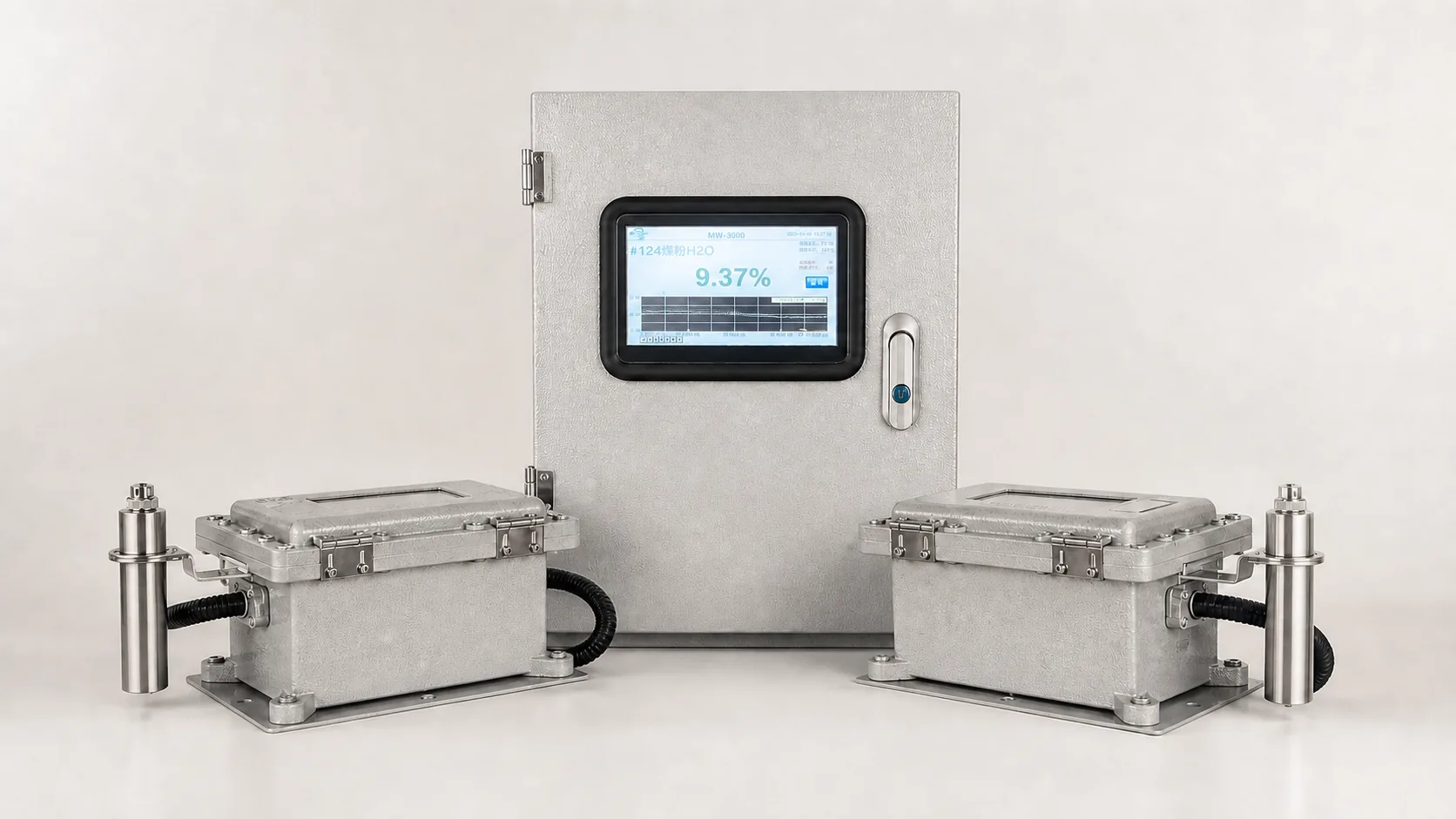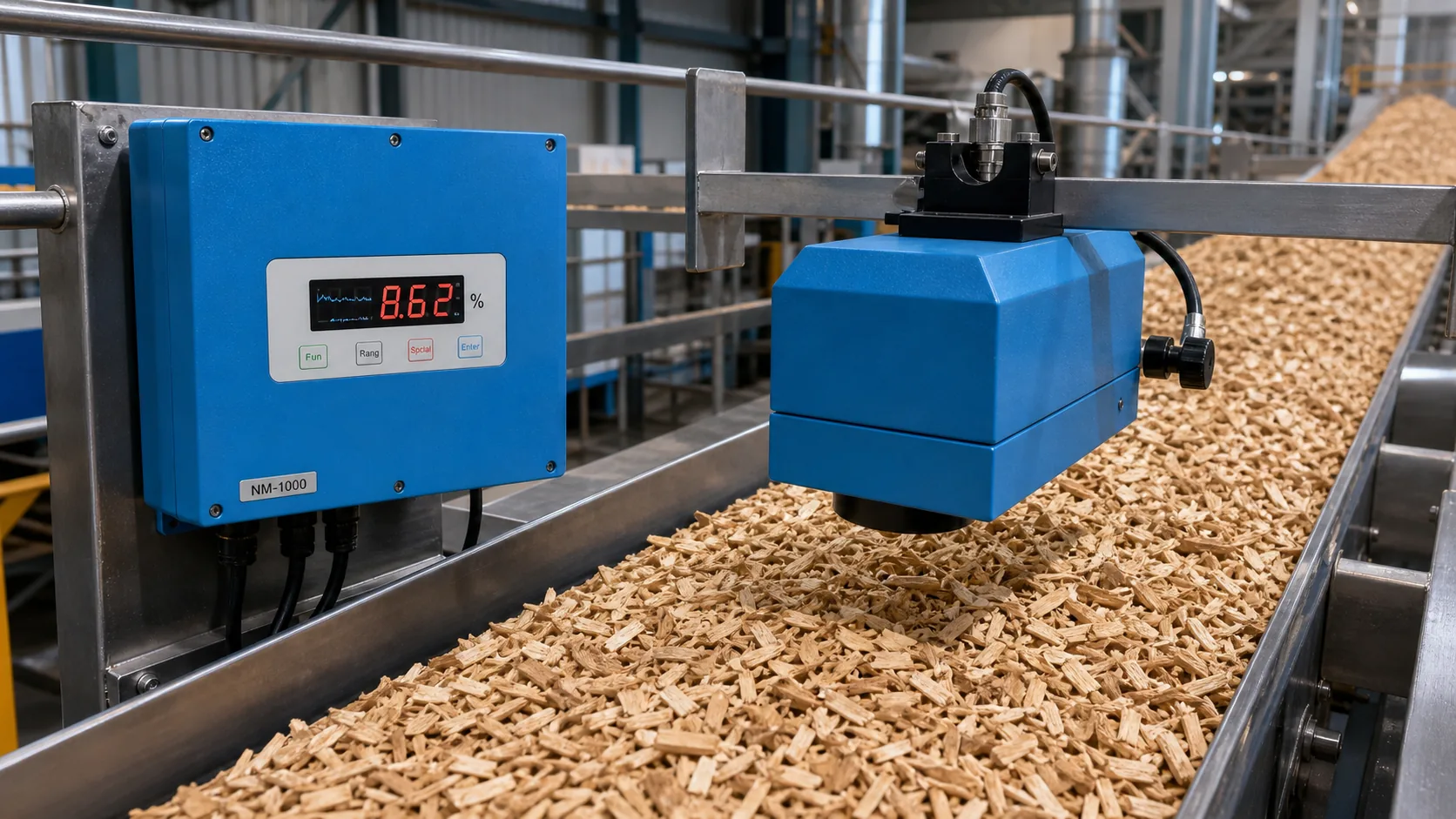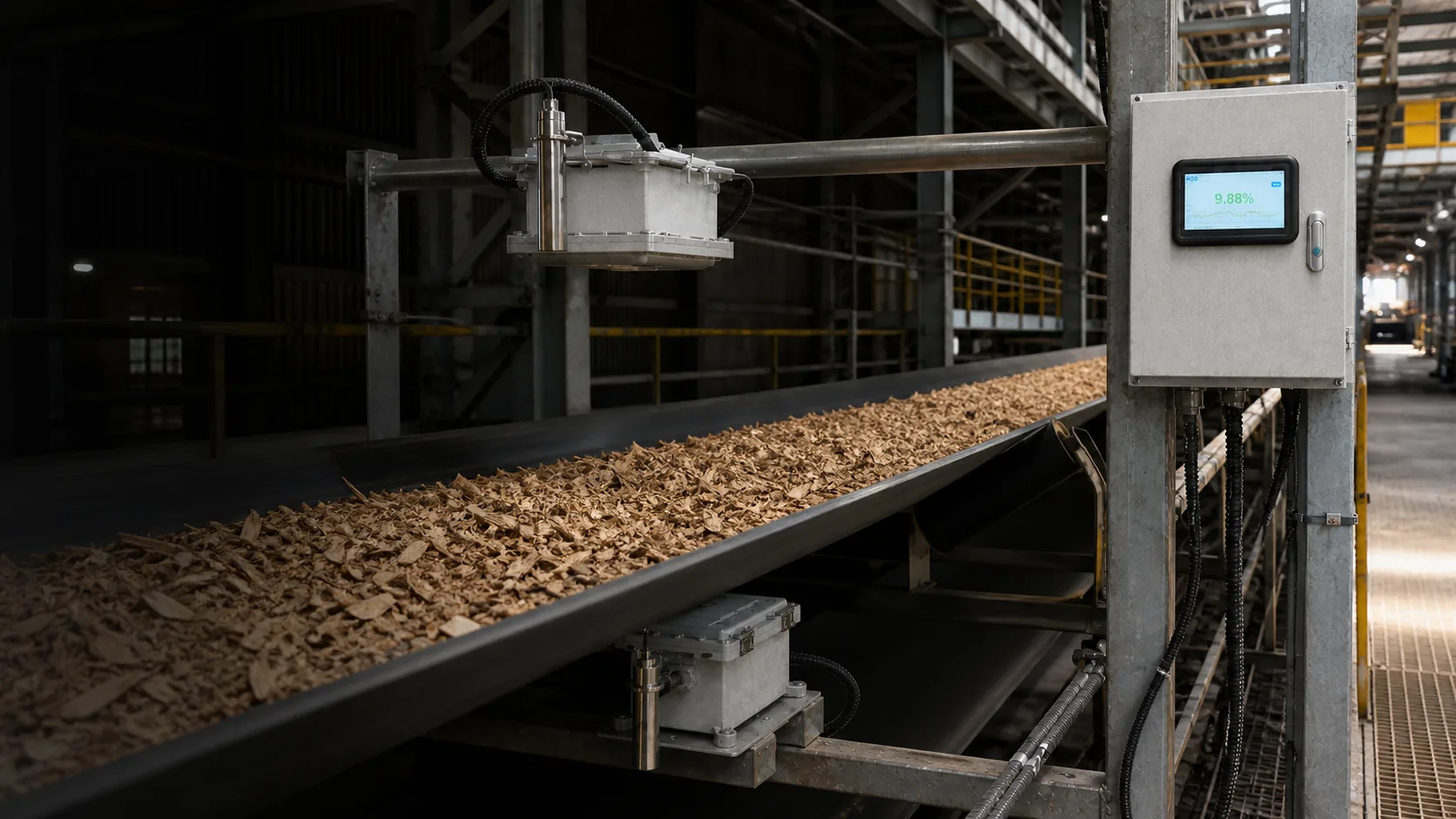
Performance depends on the material, reference method, operating range and installed configuration described in the project.
Practical reference
Define the result before the route
| Decision field | Surface or local value | Larger-volume value |
|---|---|---|
| Represented material | Visible surface or material around one process point | Defined transmission path, multiple positions or composite coverage |
| Typical decision | Trend, local adjustment or surface condition | Receiving, blending or load decision when coverage is proven |
| Required evidence | Surface representativeness and optical/contact stability | Geometry, density/depth range and matched multi-increment sampling |
| Invalid-state example | Dirty lens, lost contact or uncovered point | Partial load, gap, misalignment or geometry outside validation |
One percentage can represent different material volumes
NIR primarily responds to the visible surface. A contact sensor represents material around its process point, while a transmission path can include a larger cross-section. None of these values automatically equals a batch or laboratory result.
Match the measurement volume to the decision
Surface response can be valuable for fast drying control when the surface is representative. Receiving, blending or settlement decisions may require deeper or multi-position coverage and a sampling plan that reflects the same material volume.
Define the result in writing
Record wet or dry basis, material state, location, averaging time and intended use. This definition becomes the common reference for technology selection, calibration and acceptance.
Turn the definition into an acceptance record
Write five fields before selecting equipment: represented volume, wet/dry basis, averaging window, decision owner and response when coverage is invalid. During site acceptance, compare that definition with the installed geometry and the reference-sampling plan; a matching unit of percent is not enough.
Know what the value cannot authorise
A surface or local reading does not by itself authorise whole-batch release, settlement or a deep-volume claim. Those uses require representative coverage, an approved reference relationship and explicit exception rules for segregation, partial loads and material outside the verified range.
Before you act
Engineering checklist
- Confirm wet-basis or dry-basis reporting
- Define surface, local or larger-volume objective
- Describe layering and segregation
- Match online and laboratory time windows
- State whether the result controls, alarms, grades or settles material