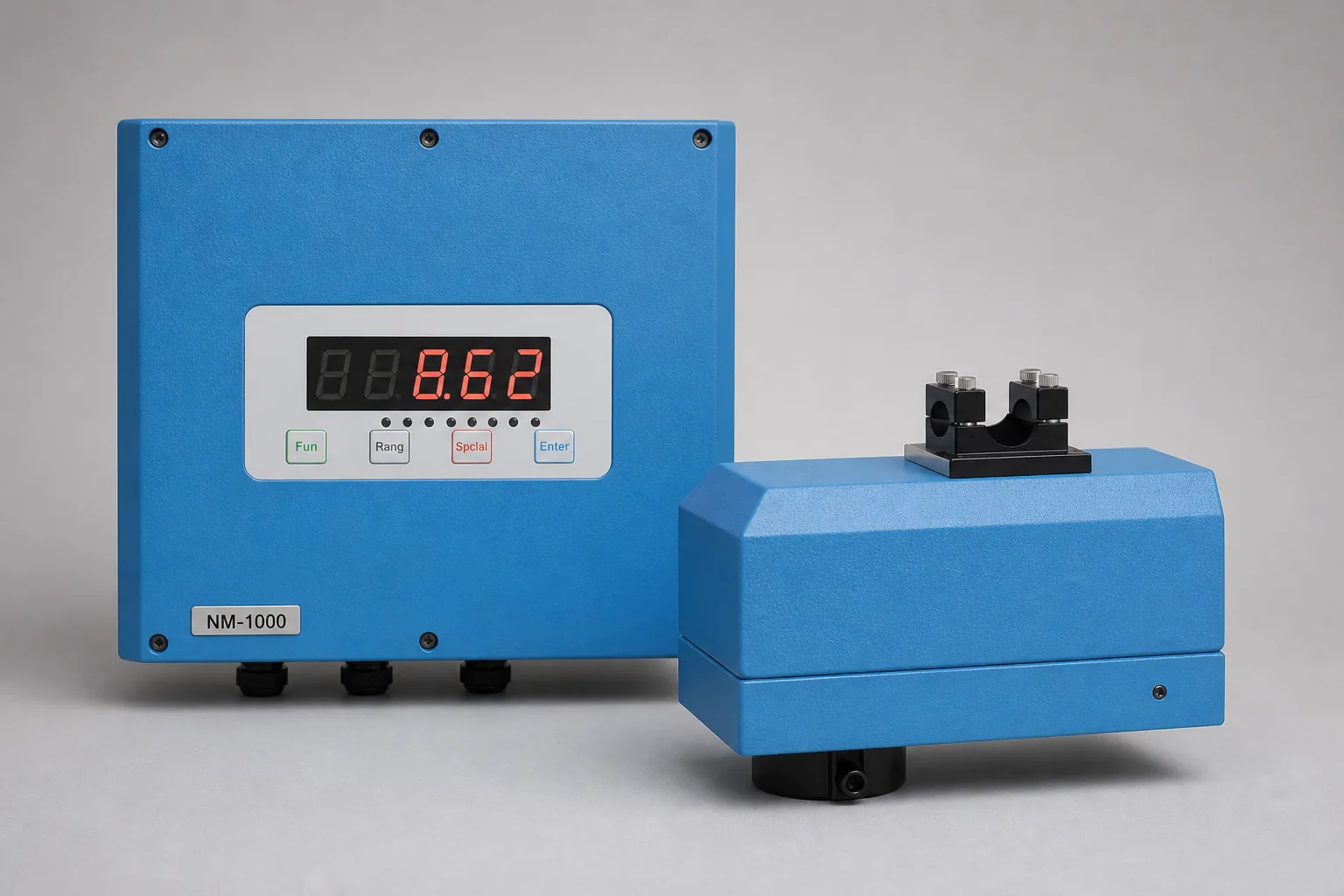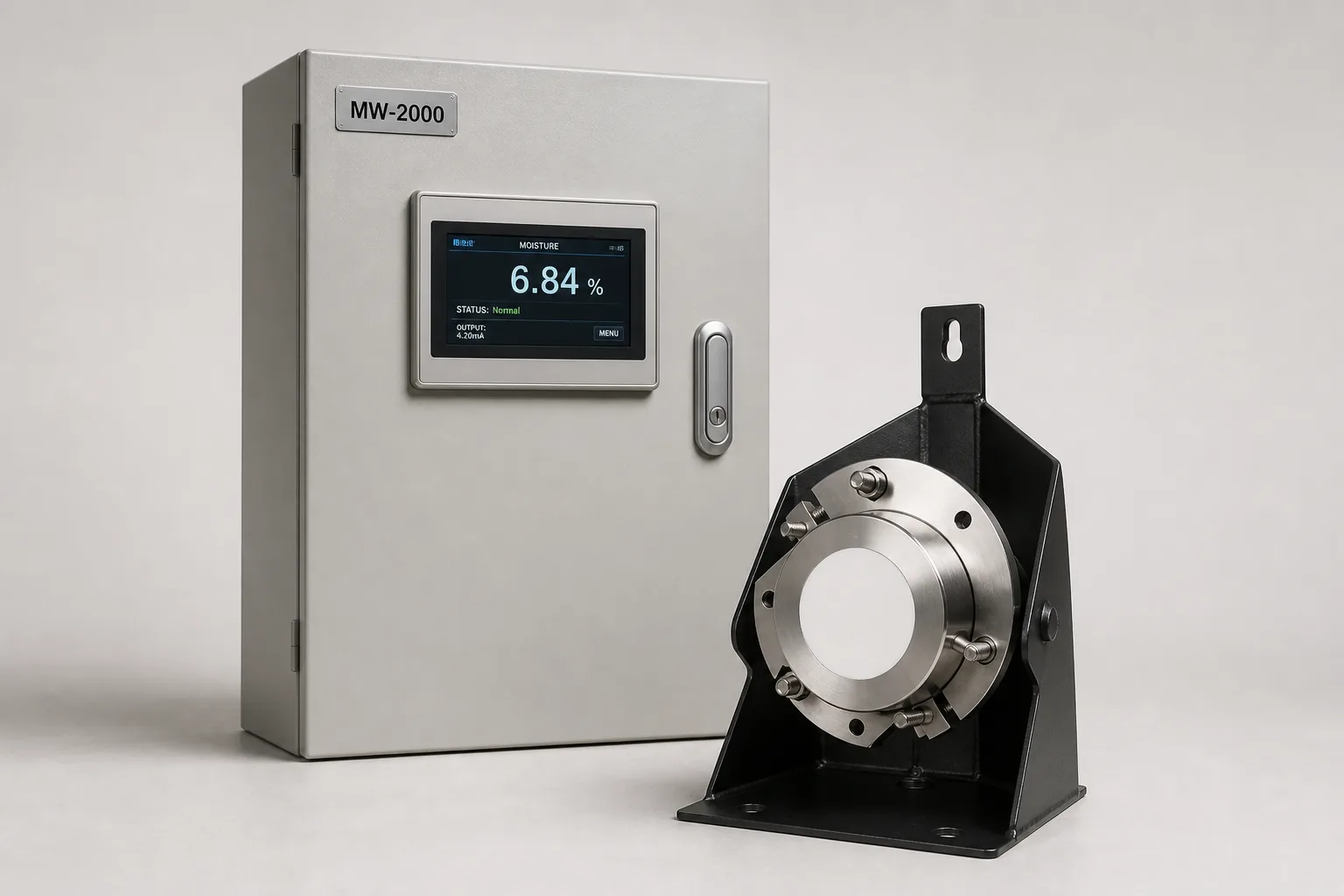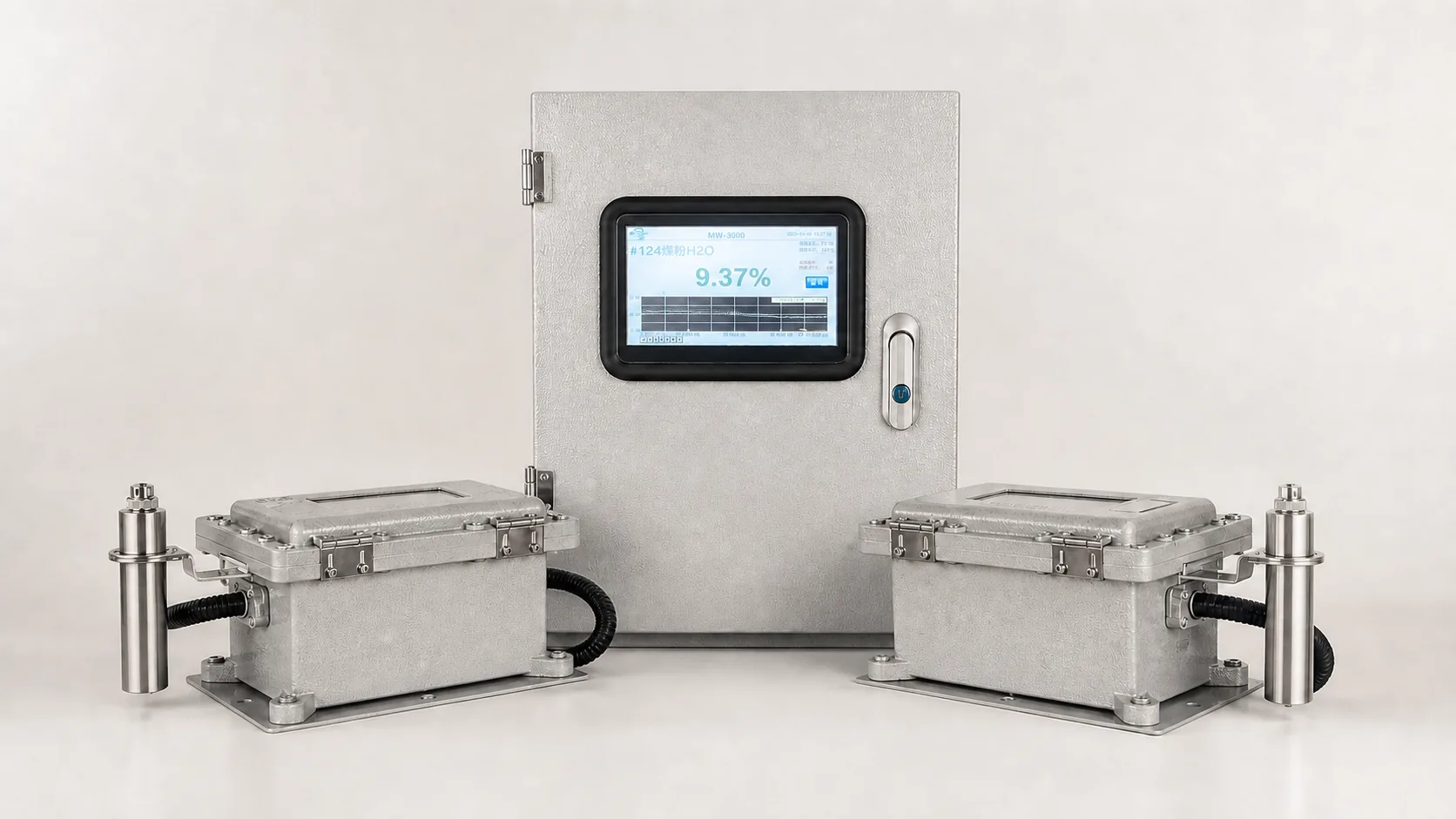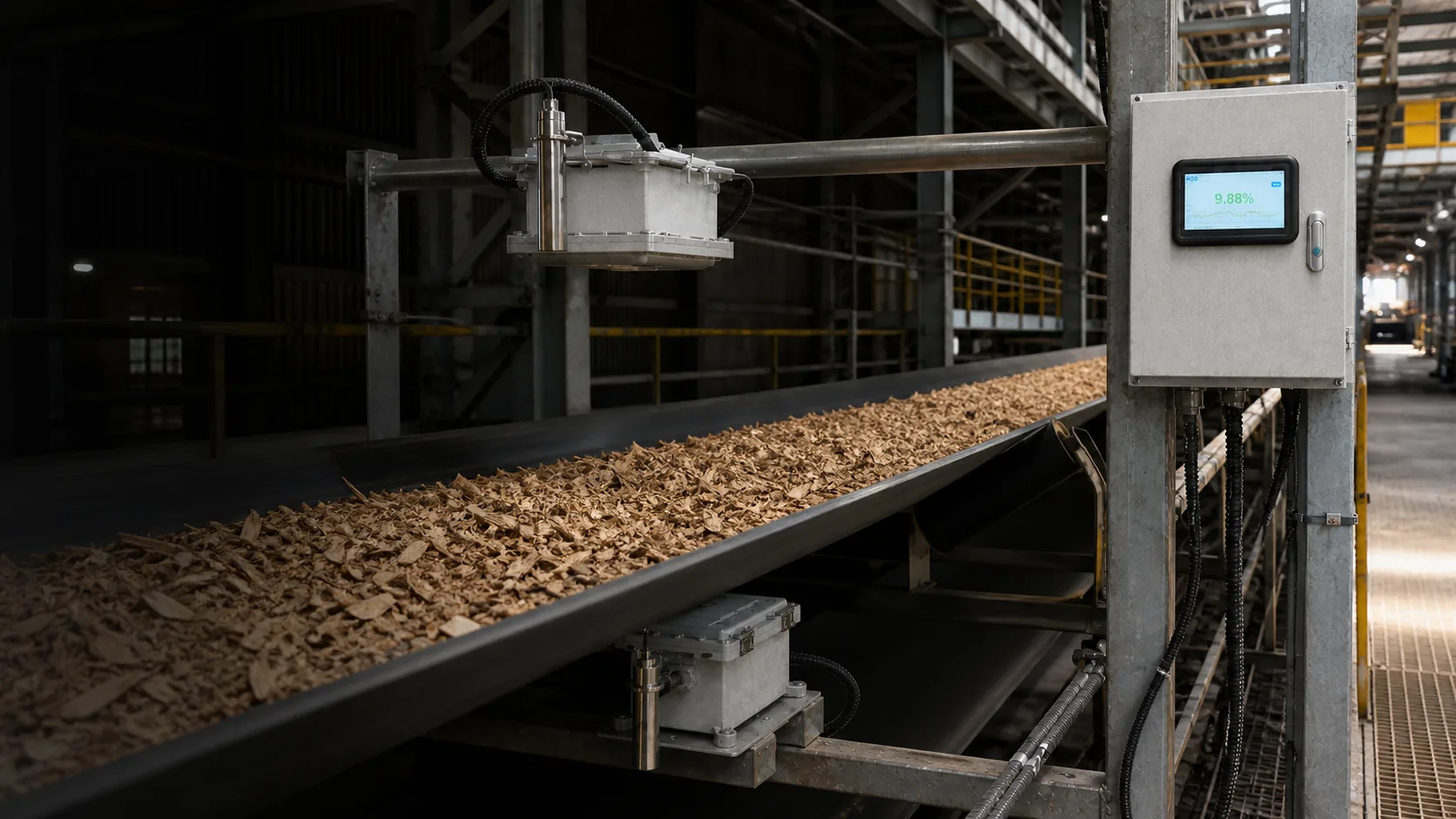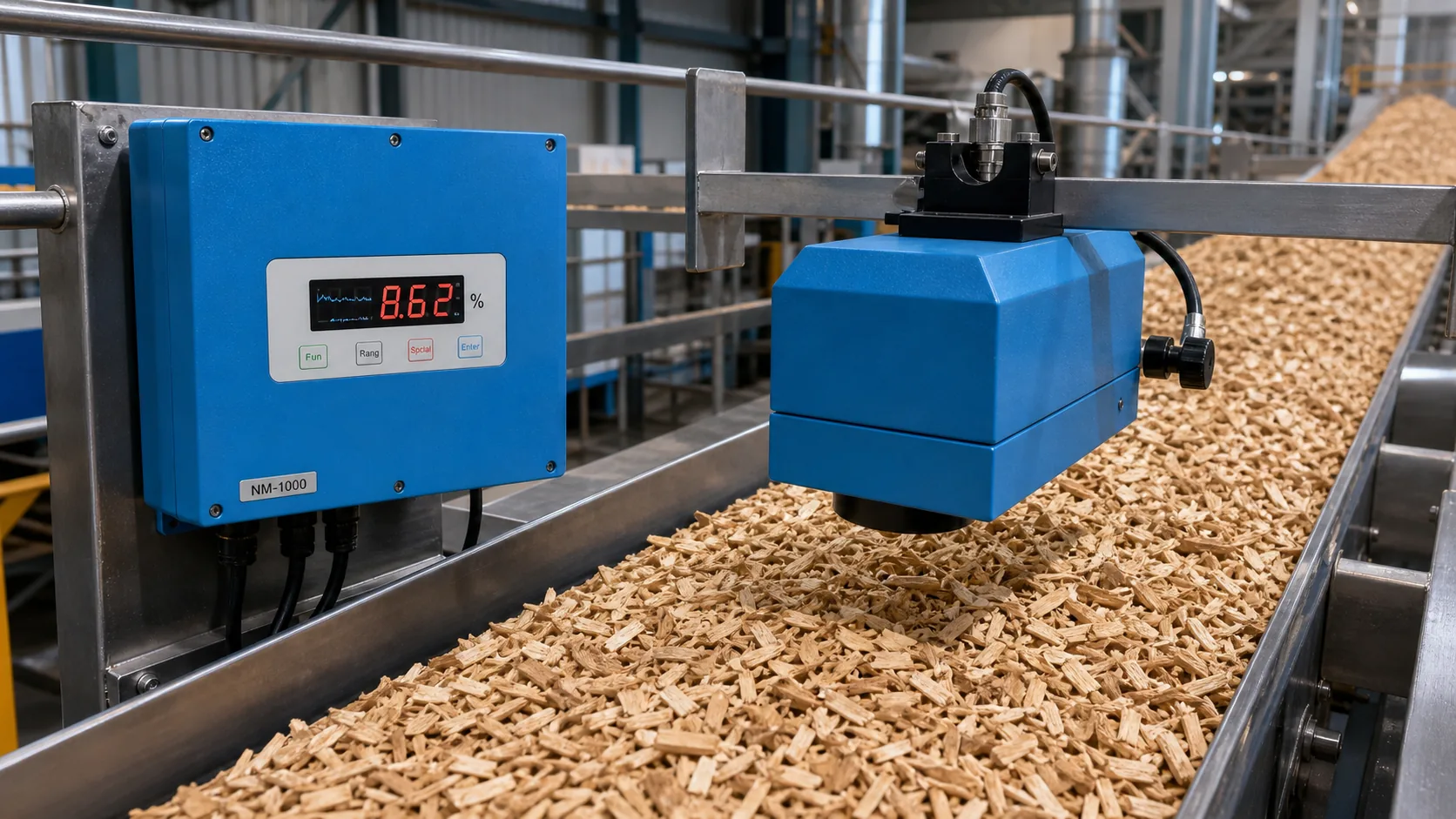
Performance depends on the material, reference method, operating range and installed configuration described in the project.
Practical reference
Route-screening decision table
| Route | Use when | Verify before trial | Do not infer |
|---|---|---|---|
| NIR surface | A visible surface represents the decision | Colour, texture, dust, distance and surface sampling | Deep-bed or whole-batch moisture |
| Contact microwave | A stable material interface can be maintained | Wear, impact, deposits, cleaning and contact | Food-contact or hygienic approval |
| Transmission microwave | A defined material path represents the target volume | Depth, density, distance, alignment and temperature | Hazardous-area suitability or universal compensation |
NIR is a surface route
It is fast and non-contact, but colour, texture, coating, dust, particle size and working distance can change the relationship between optical response and reference moisture.
Contact microwave measures at the process point
A flush-mounted sensor can suit mixers, chutes and vessels when material contact is stable. Wear, impact, build-up and cleaning access are part of the measurement design.
Transmission microwave measures across a path
A transmitter and receiver can cover a bed, bale, board or inspection zone. Density, thickness, distance, temperature and geometry still belong in calibration and compensation.
Use a screening sequence, not a technology slogan
First define surface, contact-zone or transmission-path coverage. Then record contact permission, working space, wear, deposits, colour, density and depth variation. Only routes that survive those constraints should enter paired-sample trials; commercial convenience is not evidence of measurement suitability.
Keep compliance questions outside the route label
NIR, contact and transmission describe measurement interactions, not food-contact approval, hygienic design, hazardous-area suitability or product certification. The project must review wetted materials, cleaning, enclosure, electrical protection and local obligations against the exact supplied configuration.
Before you act
Engineering checklist
- Can the sensor contact the material?
- Is the target surface or bulk response?
- Is material coverage stable?
- Which variables change with grade or supplier?
- Can representative reference samples be collected?