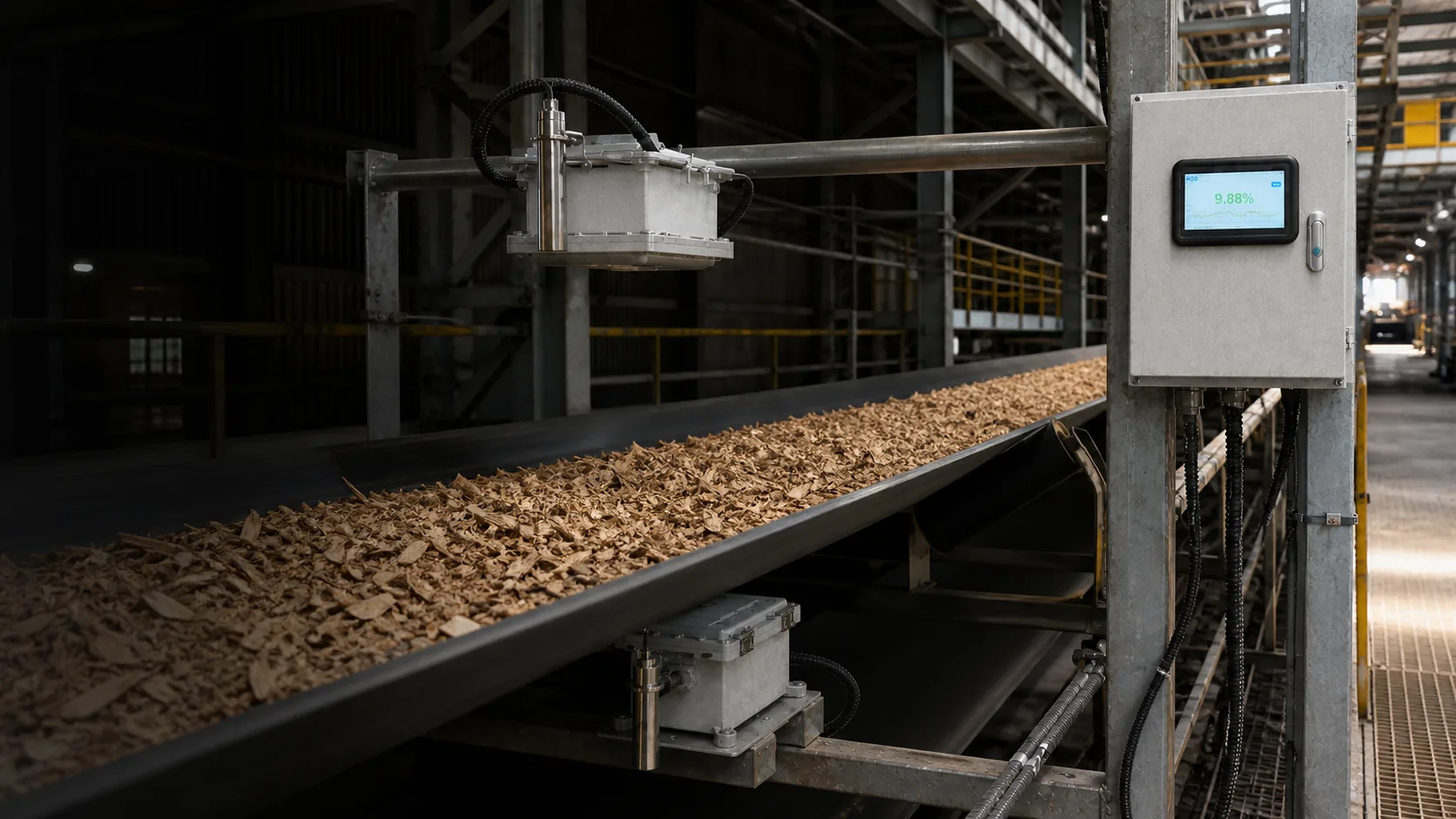
Performance depends on the material, reference method, operating range and installed configuration described in the project.
Define the intended application range
List moisture, density, temperature, depth, speed, formulation, supplier and seasonal limits. The dataset should represent normal operation and agreed decision boundaries.
Separate model building from validation
Keep independent material or production periods for validation. Closely related repeats from the same batch should not be split across both sets as if they were independent.
Control model and data versions
Record exclusions, transformations, compensation variables and approval. A later bias adjustment is not automatically equivalent to a full recalibration.
Plan coverage before counting samples
Create a matrix of moisture bands against the main material and process groups. Populate each cell with independent production events, not repeated portions of one batch. Empty decision-limit cells are a coverage gap even when the total row count is large.
Preserve exclusions and model lineage
Store raw reference and online values, pairing logic, exclusion reason, transformation, compensation fields, dataset version, model version and approver. A corrected or filtered export must remain traceable to the raw record so later bias reviews do not rewrite project history.
Before you act
Engineering checklist
- Map the full operating envelope
- Plan samples near decision limits
- Include influential-variable combinations
- Reserve independent validation data
- Version the dataset, model and approval