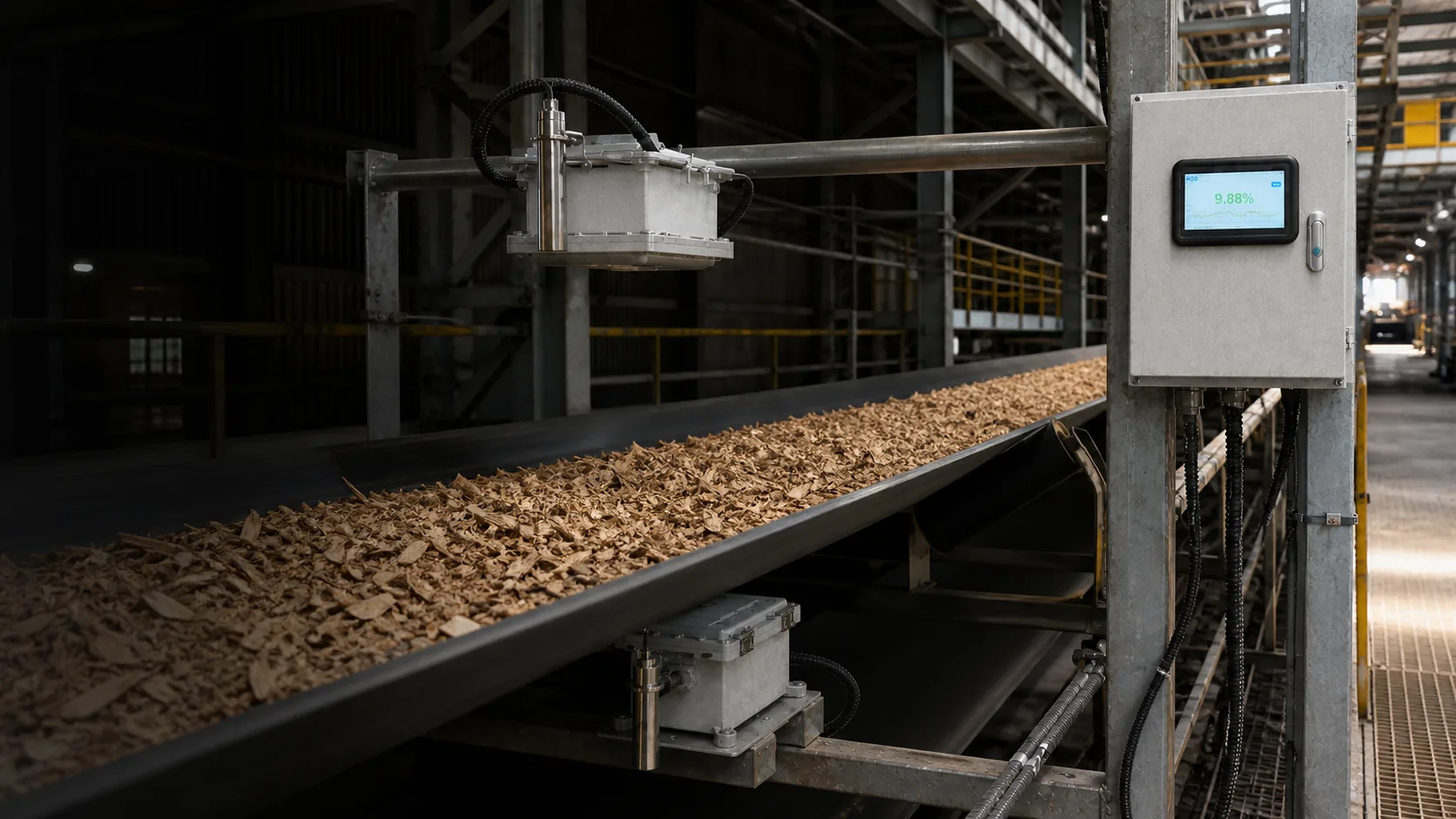
Performance depends on the material, reference method, operating range and installed configuration described in the project.
Represent space and time
A belt sample, bale core or truck sample covers a different volume from a sensor. Define increments, locations and the online averaging window before testing.
Protect the sample after collection
Open containers, warm material, delay and transport can cause moisture loss or gain. Sealing, timestamps and custody records are part of measurement quality.
Cover production variation
Sample different suppliers, recipes, temperatures, densities, shifts and seasons. Repeated portions from one easy batch do not prove performance across the application.
Make every increment traceable
Give each increment a sample ID, location or depth, timestamp, batch, operating state and intended online window. Record sealing time, container, composite rule, custody, laboratory receipt and exclusions. These fields let reviewers reconstruct which material the reported result actually represents.
Predefine invalid and missed samples
Specify what happens after an unsafe collection, torn bag, missing timestamp, uncovered sensor, partial load or laboratory delay. Do not replace a failed increment with an easy sample without recording the deviation; classify it, retain the reason and decide whether the comparison remains usable.
Before you act
Engineering checklist
- Define sample increment locations
- Match timestamps and process delay
- Seal and identify samples immediately
- Record material and operating state
- Use independent samples for validation