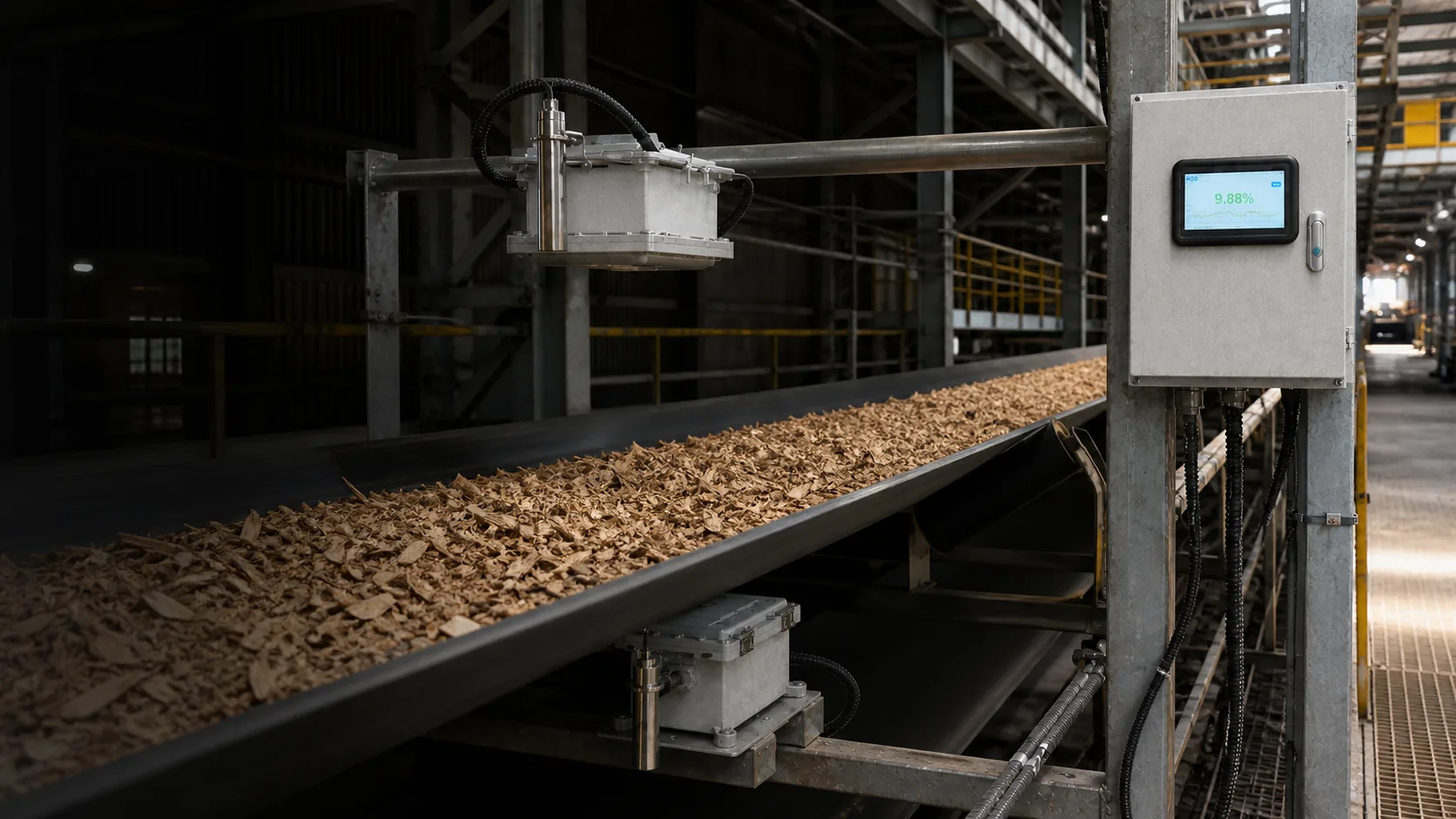
Performance depends on the material, reference method, operating range and installed configuration described in the project.
Practical reference
Two measurements with different jobs
| Question | Online moisture system | Laboratory test |
|---|---|---|
| Material represented | A surface, process point or measurement path over time | The sample delivered to the laboratory |
| Frequency | Continuous or high-frequency readings | Individual tests at selected times |
| Result timing | Available during production | Available after sampling, handling and testing |
| Primary role | Trend, alarm, control, grading or process decision | Reference, release, compliance or calibration value |
| Main risk | Installation and material conditions outside the calibrated range | Sampling, handling and method variation |
They observe different portions of the process
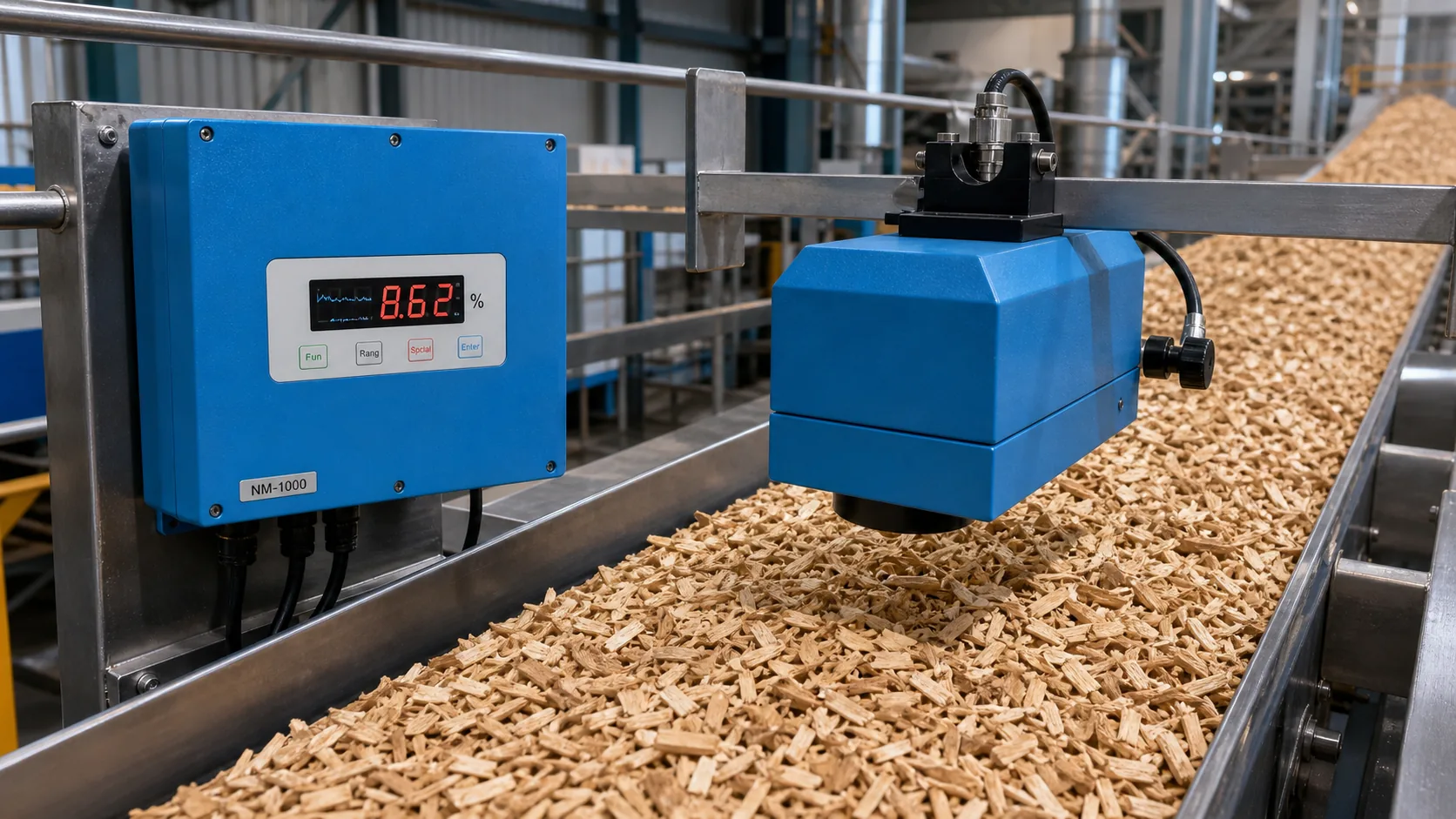
An online sensor may respond to the visible surface, a contact zone or a transmission path through moving material. A laboratory method reports the moisture of the sample actually collected. If the sample does not represent the same material volume and time, both results can be valid without matching point for point.
The laboratory reference remains essential
The online system is calibrated and verified against a defined reference method. Sample preparation, drying conditions, calculation basis and laboratory controls must suit the material. A fast online reading does not replace a contractual or regulatory laboratory method when that method is required.
Why the values do not match every second
Process delay, averaging time, segregation, bed depth, density, temperature, sample moisture loss and wet- or dry-basis reporting can all create differences. The comparison must align timestamps and material travel before attributing a difference to the instrument.
Use both methods as one measurement system
Laboratory results establish and periodically check the reference relationship. Online readings reveal variation between samples and support faster action. Together they can provide traceable verification and continuous process visibility.
Choose the next guide by the task
Use this overview when deciding what each method should do. Use the comparison-test guide to write a sampling protocol, the disagreement guide to troubleshoot an existing gap, and the wet-versus-dry-basis guide when the calculation denominator is uncertain. Keeping those tasks separate prevents a method-selection question from turning into premature recalibration.
Before you act
Engineering checklist
- Define wet-basis or dry-basis reporting
- Approve the laboratory reference method
- Match the online and sample locations
- Account for process travel time and averaging
- Seal, identify and test samples consistently
- Compare results across the real production range