Application and site review
Document material flow, geometry, environment, access, sampling and the production decision before mechanical design.
Products and systems
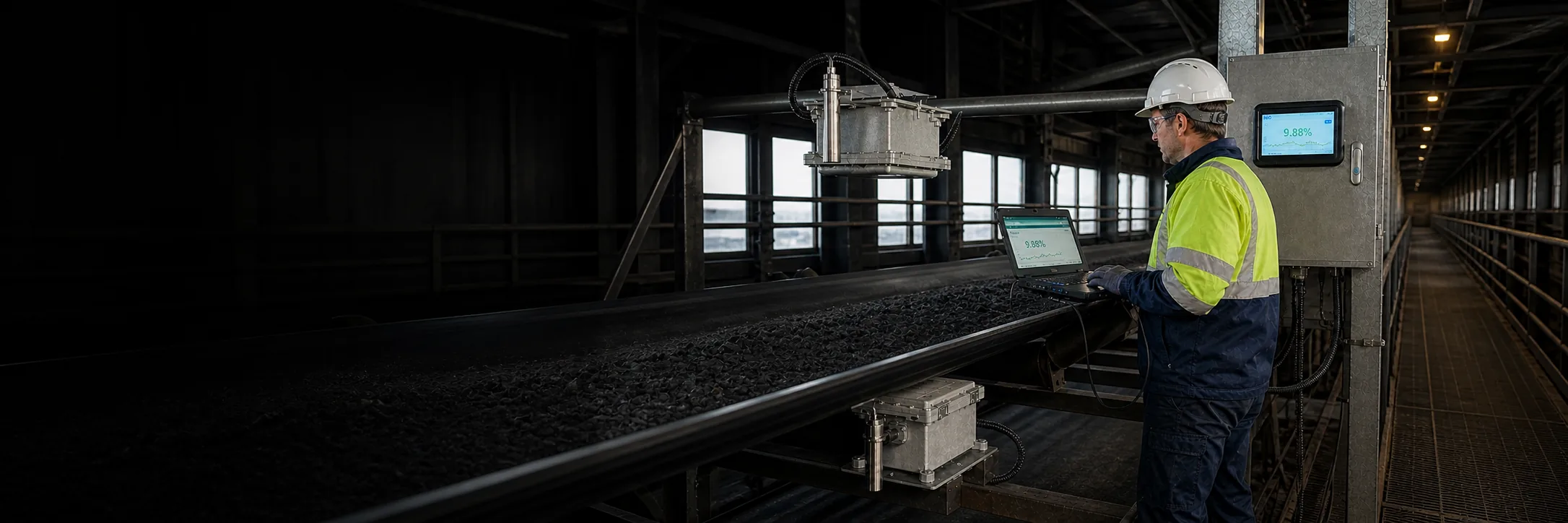
Use mounting, protection, cabling, commissioning and calibration services to keep the intended measurement geometry stable, maintainable and verifiable in real production.
 08
08Project role
A suitable sensor cannot compensate for unstable flow, changing alignment, blocked access or protection that interferes with the measurement path. Installation is part of measurement performance.
Document material flow, geometry, environment, access, sampling and the production decision before mechanical design.
Hold the intended optical, contact or transmission path while managing wear, dust, impact, cleaning and guarding.
Verify alignment, coverage, wiring, states and paired samples, then record the final as-built arrangement.
Keep inspection, cleaning, replacement, backup and revalidation practical throughout the installed life.
Scope of work
The physical arrangement and service plan protect the same measurement volume that was selected during application review.
Frames, rings and supports establish repeatable position, clearance and alignment for the selected sensor route.
Windows, wear faces, covers and enclosures protect equipment without changing the intended measurement path.
Connect power and signals, test valid and fault states, capture reference samples and document the final installation.
Plan inspection, cleaning, spares, remote support, recalibration and response responsibility before handover.
Available scope
Current documentation records MW-2000 mounting rings, wear-protection hardware, transmission and scanning frames, cabling, commissioning, calibration and lifecycle support. The exact project scope is agreed for the selected system and site.
Installation quality
Long-term performance depends on representative flow, preserved geometry, safe access and records that make change visible.
Check segregation, empty running, bridging, build-up and intermittent contact under normal and abnormal load.
Confirm liners, windows, guards and wear parts do not alter the optical or microwave path.
Make inspection, cleaning, alignment and replacement possible without improvised work.
Keep drawings, photographs, settings and sample references, and define triggers for review after change.
Site inputs
Dimensions alone are not enough. The project team needs normal-production evidence, access constraints and clear ownership of every site modification.
Contact an engineerAll blog articles
Compensation is not a claim that an instrument is unaffected. It is a controlled way to include influential variables inside the tested application range.
A laboratory result is useful only when the sample represents the material volume and time associated with the online reading.
A calibration remains credible only while the measurement conditions stay inside its approved evidence range.
Complete knowledge centre
Compare measurement routes, sampling, calibration, validation and production-control guidance.