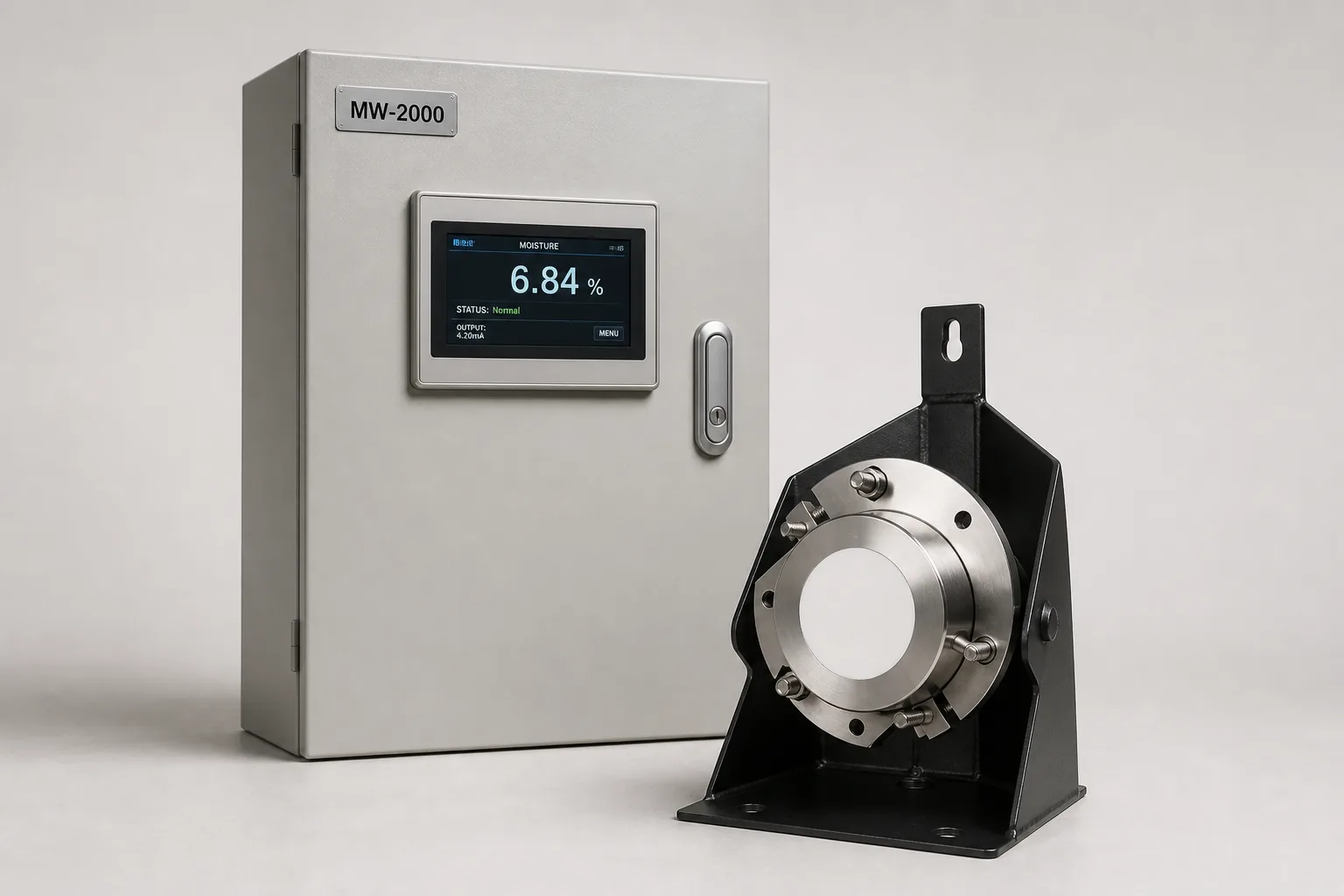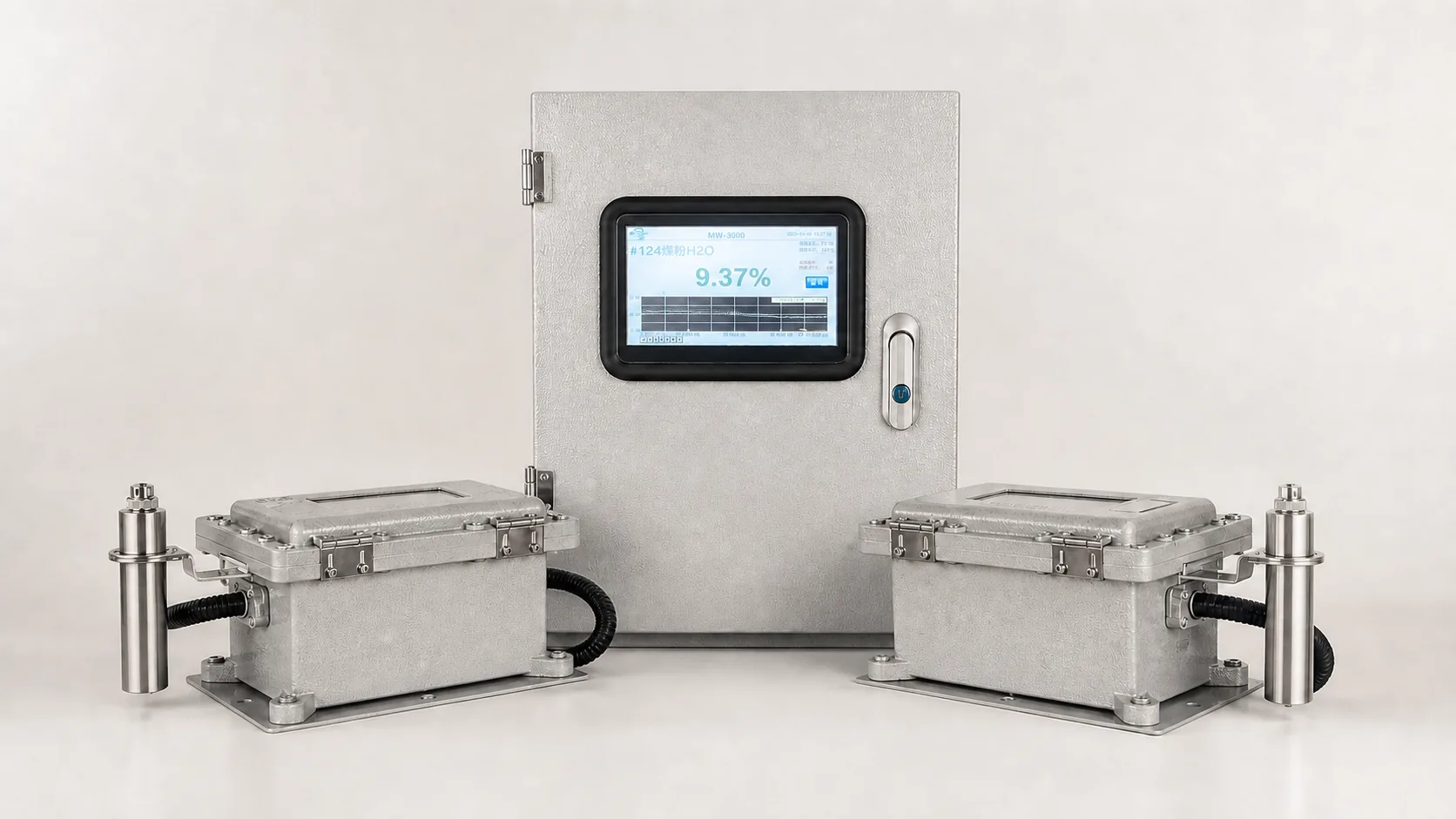
Performance depends on the material, reference method, operating range and installed configuration described in the project.
Production decision map
From aggregate feed to an auditable water correction
Treat the moisture value as one input in a timed batch-water workflow. The chain is only complete when the measured material, correction formula and reference result identify the same aggregate and batch.
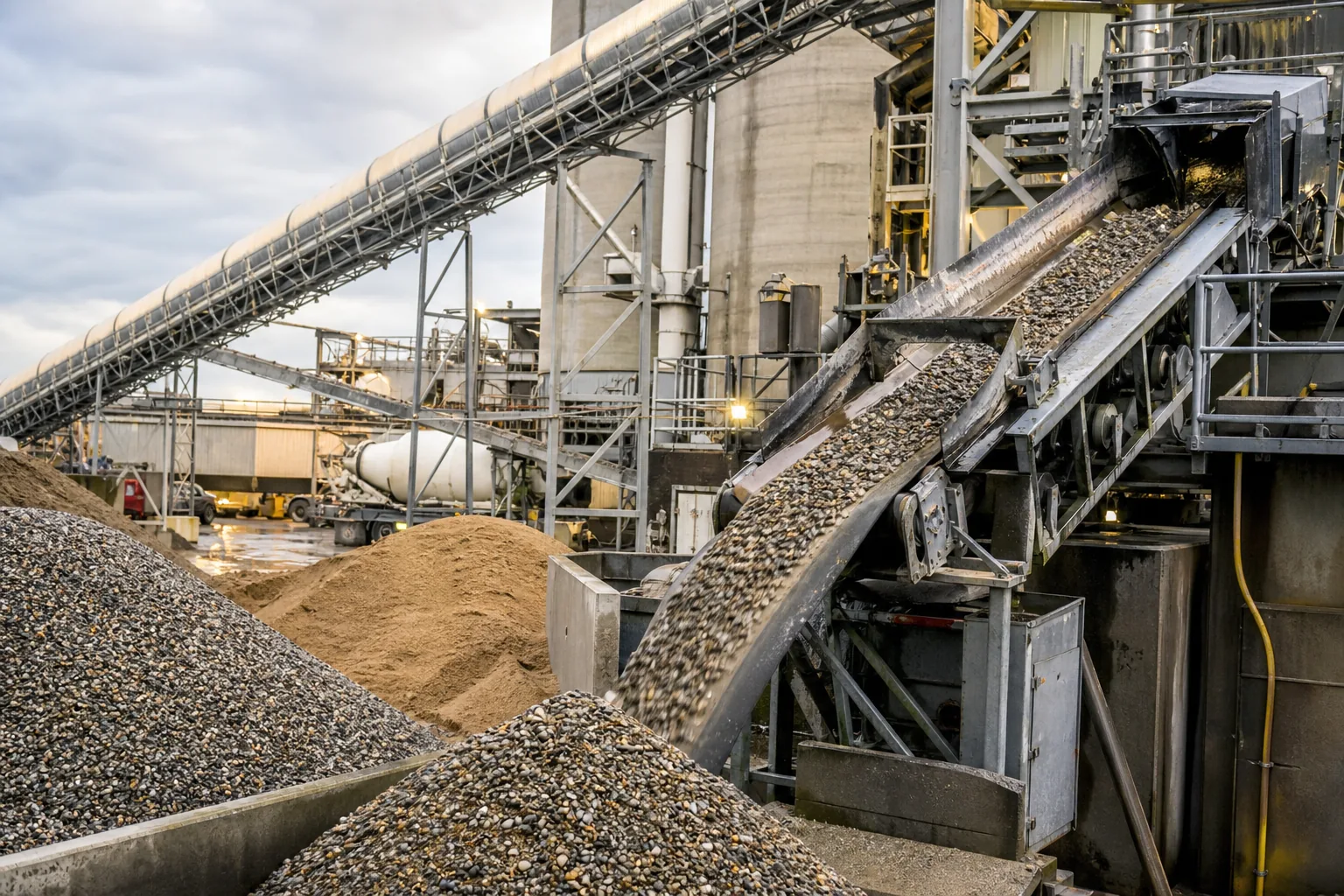
Stockpile → bin → weigh hopper → mixer
Rain, drainage, loader cuts and bin refill move different moisture zones into the batch. Record aggregate source, bin and batch identity through the sequence.
A convenient sample can miss the dosed material
A stockpile result or delayed grab sample may describe a different moisture zone. Absorption, total moisture and free water must also not be mixed silently.
Observe the stream that becomes the weighed dose
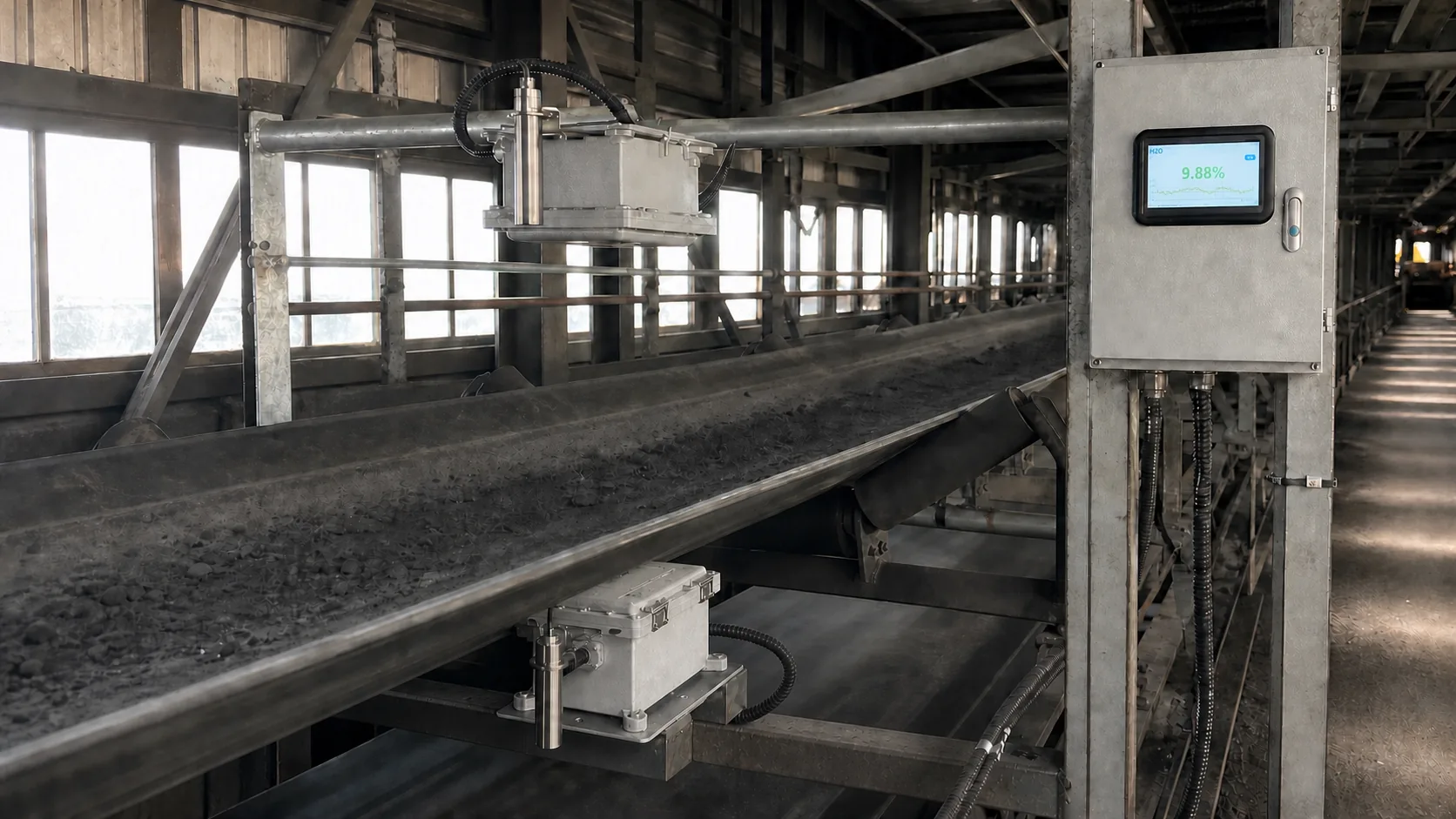
Choose a stable bin, chute or conveyor location with adequate coverage and safe paired sampling. Align its averaging window with the material entering the weigh hopper.
Apply a bounded, approved water-balance rule
Use the agreed basis to correct aggregate dry mass and batch water. Block or return to manual operation when coverage, identity or signal validity is missing.
Pair reference samples with batch records
Test dry and wet weather, start-up, refill and rate changes. Retain sensor average, reference result, formula version, applied correction and operator override for the same batch.
Follow moisture from stockpile to batch
Rain, drainage, loader practice, segregation and bin residence create gradients. Decide whether incoming monitoring, bin contact measurement or conveyor measurement best represents the weighed material.
Define the water calculation
Agree moisture basis, absorption or free-water treatment, dry-mass correction and the exact point where recipe water is adjusted. Keep the laboratory method and control formula under version control.
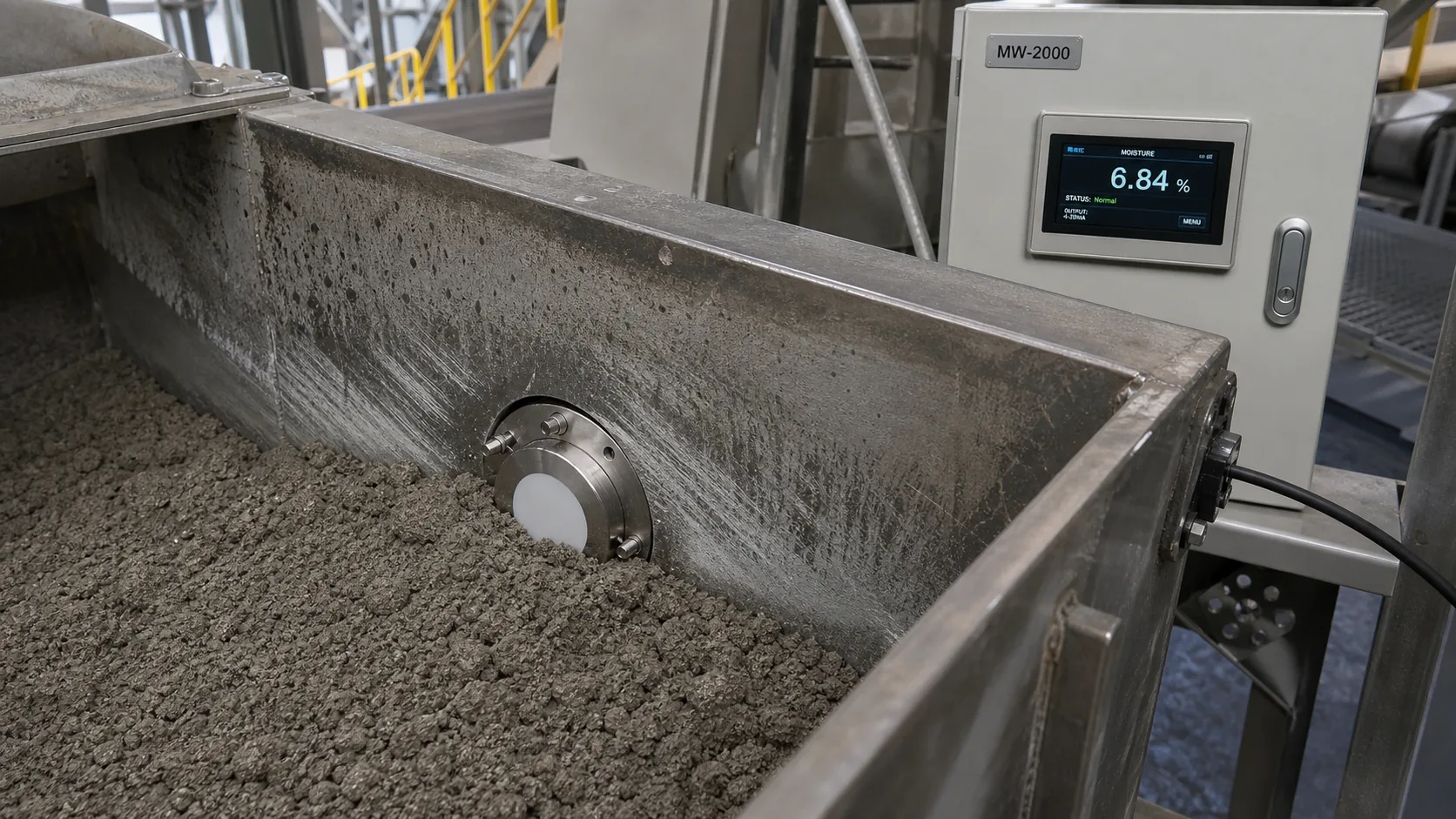
Use the production sequence to align the sensor window, aggregate weighing and mixer-water correction. The final position and correction rule must be verified on the actual plant.
Validate across operating conditions
Include suppliers, particle-size distributions, wet and dry weather, start-up, refill and different production rates. Check samples near the sensor and at the weighing stage.
Protect the batch controller
Use validity states, bounded correction and manual fallback. Record measured moisture, applied correction and operator override with every batch.
Keep water correction tied to the batch calculation
Record aggregate source, nominal dry mass, moisture basis, absorption/free-water convention, sensor validity, sample time, batch ID and water adjustment generated by the plant formula. The online system supplies a validated input; mix-design responsibility and acceptance remain with the producer’s approved quality process.
Before you act
Engineering checklist
- Map stockpile and bin gradients
- Confirm reference drying method
- Define free-water calculation
- Align sensor and weighed material
- Validate wet-weather range
- Record batch correction