← Back to all industries

Industries and materials

Construction materials

From wet aggregate at receiving to moisture correction at the mixer, reliable control depends on measuring the right material volume and pairing each reading with a representative reference sample.

Contact an engineer
Construction materials

Process scenes and measurement points

Follow the material from moisture risk to control action

Each route starts with a real material flow. Define the risk, choose a representative measurement point and decide what the validated result will change.

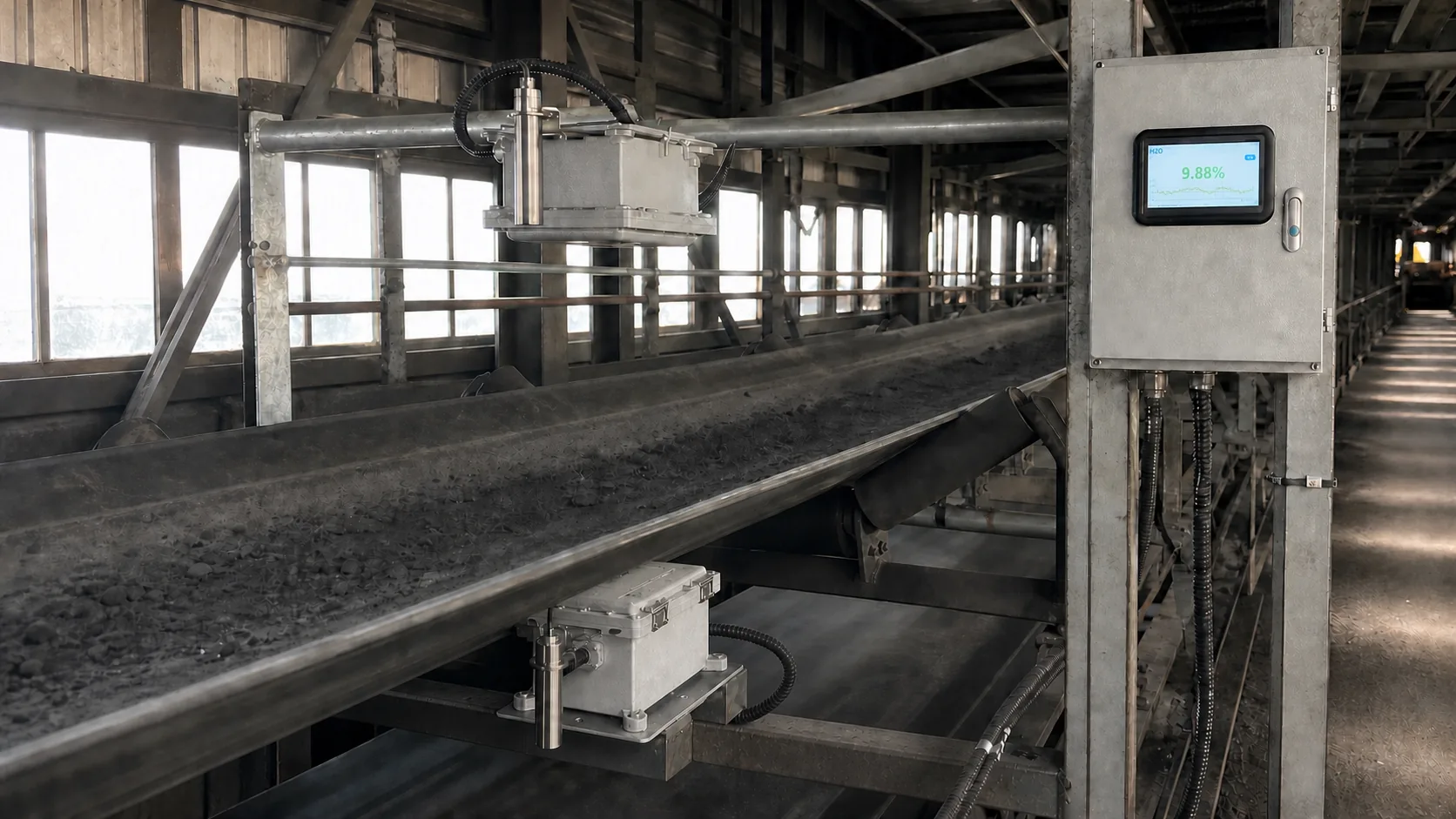
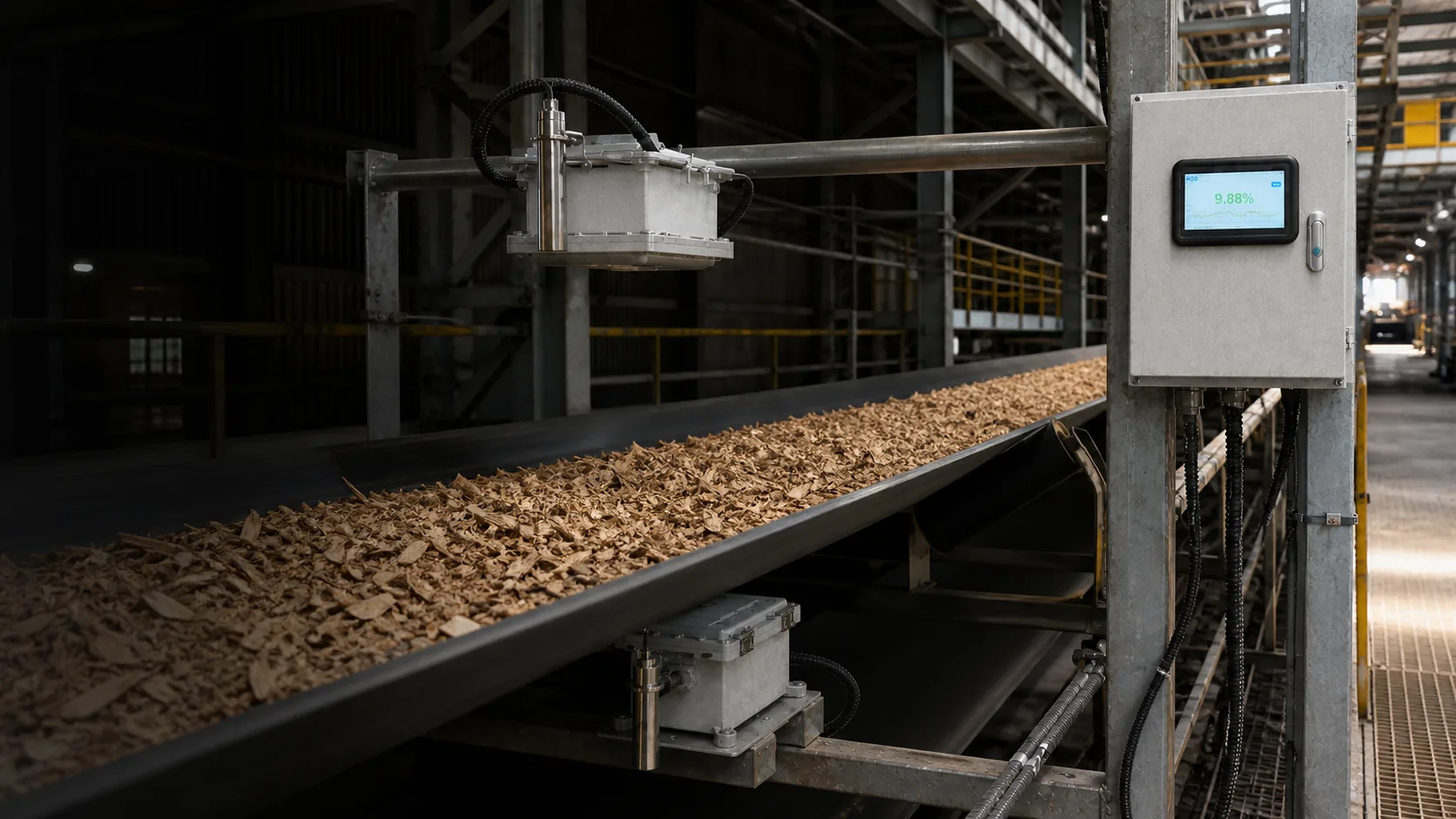
Aggregate receiving and belt transfer
01Incoming aggregate control

Aggregate receiving and belt transfer

Material
Sand, crushed stone and recycled aggregate
Moisture risk
Rain, drainage and stockpile segregation change the free water entering the recipe.
Measurement point
A stable, fully covered belt section before the bin or mixer, with timed reference sampling.
Control action
Correct the aggregate water contribution, segregate abnormal loads or hold invalid data.
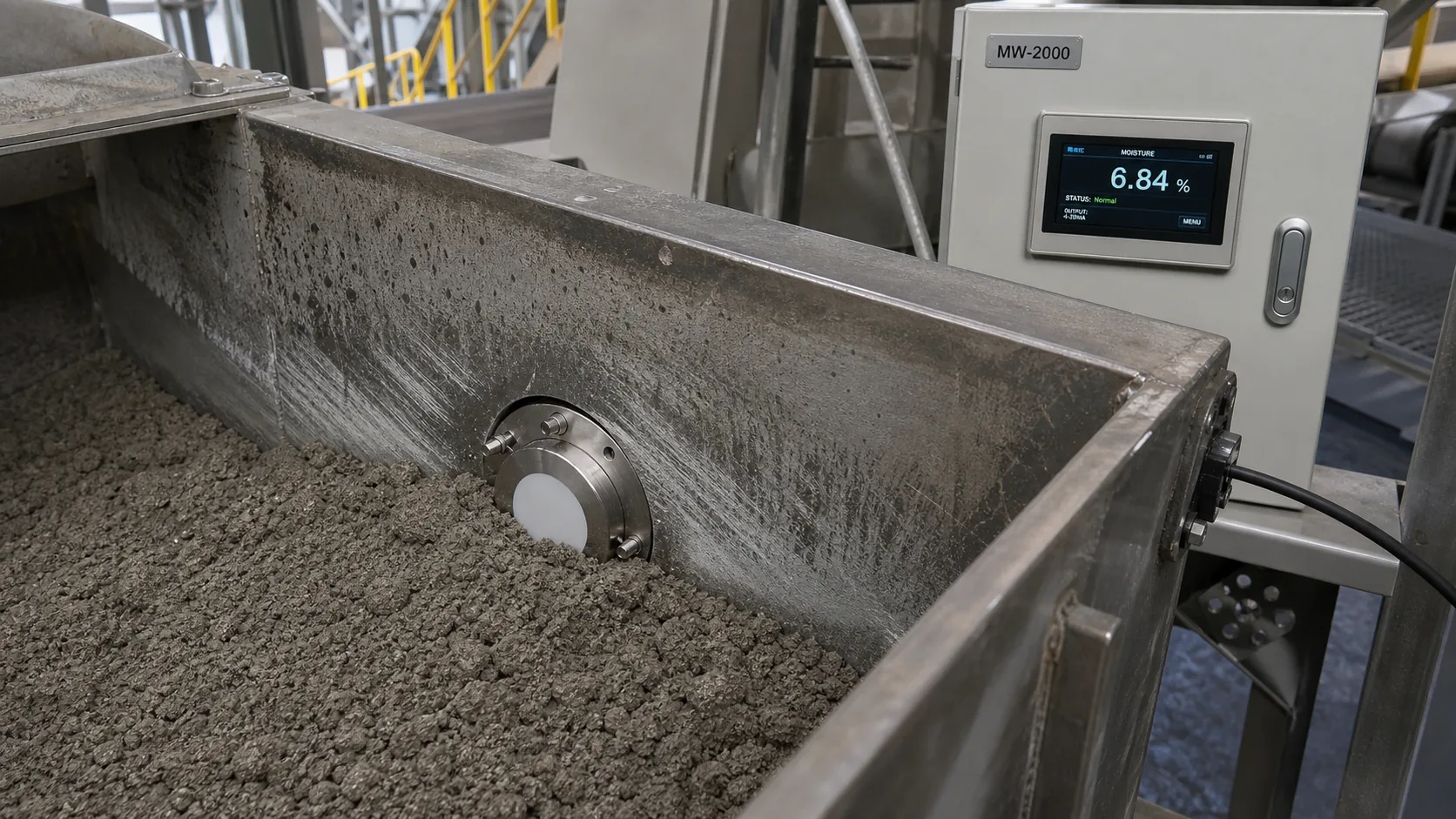
Bin discharge and concrete mixing
02Batch-water correction

Bin discharge and concrete mixing

Material
Wet aggregate fractions and batch water
Moisture risk
Uncorrected free water shifts the water-to-binder ratio and fresh-concrete consistency.
Measurement point
A repeatable bin discharge or mixer measurement aligned with the active recipe and material delay.
Control action
Apply a recipe-specific water correction only after interface and fallback states are verified.
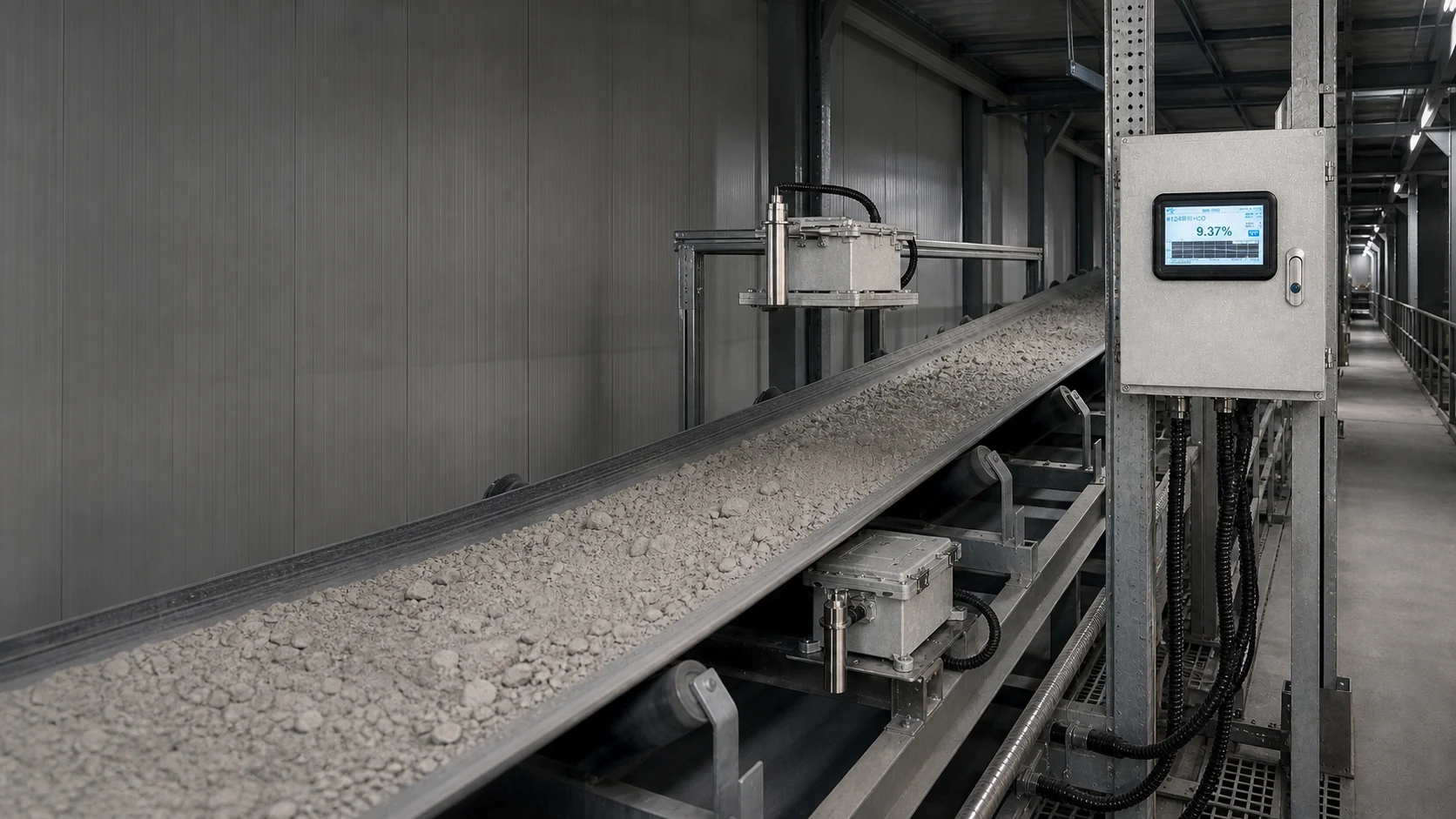
Drying and final dry-mix transfer
03Drying and finished-product consistency

Drying and final dry-mix transfer

Material
Sand, mineral filler and dry-mix product
Moisture risk
Residual moisture increases drying demand, caking risk and finished-product variation.
Measurement point
A representative stream after drying or before packing, accessible for paired samples.
Control action
Tune drying, trigger a quality review and prevent wet material from moving to packing.

Practical moisture testing

How to measure and control moisture in construction materials

From wet aggregate at receiving to moisture correction at the mixer, reliable control depends on measuring the right material volume and pairing each reading with a representative reference sample.

01

How do you measure sand and aggregate moisture on a conveyor?

Choose a belt section with stable loading and enough material coverage. The reading should represent the same stream that feeds the bin or mixer, not an exposed edge or a segregated return stream.

How to do it
  1. Map the belt loading, particle-size range and normal bed depth.
  2. Install at a stable point and define empty-belt and low-coverage states.
  3. Collect timed reference samples from the measured stream and build the calibration across the operating range.
Variables to control

Bed depth, bulk density, segregation, belt speed, temperature and metal near the measurement zone.

Use the result to

correct aggregate water contribution before batching and identify abnormal incoming loads.

Read the full methodAggregate and sand moisture measurement for batching and concrete production
02

How do you correct added water for wet aggregates in a concrete mixer?

Convert measured aggregate moisture into the water already entering with each fraction. Apply the correction by recipe and verify the response against fresh-concrete quality rather than using one fixed offset for every material.

How to do it
  1. Define the target moisture basis and dry mass for each aggregate fraction.
  2. Calculate free-water contribution after accounting for the agreed absorption convention.
  3. Specify how the correction enters the site batch logic, then test valid, hold and manual states before operators use it.
Variables to control

Aggregate absorption, recipe mass, sensor-to-mixer delay, bin changes, interface logic and invalid readings.

Use the result to

stabilise water-to-binder ratio, consistency and batch-to-batch quality.

Read the full methodMixer moisture control: connect the sensor window to water addition and batch release
03

Where should an online moisture sensor be installed in a sand or dry-mix plant?

Install where material flow is continuous, representative and accessible for safe reference sampling. A convenient bracket location is unsuitable if the bed changes shape, the material separates or the measured stream does not reach the control point.

How to do it
  1. Trace material from receiving through storage, transfer and dosing.
  2. Rank candidate points by representativeness, mechanical stability and process response time.
  3. Confirm mounting geometry and sampling access during real production before freezing the design.
Variables to control

Chute build-up, variable distance, vibration, abrasion, flow interruption and time delay.

Use the result to

select a measurement point that supports repeatable calibration and timely control.

Read the full methodHow the measurement point determines representativeness
04

How do you compare online aggregate moisture with an oven-dry reference test?

Pair each sensor average with a sample taken from the same material and time window. Keep the reference method, sample handling and reporting basis fixed so sampling error is not mistaken for sensor error.

How to do it
  1. Define sampling location, averaging window and transport container.
  2. Run the agreed gravimetric reference method and record wet-basis or dry-basis reporting.
  3. Use separate calibration and validation sets, then review bias and residuals by material type.
Variables to control

Evaporation, sample delay, coarse-particle representation, reference balance and basis conversion.

Use the result to

prove the usable error for each aggregate and decide whether recalibration is needed.

Read the full methodHow to select a laboratory reference method for an online moisture system
05

How do you set moisture alarms and control limits for aggregate production?

Build limits from process requirements and observed operating variation, not from a universal moisture range. Separate a quality warning from a sensor fault or low-coverage condition.

How to do it
  1. Collect a stable baseline by material, recipe and season.
  2. Link warning and action limits to batching or product-quality consequences.
  3. Test alarm delay, operator response and fallback logic before enabling automatic correction.
Variables to control

Natural seasonal shifts, recipe changes, false alarms, signal filtering and process delay.

Use the result to

respond to real moisture excursions without turning invalid data into automatic dosing changes.

Read the full methodClosed-loop moisture control: move safely from trending to automatic action

Project success factors

Build a reliable measurement result

Share your material, moisture range and process conditions to receive a focused measurement recommendation.

  • A clearly defined material and process objective
  • A suitable sensor route and installation geometry
  • A representative reference method and calibration plan
  • Environmental and compliance requirements
  • Validation under real operating conditions

Application pathway

Place the measurement where it can change the process

From wet aggregate at receiving to moisture correction at the mixer, reliable control depends on measuring the right material volume and pairing each reading with a representative reference sample.

01

Locate the variation

Map where moisture enters, separates, dries or is mixed before choosing an accessible measurement point.

02

Choose the representative point

Match surface, contact, transmission or scanning coverage to the material flow and the decision that follows.

03

Connect the reference

Align representative samples, method, calculation basis and laboratory time with the online measurement window.

04

Define the production action

Assign valid states, alarm limits, manual response, control authority and a review method for abnormal material.

Sources of moisture variation

Sources of moisture variation

Rain exposure, aggregate source, drainage, reclaimed material and silo dwell time can change sand and aggregate moisture within one shift.

Reference and operating response

Reference and operating response

Place measurement before dosing where flow is well mixed and continuously covers the sensor. Pair increments from the same time window with the approved aggregate reference method, then use valid values for free-water correction, recipe consistency and dryer decisions.

Begin with an observation period that records the online value, reference samples, product identity and operating state. Use the combined record to set material groups and valid limits. Then introduce alarms, operator guidance or bounded control in stages, with a manual fallback and a documented response for off-specification or unmeasured material.

Discuss your material, process point and control objective

Share a few process details and our application team will recommend a suitable technology, installation concept and validation plan.

Contact an engineer
WhatsApp