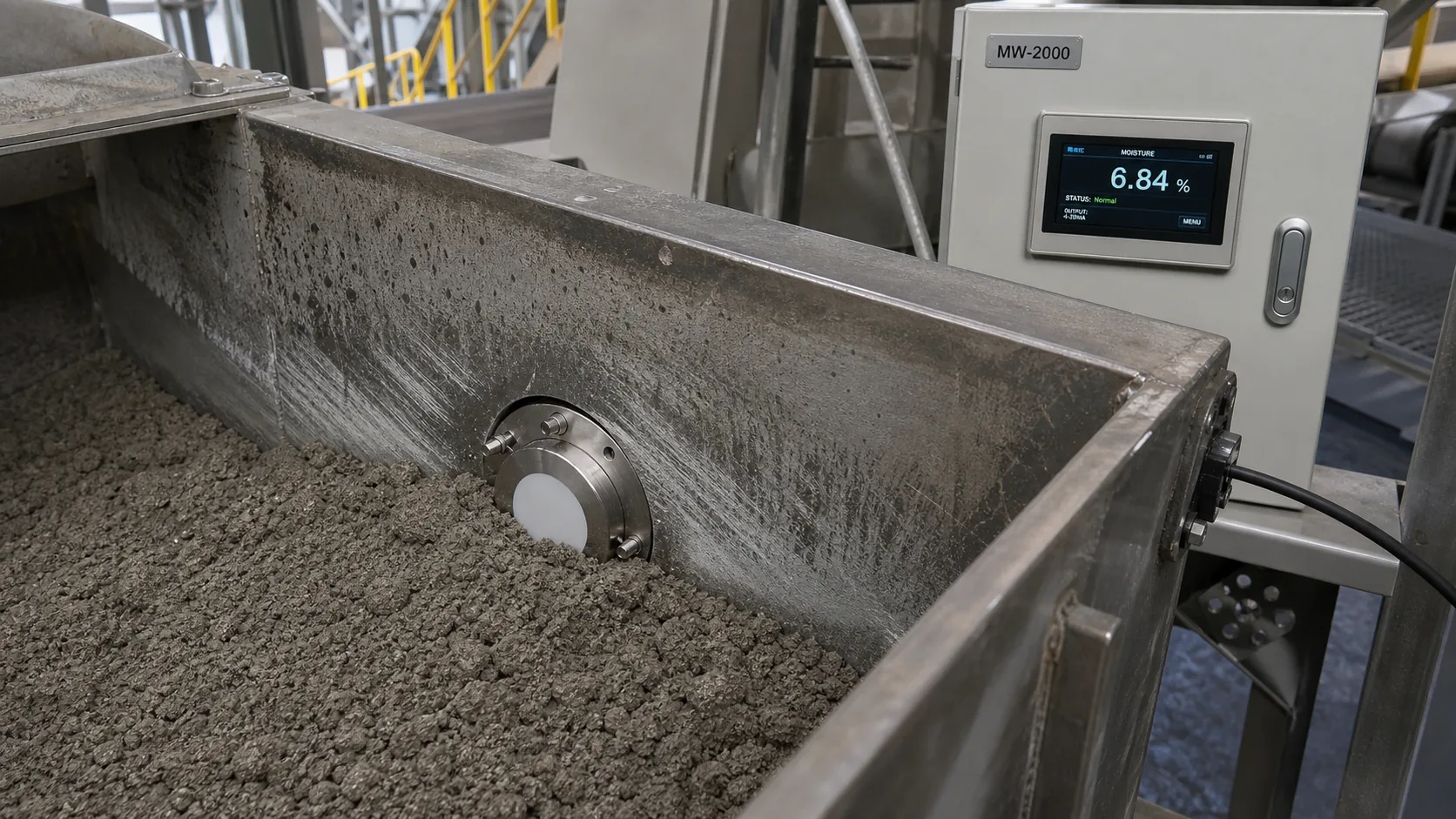
Performance depends on the material, reference method, operating range and installed configuration described in the project.
Map the complete batch cycle
Identify filling, dry mix, liquid addition, wet mix, discharge and cleaning states. Decide where the moisture estimate becomes stable enough for action.
Control only from a valid window
Enable correction when material contact, mixer state and signal quality are valid. Apply limits to one-step addition and handle short or abnormal batches safely.
Manage recipes and raw-material carryover
Recipe, aggregate moisture, recycled material, temperature and batch size can change the relationship. Version the approved logic and group calibrations when justified.
Verify the finished decision
Compare independent samples or downstream quality with the locked control strategy. Report water addition, final window, alarms and manual overrides for each batch.
Stage the mixer loop from observe to automatic
First trend the measurement without changing the recipe, then test advisory additions, supervised automatic dosing and only then approved closed-loop operation. Define mixer fill state, valid reading window, water-addition limit, mixing delay, interlocks and manual fallback so a bad value cannot create repeated additions.
Before you act
Engineering checklist
- Map cycle states
- Define valid control window
- Limit automatic correction
- Version recipe parameters
- Record manual overrides
- Verify independent batches