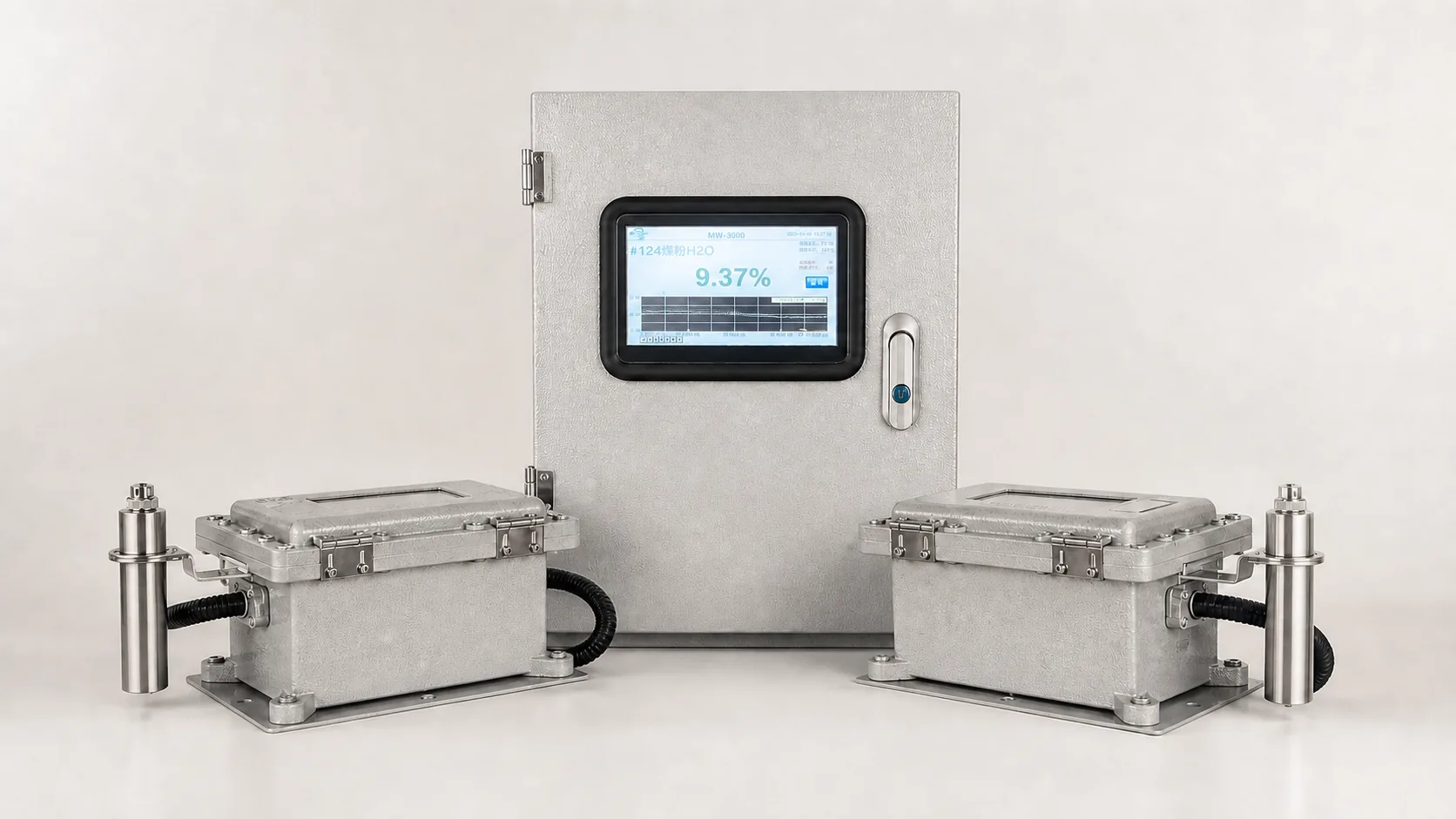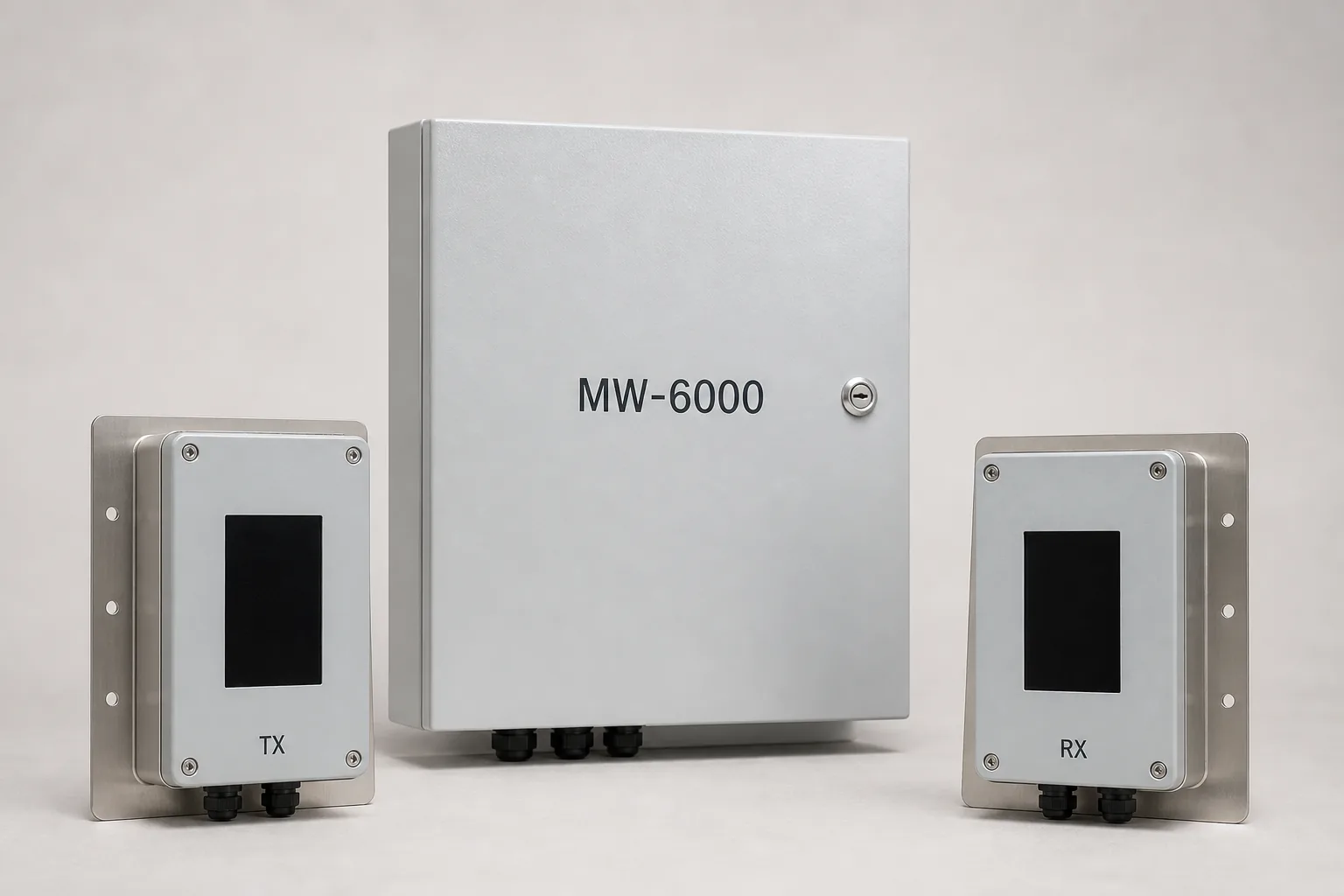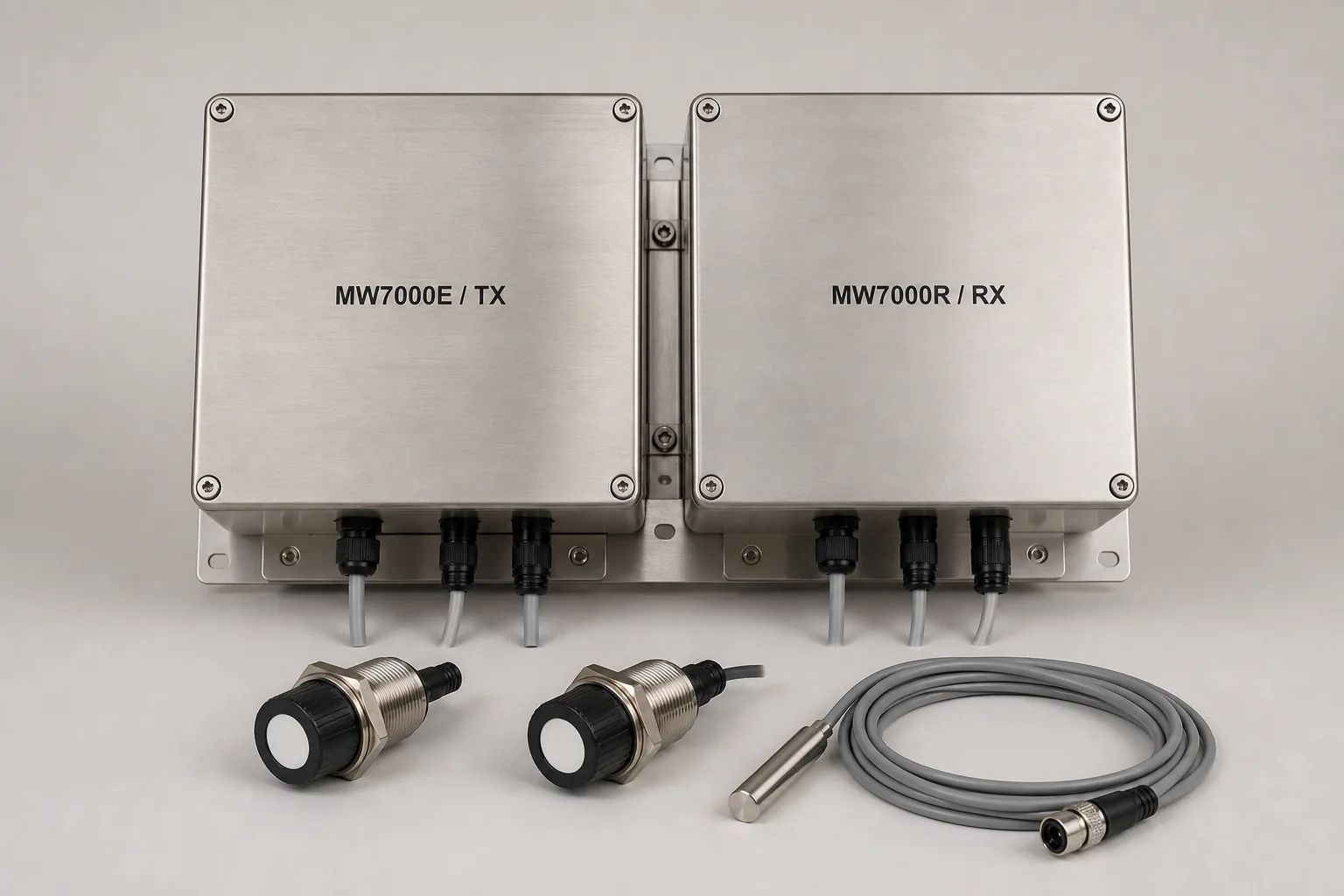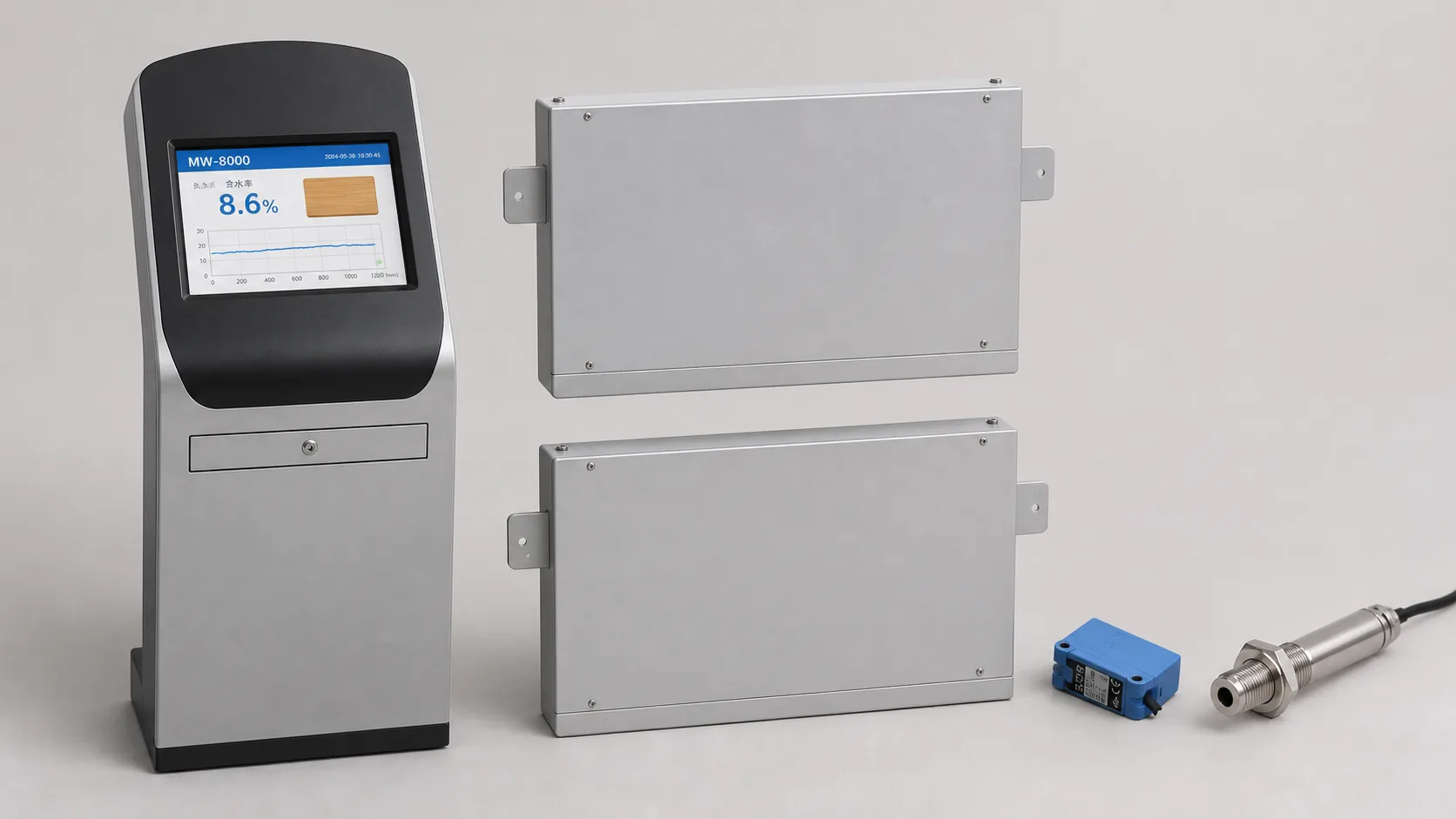
Performance depends on the material, reference method, operating range and installed configuration described in the project.
Define the measurement path
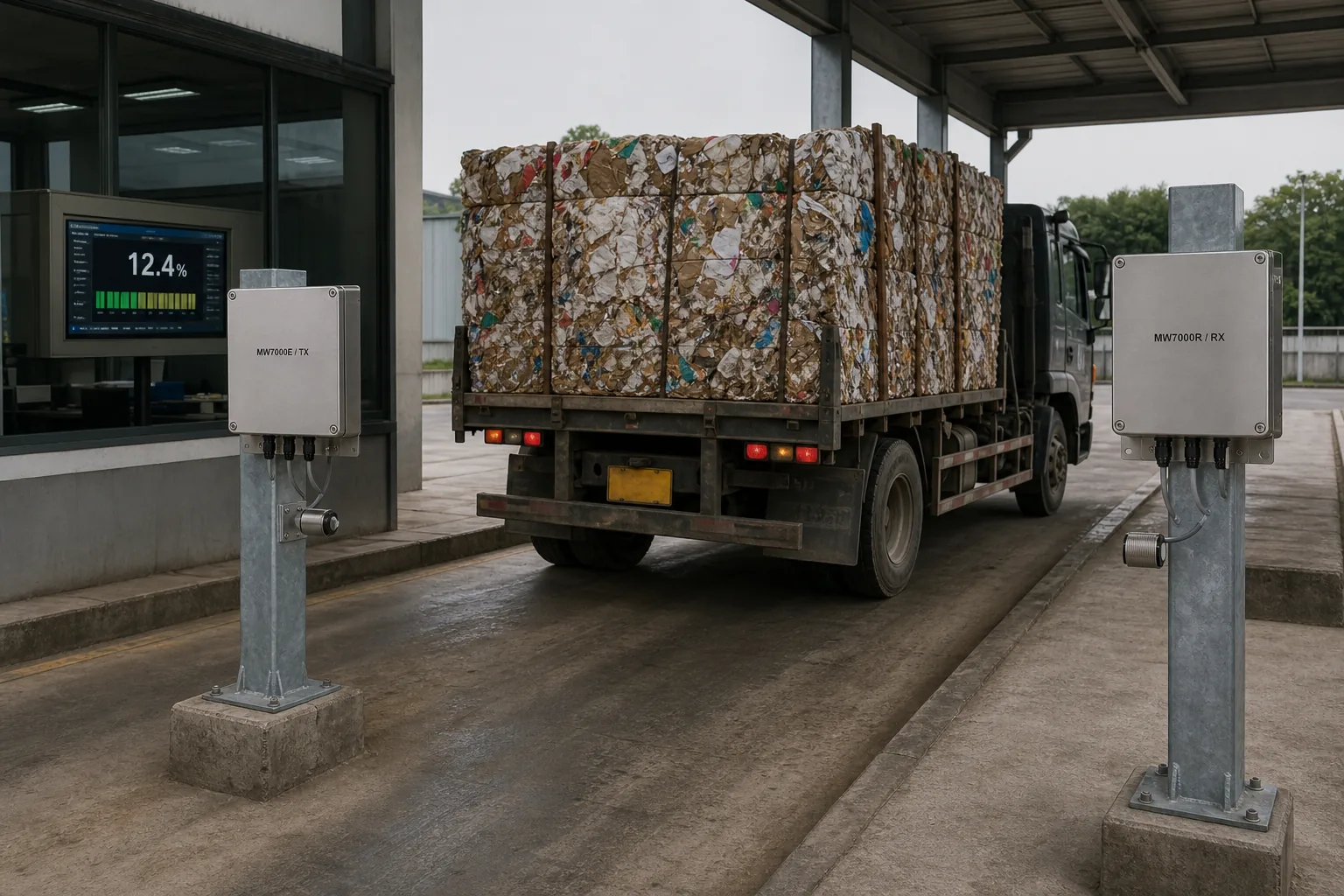
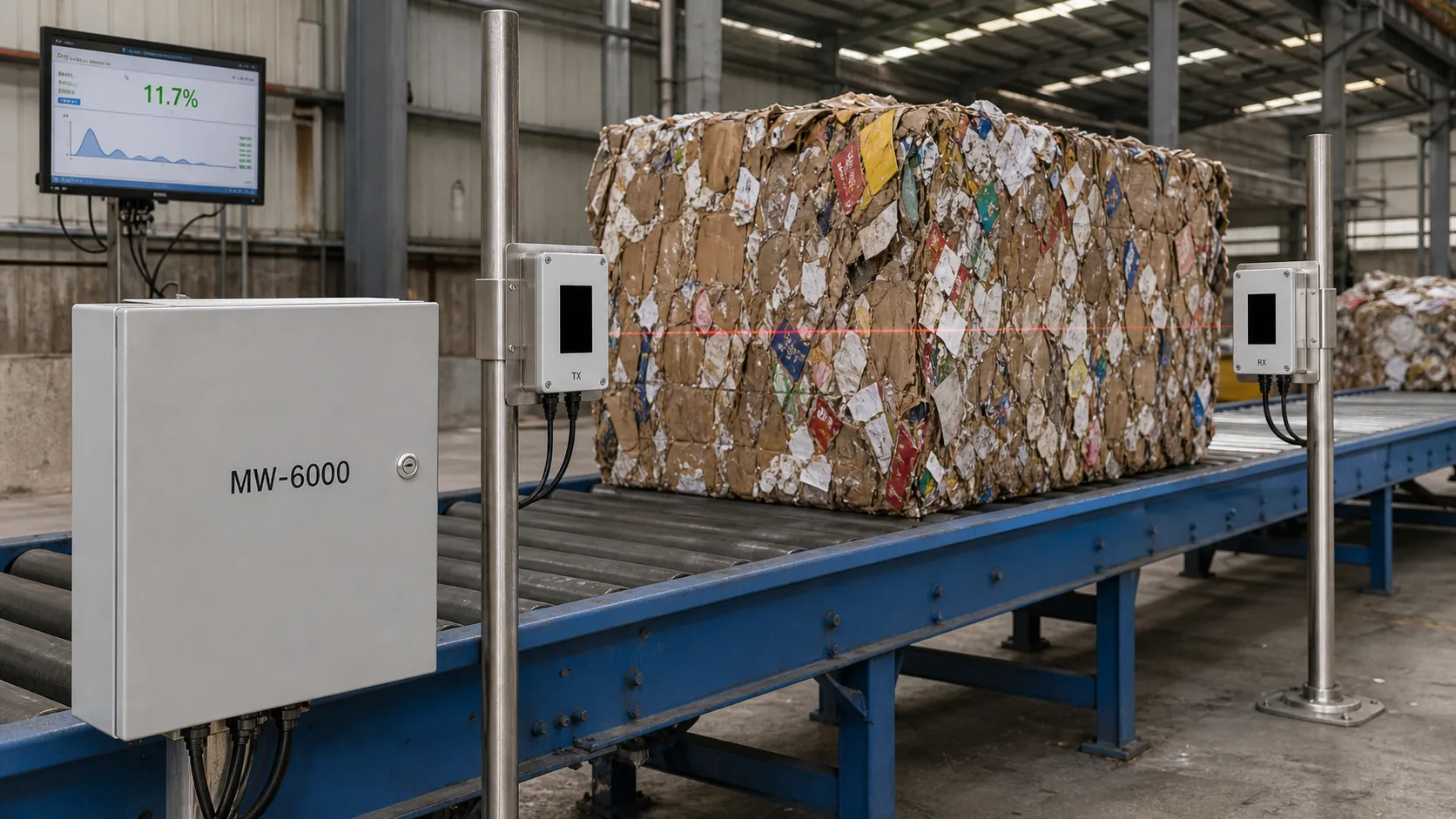
Document where the transmitter, receiver and material sit, including path length, active width and the portion of the load that is not observed.
Separate moisture from path variation
Density, voids, thickness, compression, distance and temperature can change the response. Stabilise them, measure them or include their range in the model and validation.
Match coverage to the load
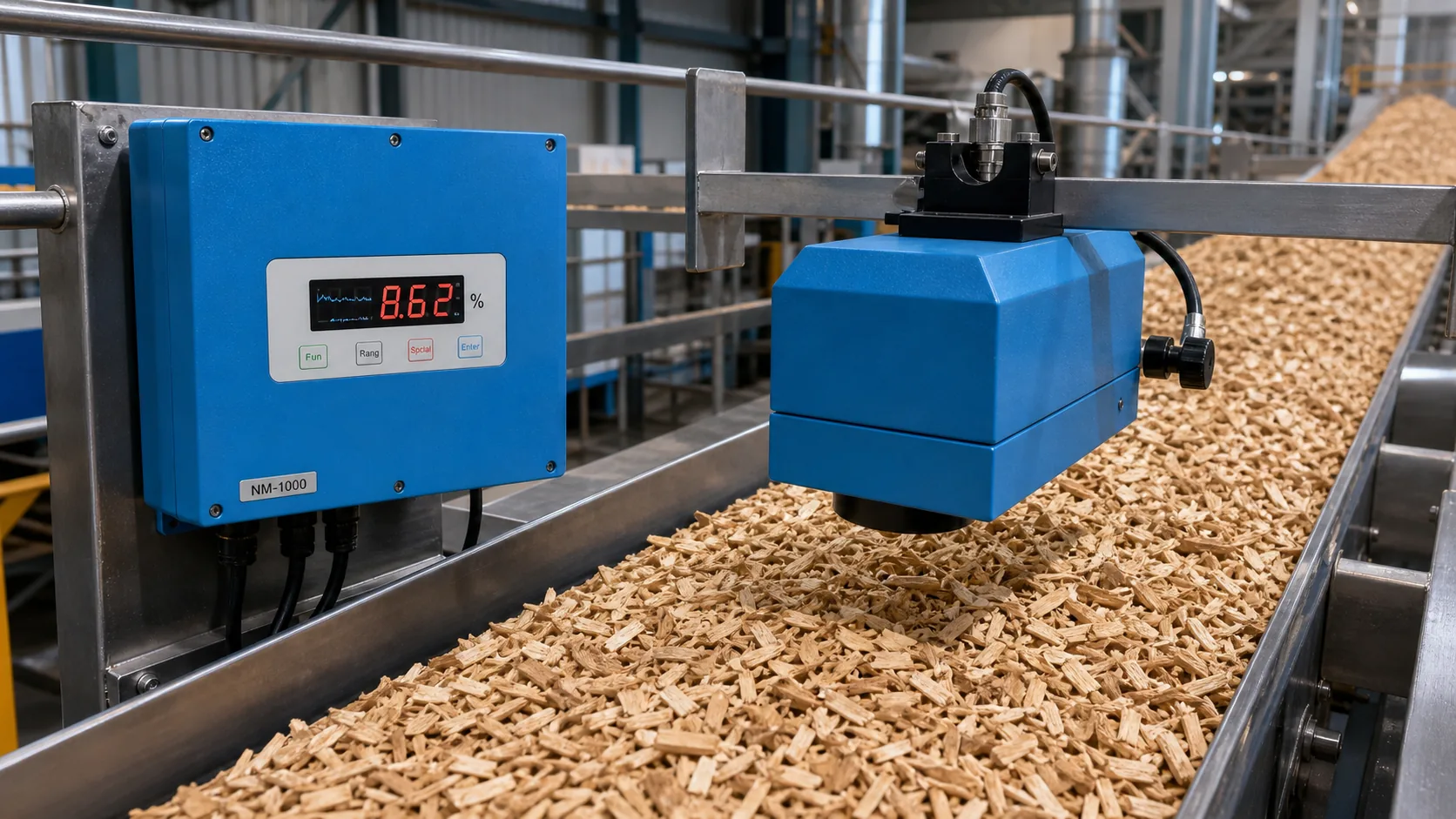
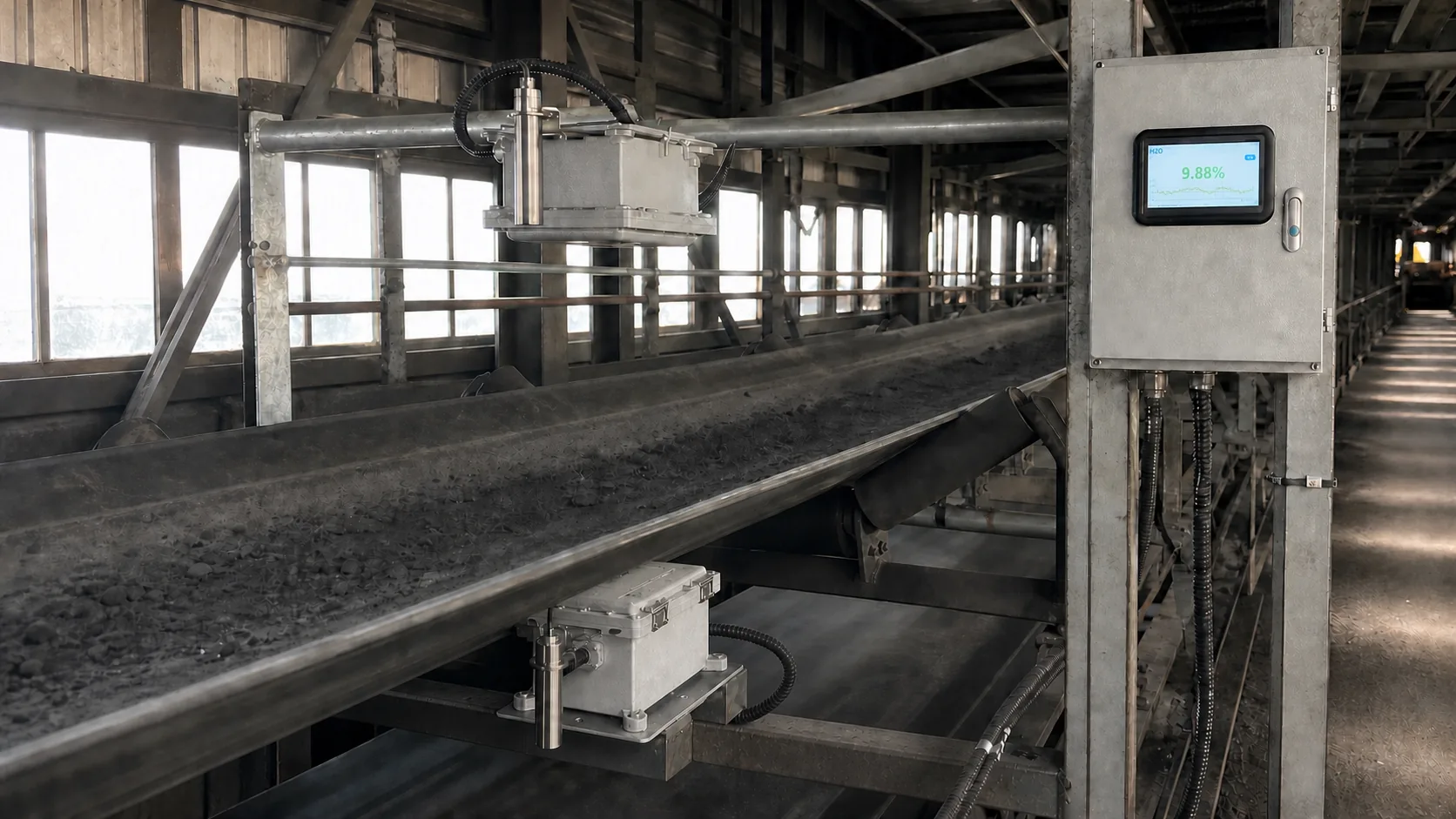
A conveyor bed may use one stable path; a bale or truck may need multiple positions or sections; a board line may need width-wise coverage and product tracking.
Create a quality state as well as a value
No material, partial coverage, misalignment, excessive gap and out-of-range conditions should be visible to the PLC and operator rather than converted into an ordinary moisture number.
Set geometry and safety gates
Define transmitter/receiver separation, alignment tolerance, minimum coverage, maximum depth/density range, guarding and safe access. Mark partial loads, blocked paths and geometry outside validation as invalid. Transmission describes the signal path, not automatic hazardous-area suitability or guaranteed compensation for every material change.
Before you act
Engineering checklist
- Draw transmitter and receiver positions
- Define minimum material coverage
- Record density and thickness range
- Identify unmeasured regions
- Design multi-position coverage if needed
- Send validity status with the value