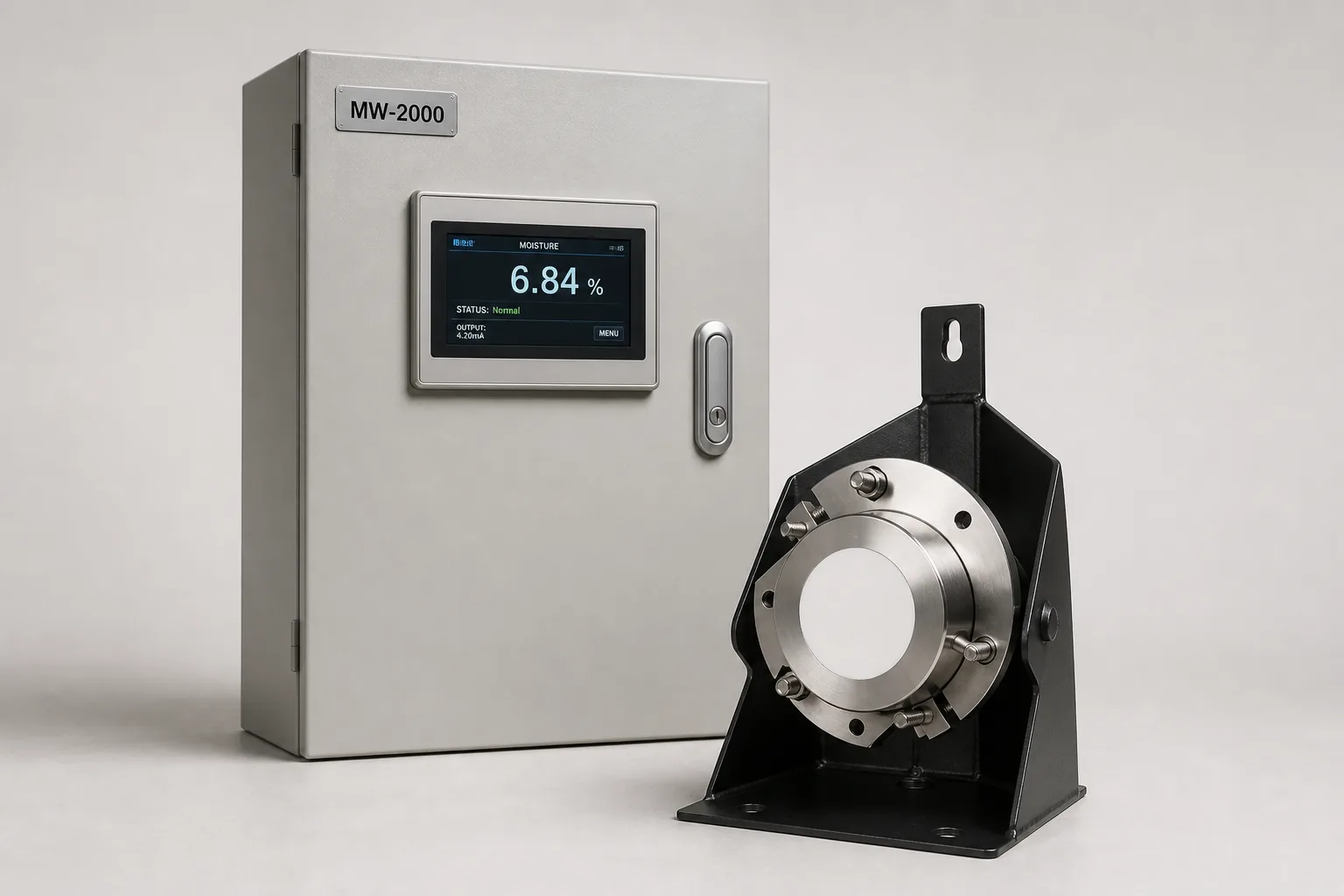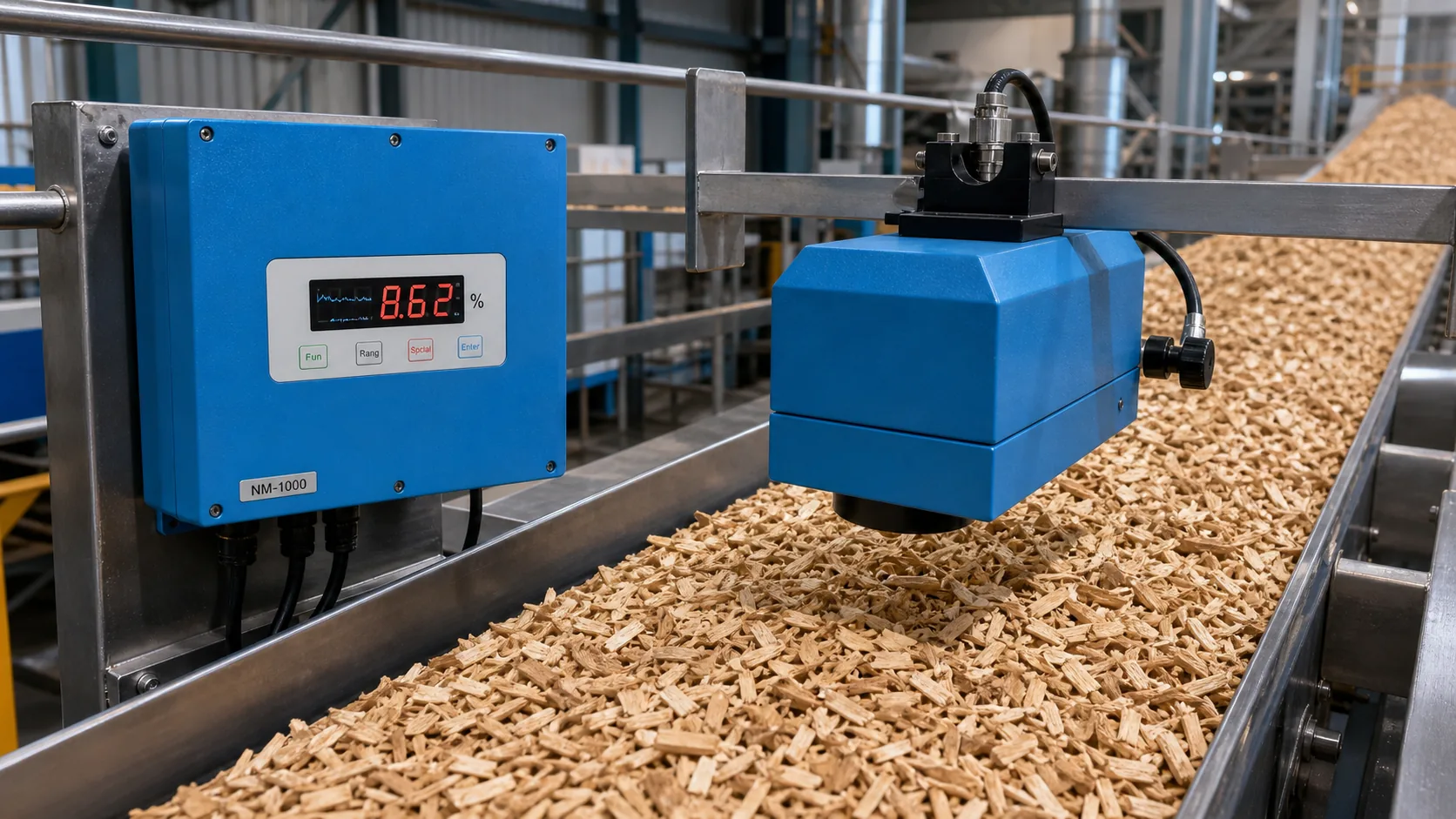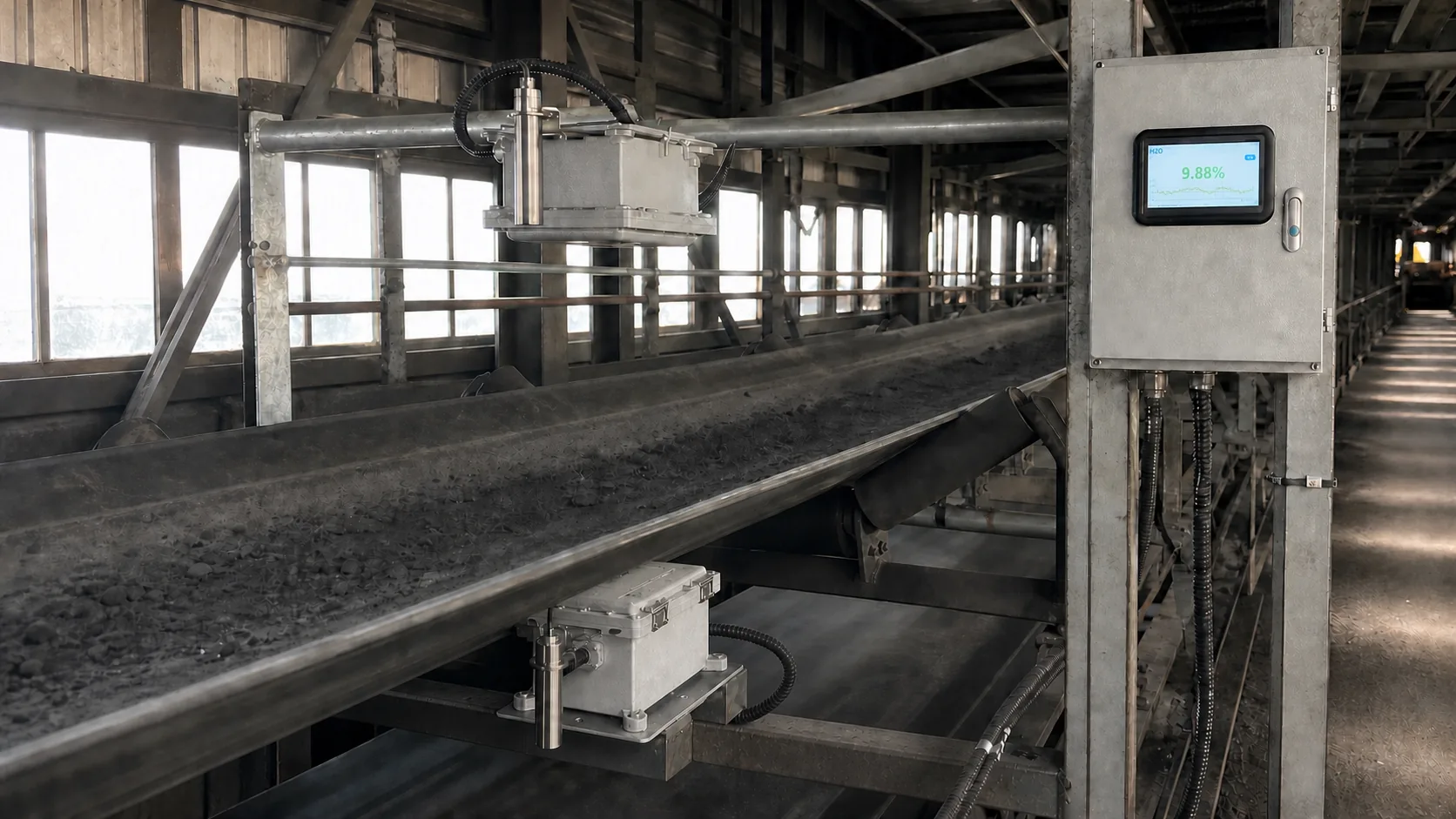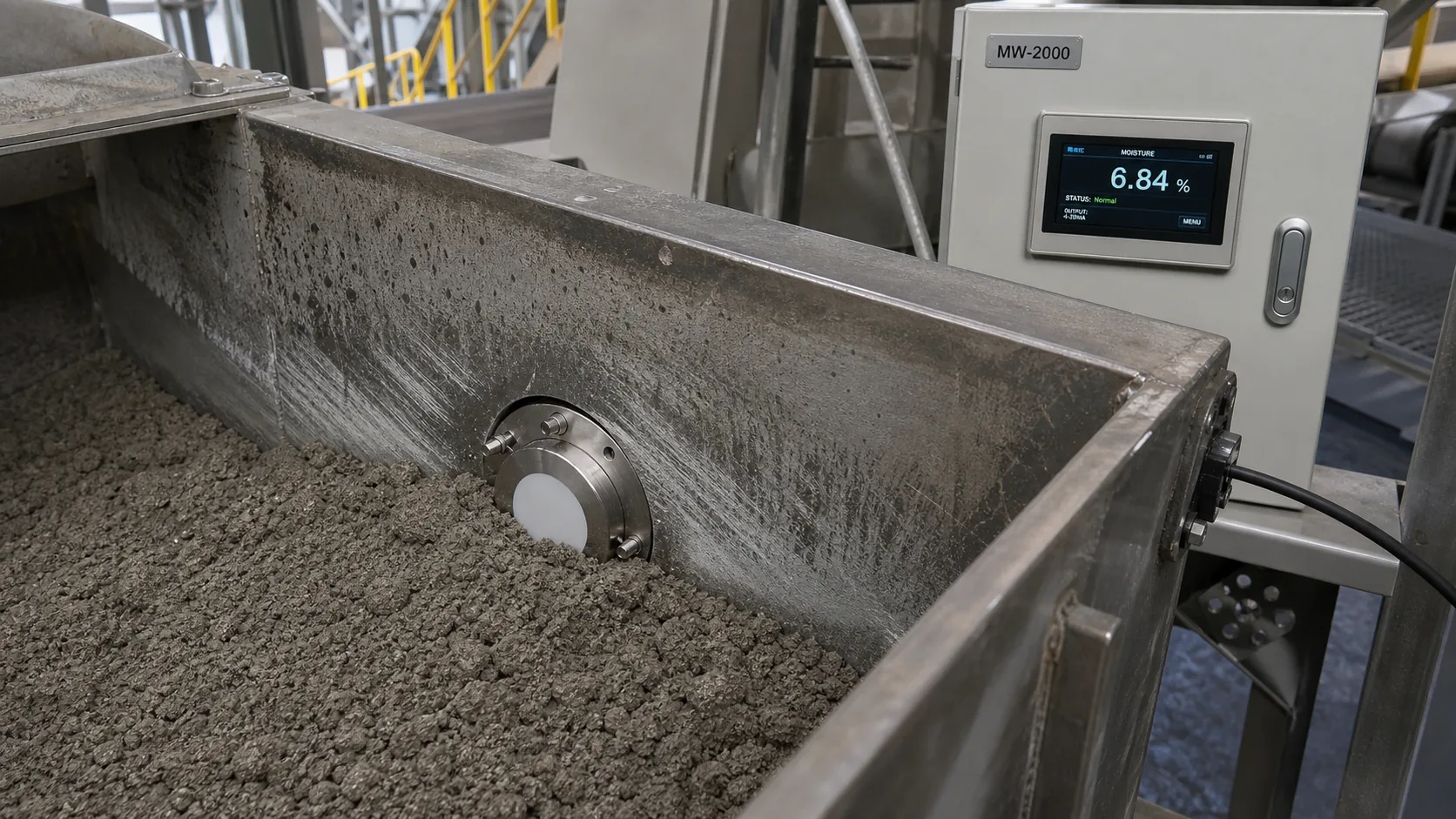
Performance depends on the material, reference method, operating range and installed configuration described in the project.
Make material contact repeatable
The sensing face should see material rather than air, scraper gaps or intermittent splashes. Select a point with repeatable coverage through the useful part of the cycle.
Treat the wear face as part of the measurement
Abrasion, impact, build-up and polishing can alter the interface. Review wear protection, cleaning method and inspection access before fixing the location.
Choose the right process moment
In a mixer, readings during filling, dry mixing and liquid addition answer different questions. Define the stable calculation window and the delay before the control action.
Build a safe reference plan
Take representative samples at a stage that corresponds to the online window. Record recipe, batch, temperature, mixing time and added water during calibration and validation.
Approve the exact material interface
Document face material, seals, mounting recess, temperature, impact, abrasion, cleaning agent and inspection interval for the supplied configuration. A contact measurement route does not by itself establish food-contact compliance, hygienic suitability, corrosion resistance or hazardous-area approval; those reviews remain separate project gates.
Before you act
Engineering checklist
- Confirm continuous material contact
- Avoid blades and impact zones
- Define the measurement window
- Plan cleaning and wear inspection
- Match sample to mixer stage
- Test invalid and empty states