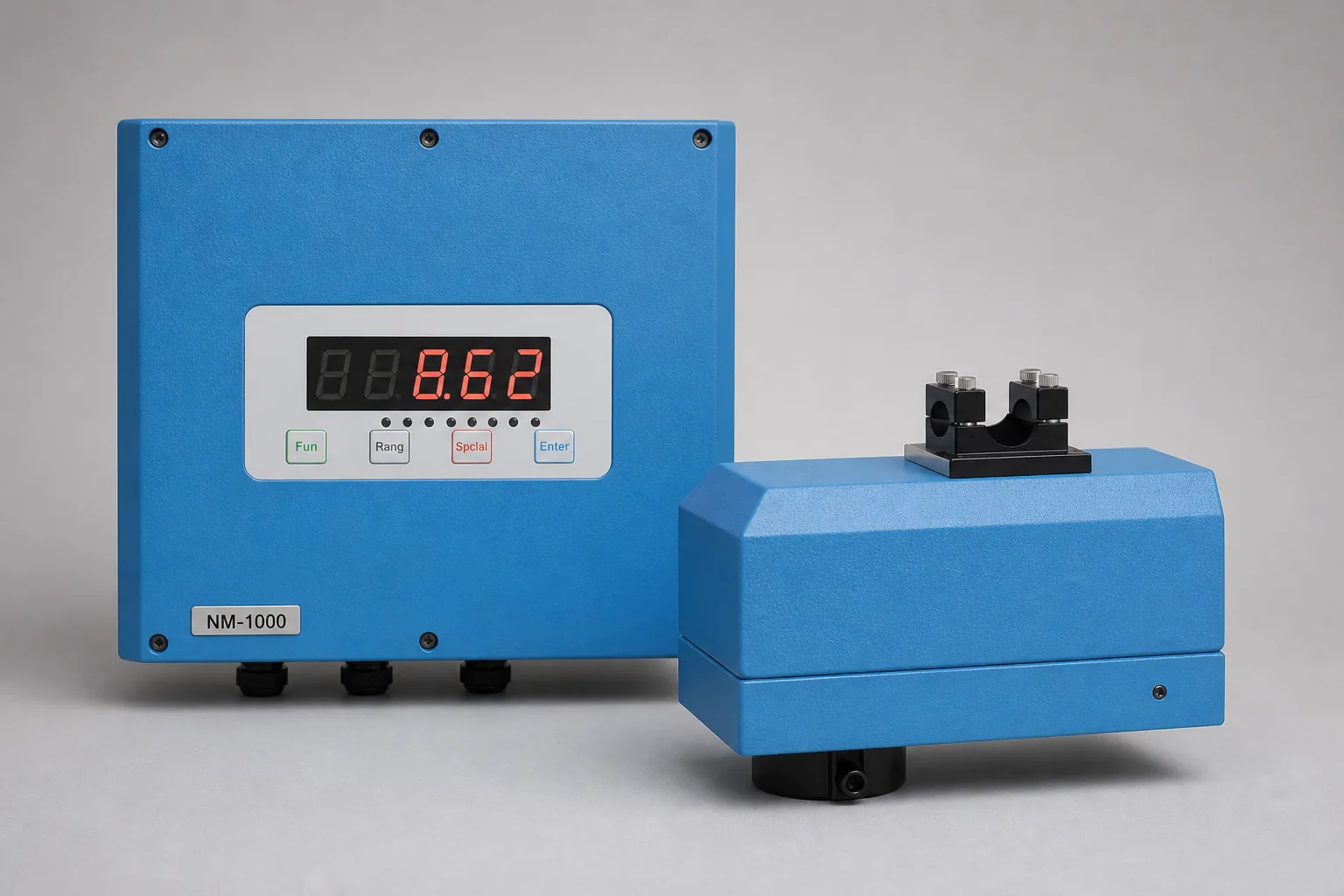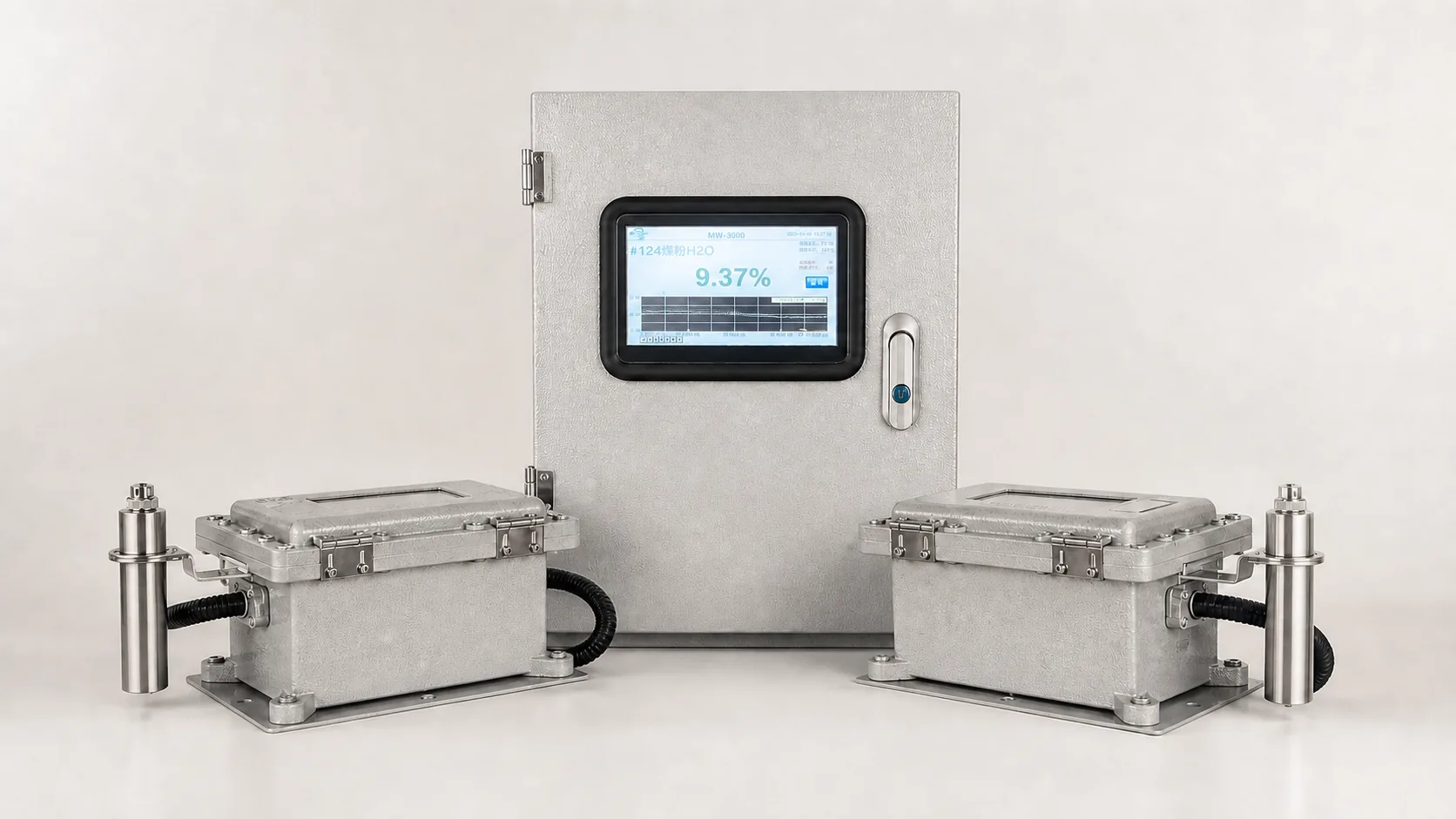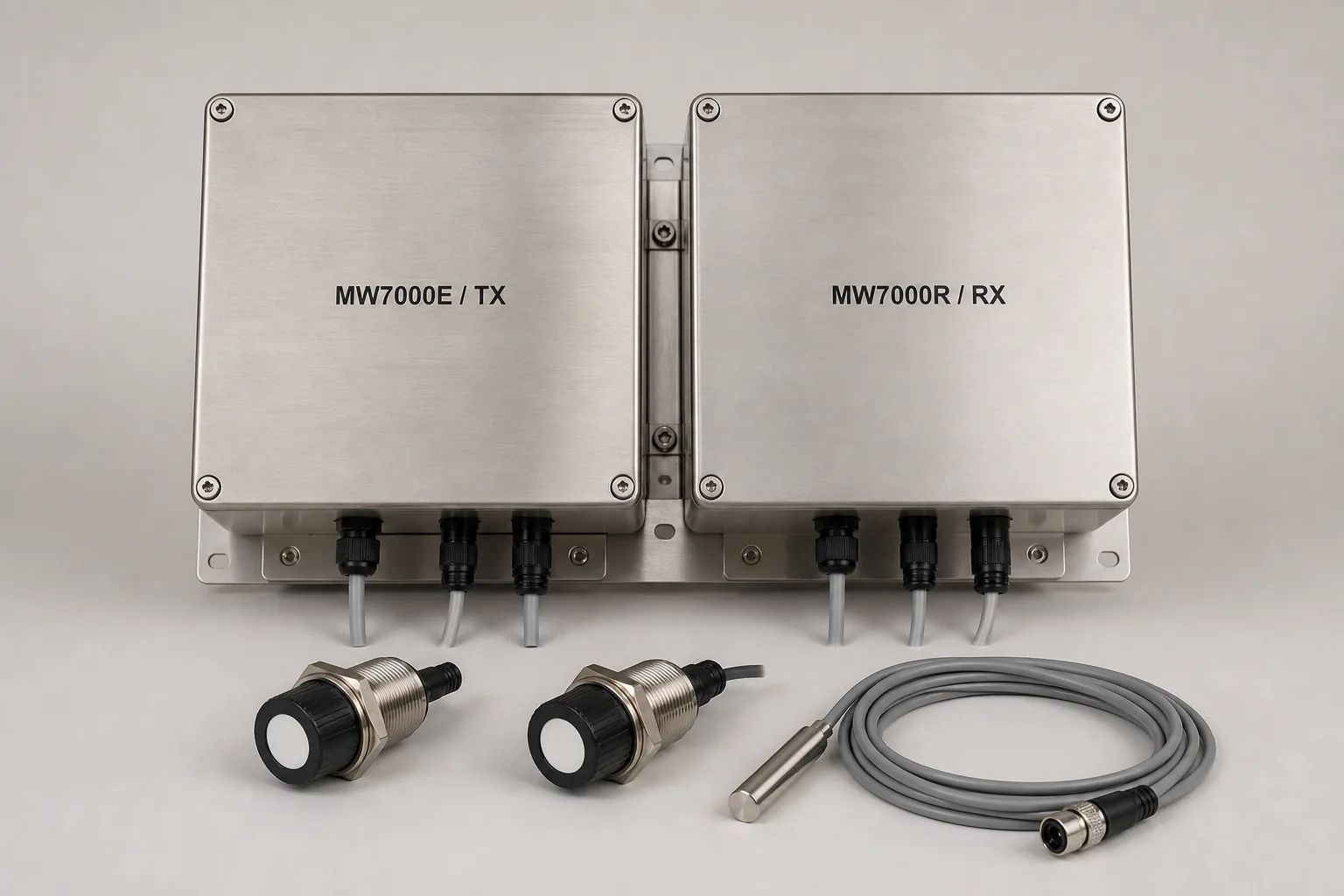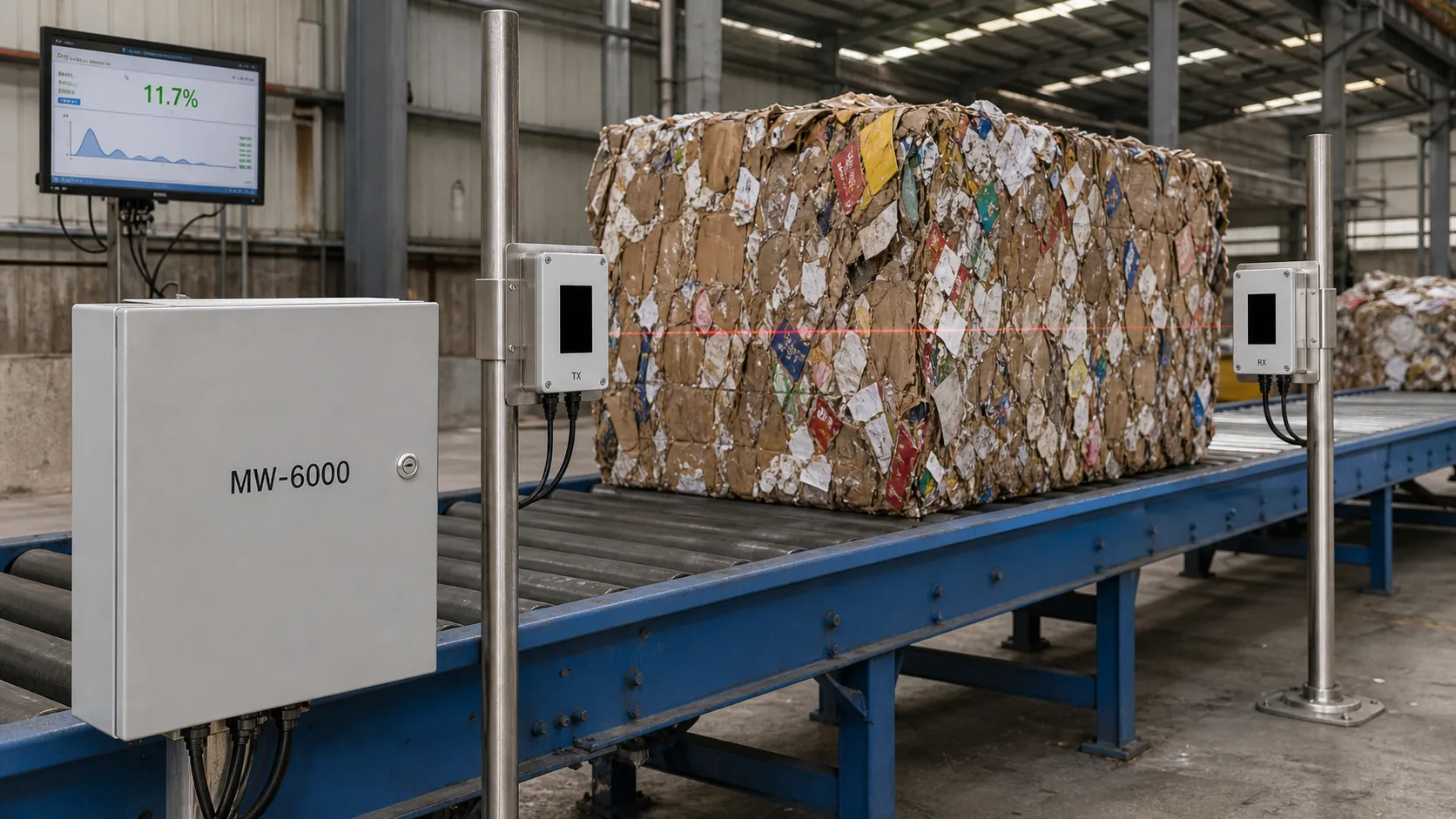
Performance depends on the material, reference method, operating range and installed configuration described in the project.
Production decision map
Connect a heterogeneous biomass stream to an authorised decision
Biomass moisture becomes operationally useful when lot identity, representative coverage, mass data and the approved calculation remain connected from delivery through process use or settlement.
Delivery → conveyor → storage or boiler → record
Source, species or fuel class, fines, storage history and weather can change within one delivery. Define the lot before averaging readings.
A small sample or exposed surface misses internal variability
Large chips, fines, voids and frozen or rain-wet material change both water distribution and presentation to the sensor.
Measure a formed stream or documented load sections
Select a point with consistent coverage before the operational decision. Time-align increments from the same stream and protect samples from moisture loss or gain.
Route, dry or adjust operation inside approved limits
Use valid-state rules for operational action. Settlement or energy calculations require the agreed mass source, basis and formula; moisture alone is not an energy guarantee.
Validate by source, season and material class
Use composite reference samples and an independent dataset. Retain inclusions, exclusions, averaging, formula version and approval when the result affects payment.
Classify material and load form
Separate chips, bark, pellets, fibres, loose loads and bales. Record species or source, particle size, fines, temperature, density and seasonal range.
Choose surface or bulk coverage
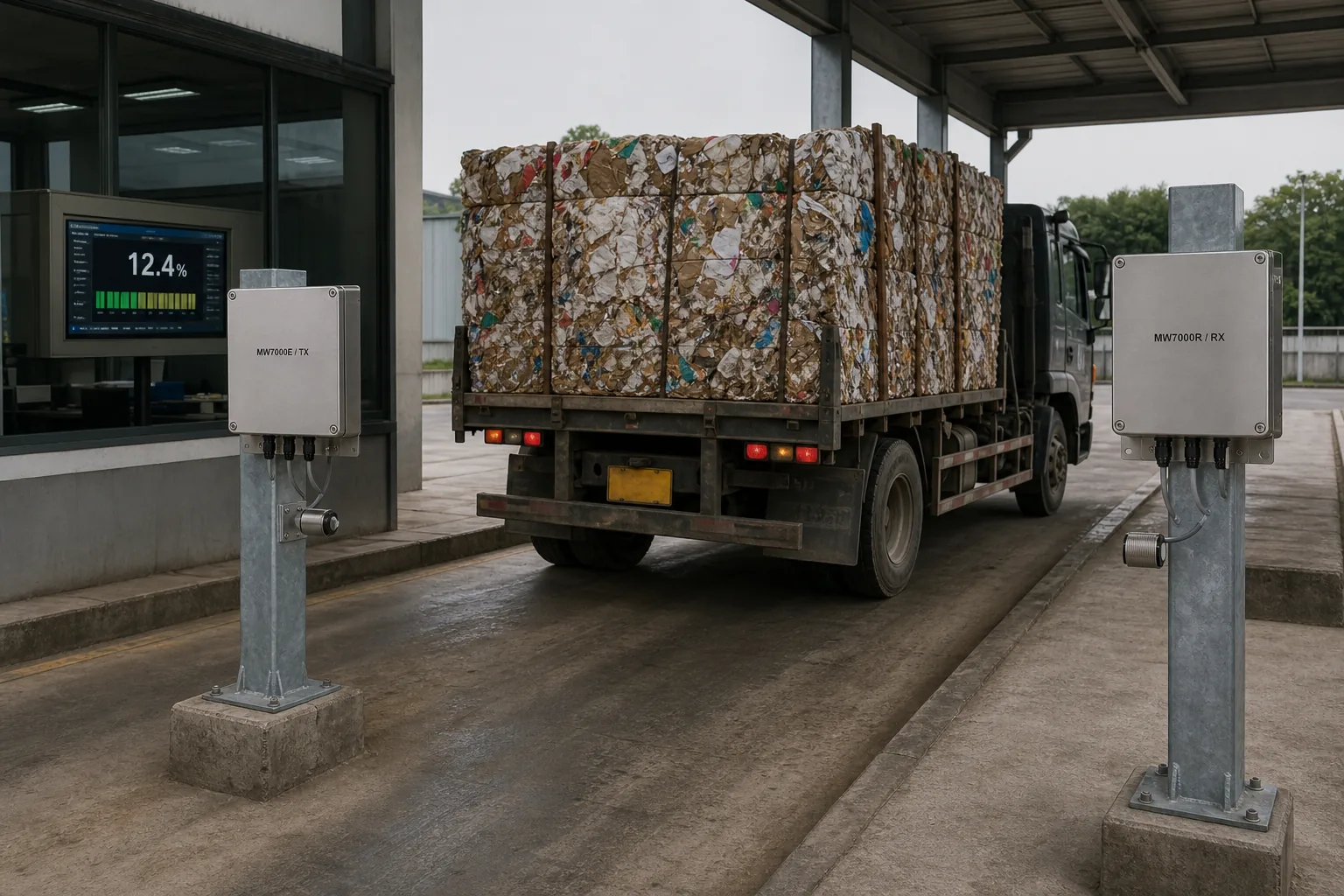
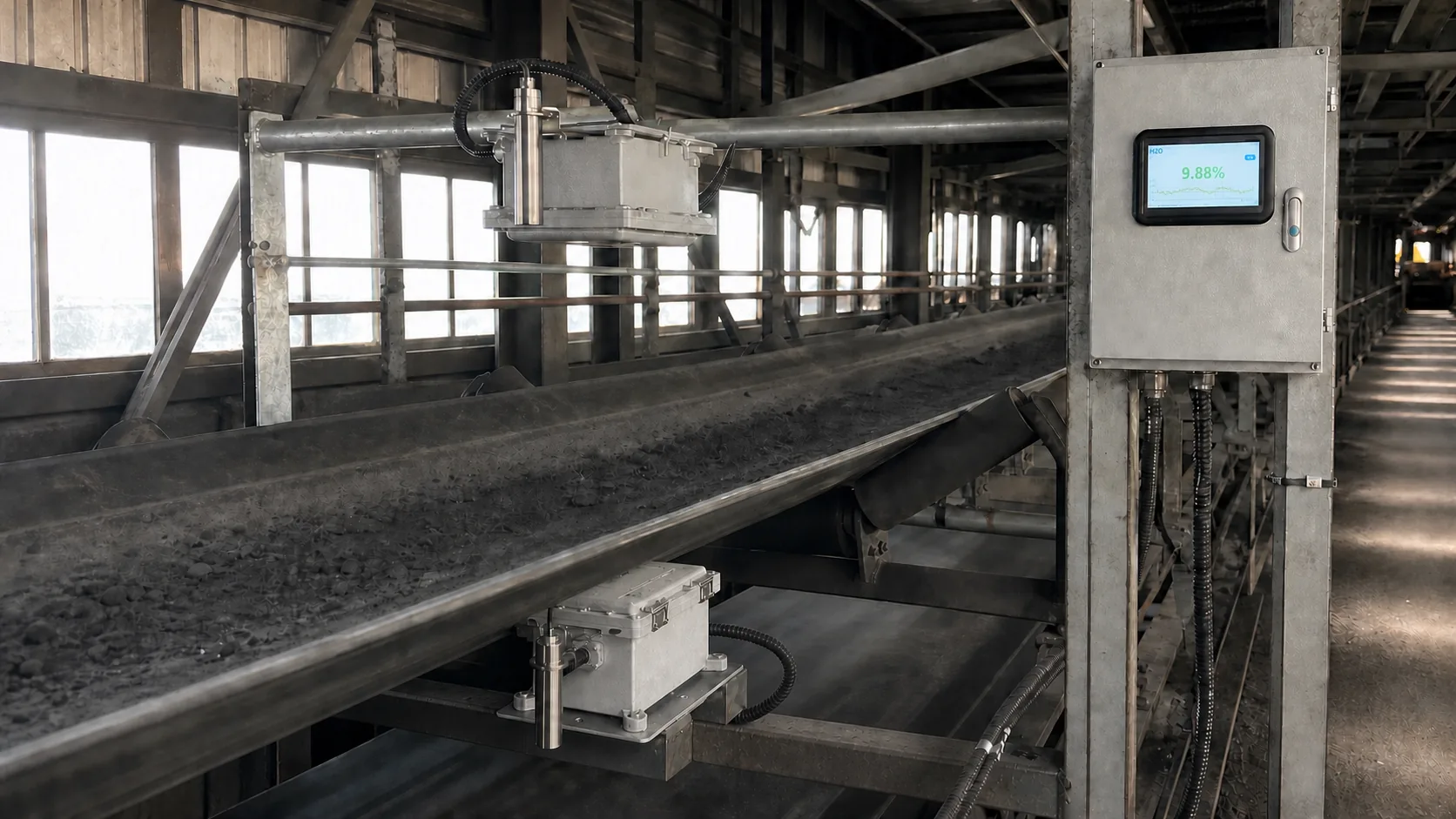
NIR can support a representative moving surface; transmission paths can observe a larger bed, bale or load section. Select coverage according to receiving or process risk.
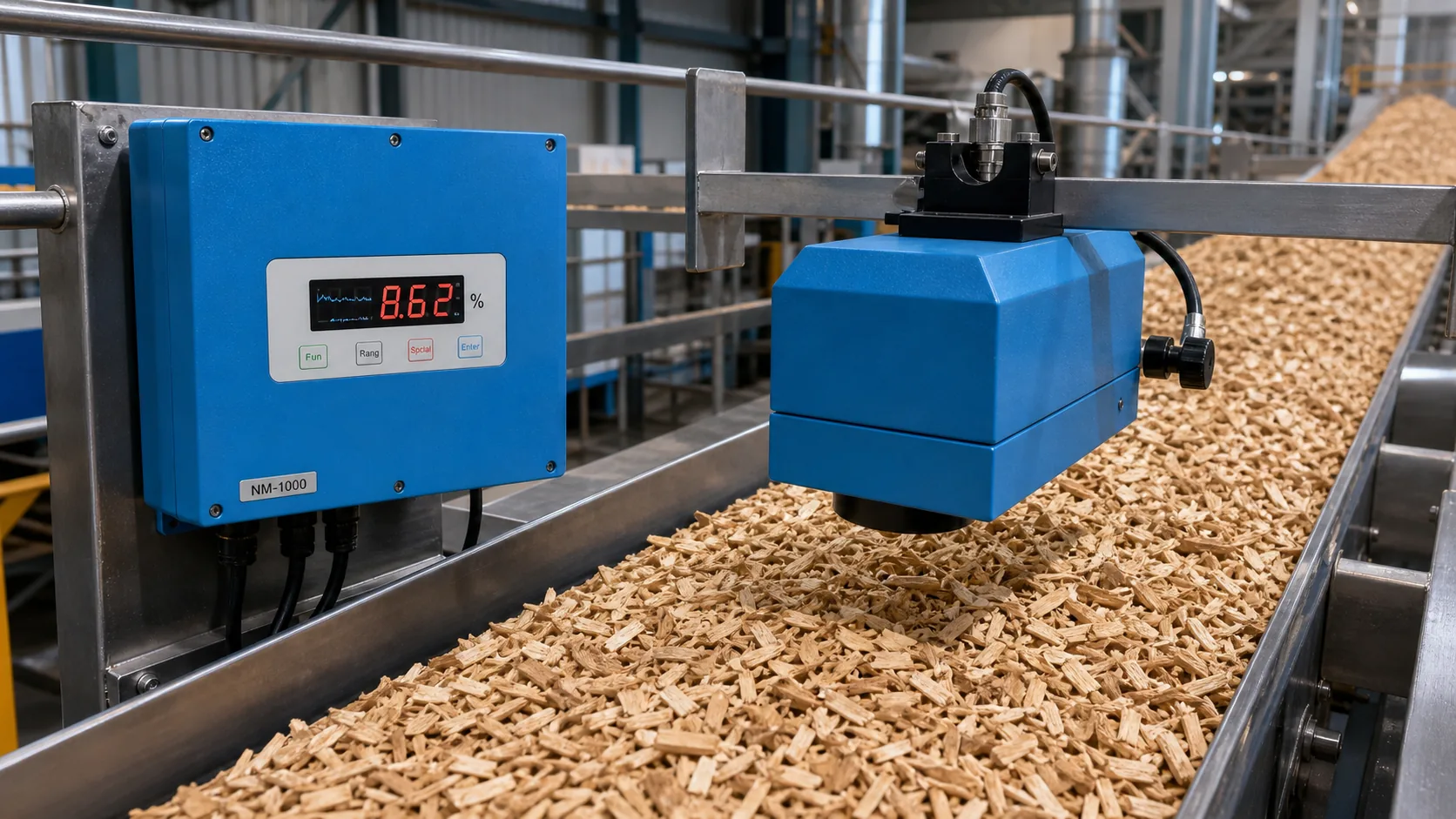
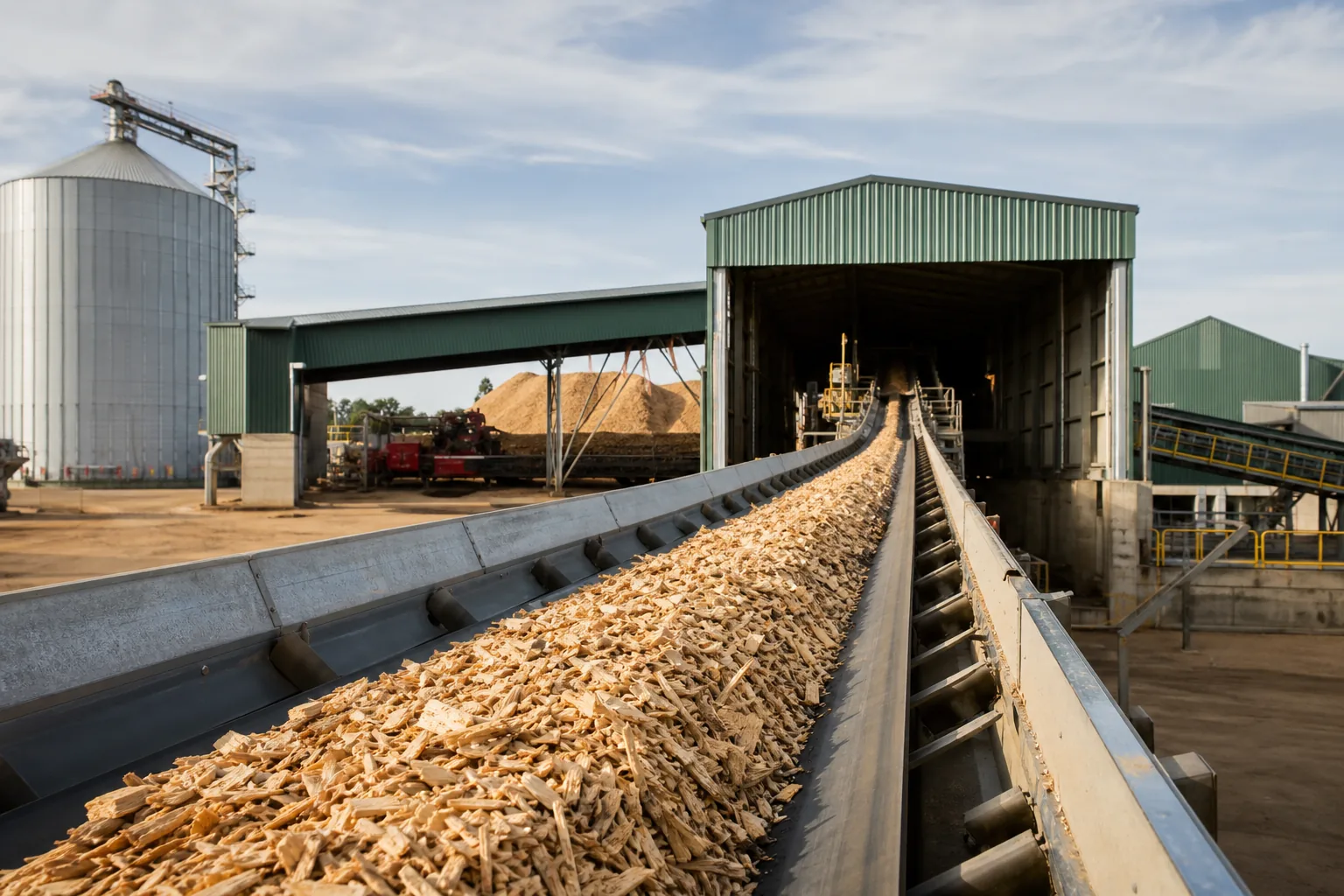
A formed moving stream can support continuous observation, but seasonal composition, density and particle-size ranges still belong in the validation dataset.
Align with the reference basis
Confirm total-moisture method, sample preparation and wet or dry basis. Multi-increment sampling is essential for heterogeneous loads.
Connect data to the decision
For drying, account for transport delay and control constraints. For settlement, approve load summary, recheck and exception rules before commercial use.
Lock the calculation and contract boundary
Record whether moisture is wet or dry basis, the reference method, mass source, sampling population, averaging, exclusions, formula version and approval. Energy or payment calculations may use additional agreed inputs; a moisture reading alone is not an energy-content guarantee or settlement authority.
Before you act
Engineering checklist
- Classify biomass form
- Define wet or dry basis
- Record density and temperature
- Match scan to load
- Use multi-increment reference
- Approve drying or settlement rule