← Back to all industries

Industries and materials

Biomass and bioenergy

Wood chips, sawdust, bark and pellets vary by source, particle size and storage history. Effective measurement links representative coverage to storage, drying, combustion and settlement decisions.

Contact an engineer
Biomass and bioenergy

Process scenes and measurement points

Follow the material from moisture risk to control action

Each route starts with a real material flow. Define the risk, choose a representative measurement point and decide what the validated result will change.

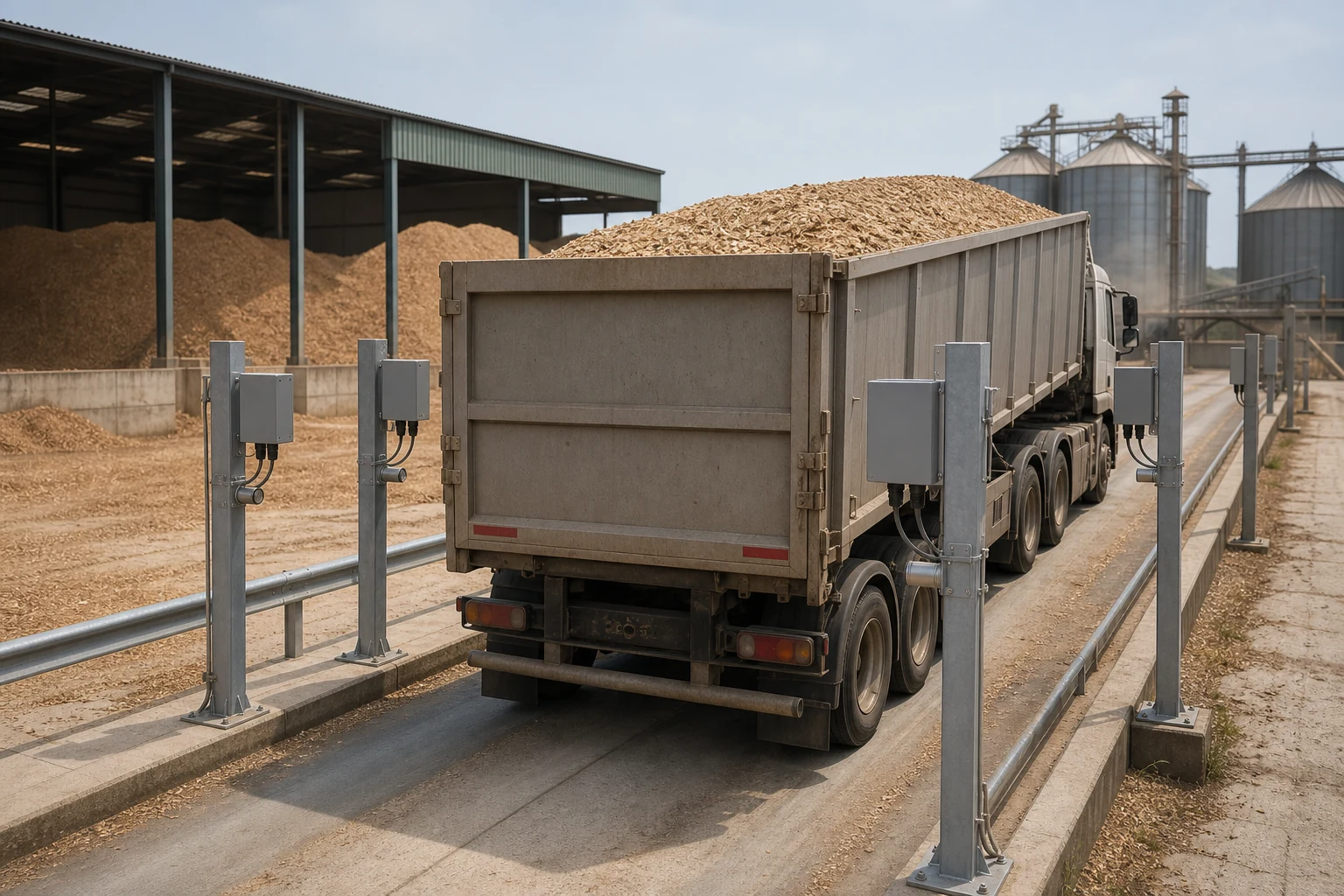
Truck or conveyor receiving
01Receiving and storage control

Truck or conveyor receiving

Material
Wood chips, bark, sawdust and mixed biomass
Moisture risk
Source, particle size, rain and frozen material create non-uniform incoming moisture.
Measurement point
Planned vehicle sections or a stable covered conveyor before the storage-routing decision.
Control action
Route material to storage, drying, inspection or faster use according to site rules.
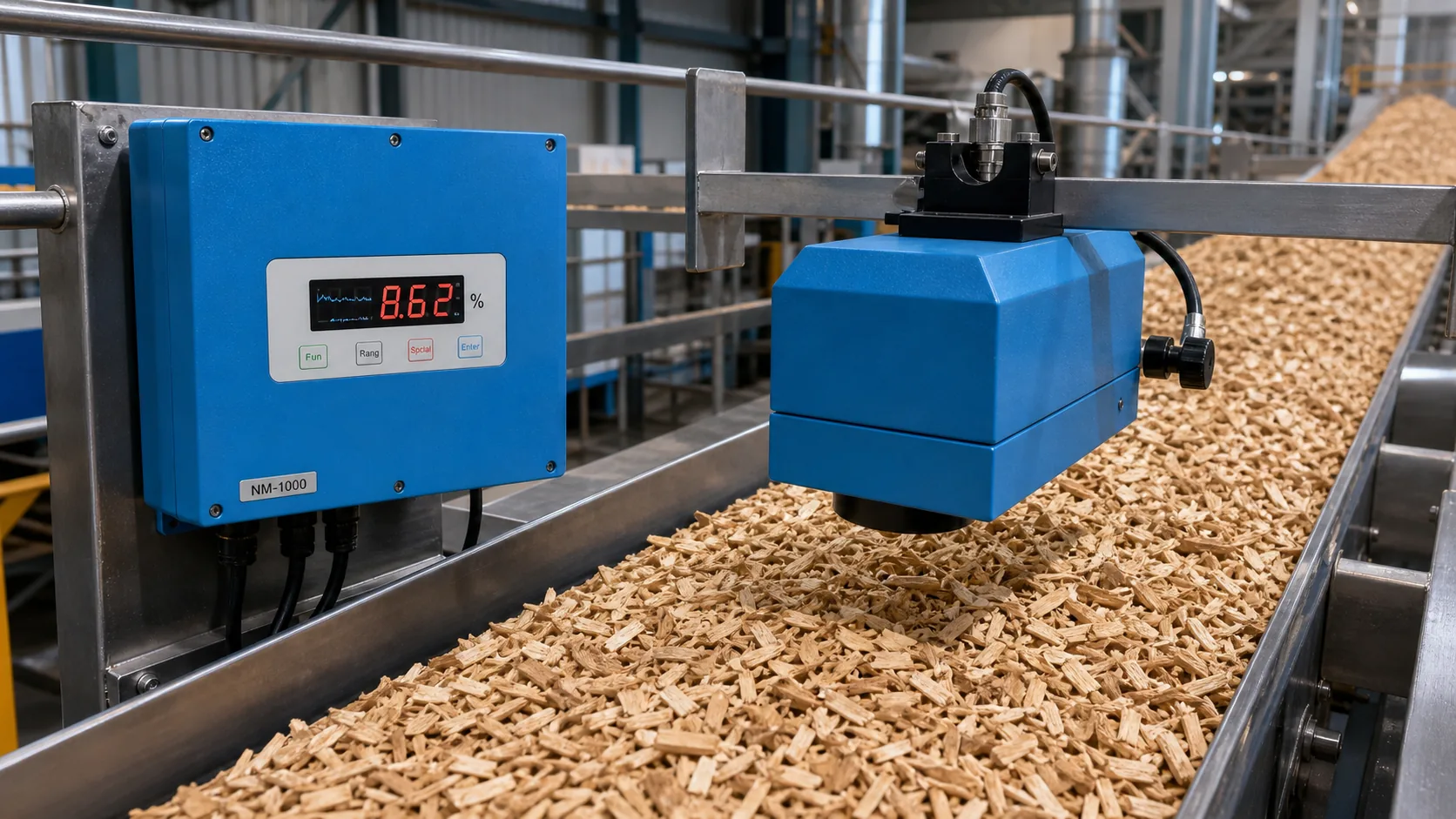
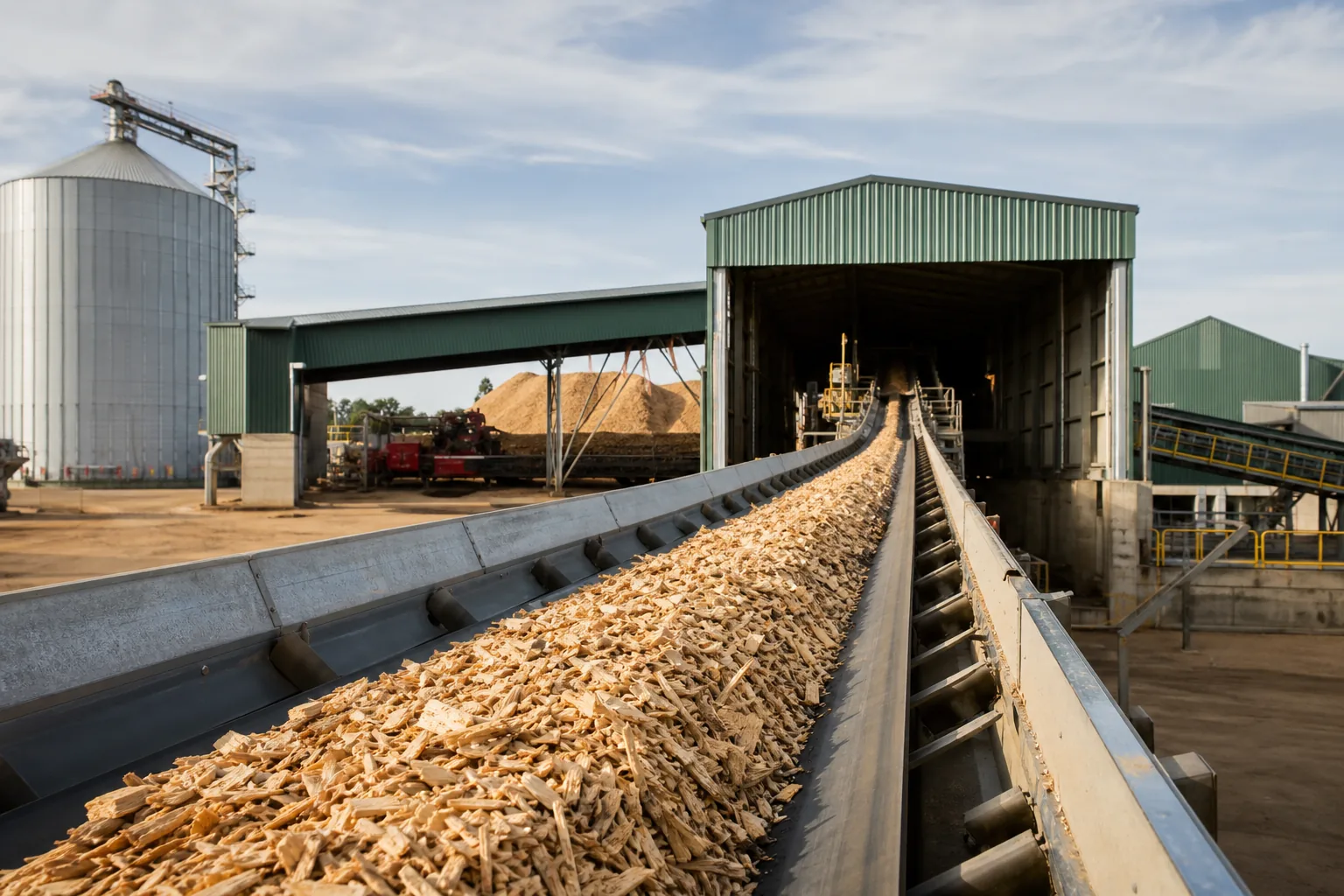
Dryer feed and discharge
02Dryer optimisation

Dryer feed and discharge

Material
Wood chips, sawdust and prepared biomass
Moisture risk
Wet feed raises energy demand; over-drying loses yield and can destabilise downstream operation.
Measurement point
A consistent bed before or after the dryer with sensor averages paired to the delayed product sample.
Control action
Trial bounded dryer changes and verify energy and downstream quality before automation.
Fuel use and commercial settlement
03Fuel and settlement consistency

Fuel use and commercial settlement

Material
Fuel chips, pellets and bioenergy feedstock
Moisture risk
Moisture changes dry matter and usable energy, while poor lot coverage creates settlement disputes.
Measurement point
A validated lot-representative point at receiving or loadout using the agreed reporting basis.
Control action
Calculate dry matter or energy, segregate off-spec lots and retain traceable settlement records.

Practical moisture testing

How to measure biomass moisture from receiving to energy conversion

Wood chips, sawdust, bark and pellets vary by source, particle size and storage history. Effective measurement links representative coverage to storage, drying, combustion and settlement decisions.

01

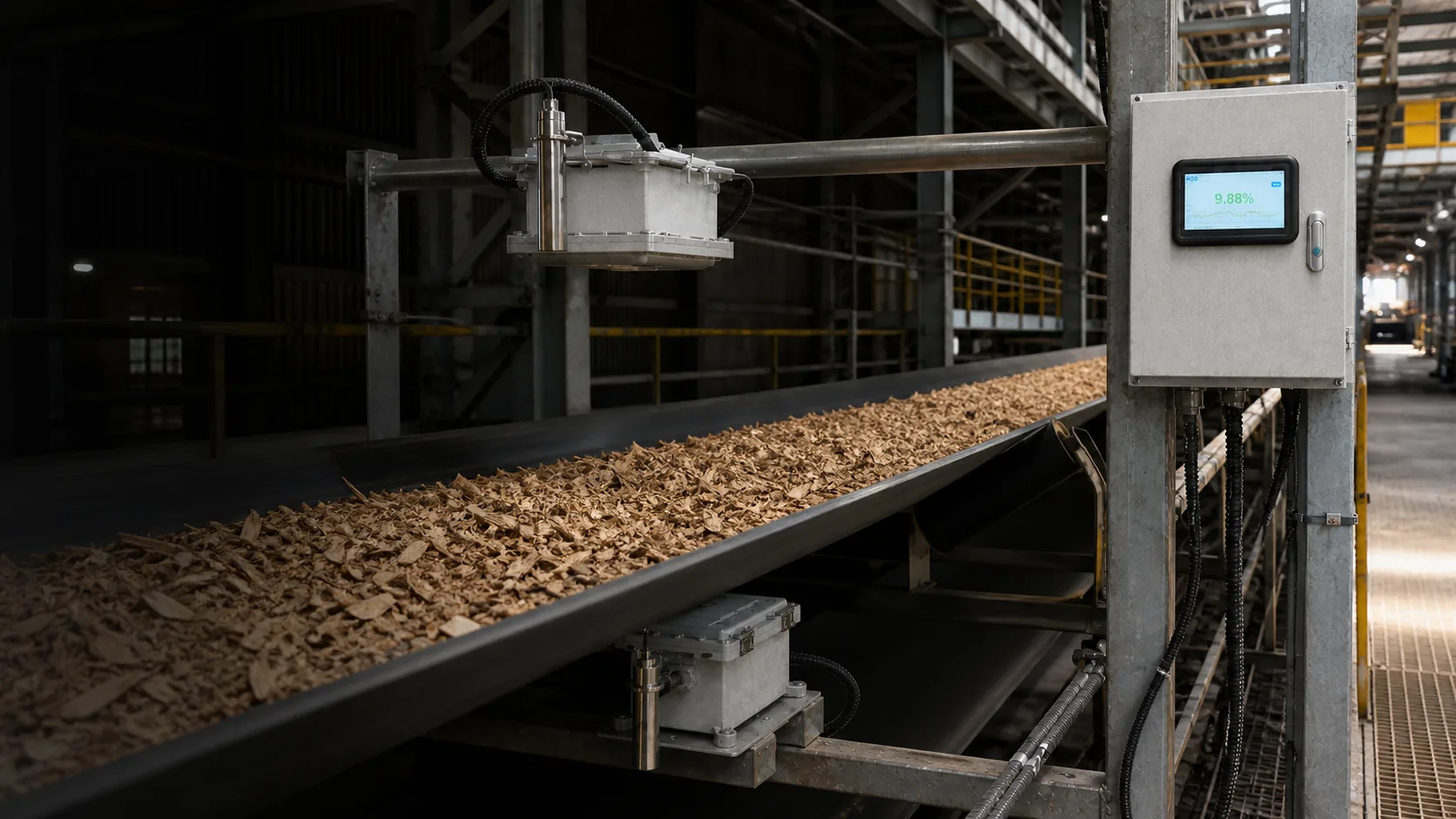
How do you measure wood-chip or sawdust moisture on a conveyor?

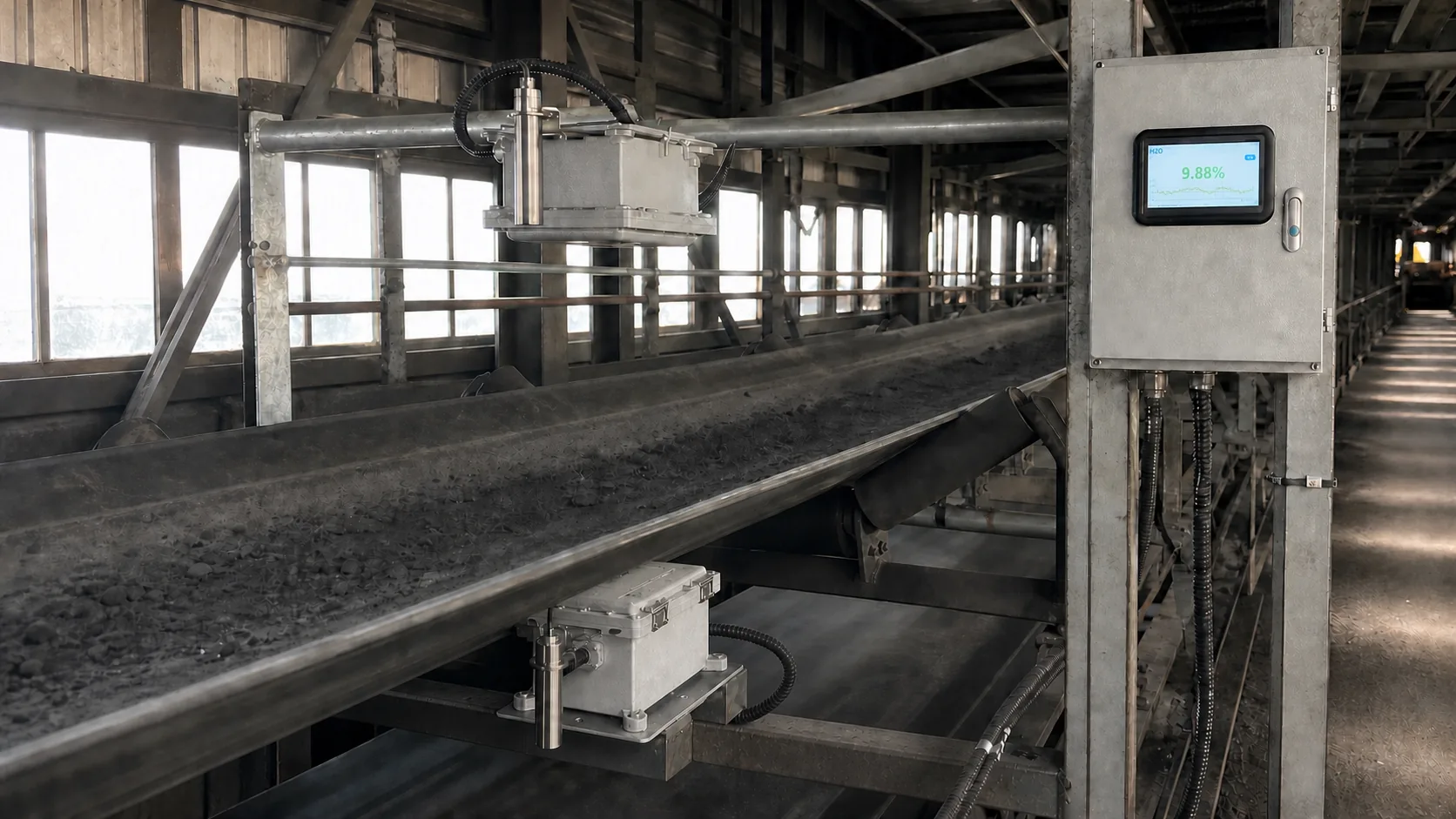
Use a stable, well-filled section after the material stream has been formed and before the decision point. Calibration must include the density, particle-size and seasonal ranges seen in production.

How to do it
  1. Survey bed depth, fines distribution and normal flow interruptions.
  2. Install where the active measurement area stays covered and reference samples can be taken safely.
  3. Pair sensor averages and samples through dry, normal and wet operating conditions.
Variables to control

Bulk density, voids, particle size, bark content, frozen material, temperature and bed depth.

Use the result to

track incoming or process moisture continuously and detect changes early.

Read the full methodConveyor online moisture measurement: complete engineering checklist
02

How do you control biomass moisture before storage?

Measure before the storage decision and combine the result with material identity and residence plan. Moisture alone does not define storage safety, but it can trigger segregation, drying, inspection or faster use.

How to do it
  1. Define material-specific operating bands from site storage practice and risk assessment.
  2. Link each reading to source, pile, silo or delivery identity.
  3. Create warning actions for abnormal moisture and preserve a manual hold state when data are invalid.
Variables to control

Material temperature, pile size, ventilation, contamination, residence time and non-uniform wet pockets.

Use the result to

route material according to storage risk and reduce avoidable quality loss.

Read the full methodBiomass moisture measurement for receiving, drying and energy decisions
03

How do you use biomass moisture for energy and settlement calculations?

Use the contractually agreed moisture basis and a validated result for the represented load. Keep calorific-value assumptions, sampling uncertainty and any conversion from wet to dry mass explicit.

How to do it
  1. Confirm whether payment uses as-received mass, dry matter or an energy formula.
  2. Calculate dry-matter quantity from the agreed moisture basis without mixing wet- and dry-basis percentages.
  3. Store the original result, formula version and load identity with the settlement record.
Variables to control

Basis conversion, ash content, calorific-value model, load variability, rounding and dispute thresholds.

Use the result to

calculate comparable dry-matter or energy values and explain every commercial adjustment.

Read the full methodBiomass moisture measurement for receiving, drying and energy decisions
04

How do you take representative reference samples from heterogeneous biomass?

Collect increments across the moving stream or multiple load locations, then combine and reduce them without losing fines or moisture. A convenient handful cannot validate a sensor observing a much larger flow.

How to do it
  1. Define the lot, sampling increments and timing before collection.
  2. Protect samples immediately from evaporation, rain and contamination.
  3. Homogenise and reduce the composite sample according to the chosen reference procedure.
Variables to control

Fines segregation, large particles, surface drying, sample mass, sealed storage and test delay.

Use the result to

build calibration and validation data that represent the production stream.

Read the full methodRepresentative sampling: connect the laboratory sample to the online value
05

How do you reduce density and bed-depth effects in biomass moisture measurement?

Stabilise the mechanical presentation first, then include the remaining normal variation in calibration and validation. Do not hide an empty or thin bed by filtering it into an ordinary moisture value.

How to do it
  1. Measure the normal ranges of depth, density, temperature and material grade.
  2. Improve levelling, containment or sensor geometry where variation can be reduced mechanically.
  3. Create coverage and out-of-range states and validate residual error across the remaining range.
Variables to control

Compaction, void fraction, mixed grades, distance, temperature and partial sensor coverage.

Use the result to

separate true moisture change from geometry-driven signal change.

Read the full methodWhy density, bed depth, distance and temperature change moisture readings

Project success factors

Build a reliable measurement result

Share your material, moisture range and process conditions to receive a focused measurement recommendation.

  • A clearly defined material and process objective
  • A suitable sensor route and installation geometry
  • A representative reference method and calibration plan
  • Environmental and compliance requirements
  • Validation under real operating conditions

Application pathway

Place the measurement where it can change the process

Wood chips, sawdust, bark and pellets vary by source, particle size and storage history. Effective measurement links representative coverage to storage, drying, combustion and settlement decisions.

01

Locate the variation

Map where moisture enters, separates, dries or is mixed before choosing an accessible measurement point.

02

Choose the representative point

Match surface, contact, transmission or scanning coverage to the material flow and the decision that follows.

03

Connect the reference

Align representative samples, method, calculation basis and laboratory time with the online measurement window.

04

Define the production action

Assign valid states, alarm limits, manual response, control authority and a review method for abnormal material.

Sources of moisture variation

Sources of moisture variation

Biomass species, bark, particle size, rain, storage heating and uneven drying change both moisture and bulk density.

Reference and operating response

Reference and operating response

Measure at receiving, before storage or around the dryer where the material is sufficiently mixed. Match samples to the online window and use the value to manage storage risk, dryer load, energy calculation and product specification.

Begin with an observation period that records the online value, reference samples, product identity and operating state. Use the combined record to set material groups and valid limits. Then introduce alarms, operator guidance or bounded control in stages, with a manual fallback and a documented response for off-specification or unmeasured material.

Discuss your material, process point and control objective

Share a few process details and our application team will recommend a suitable technology, installation concept and validation plan.

Contact an engineer
WhatsApp