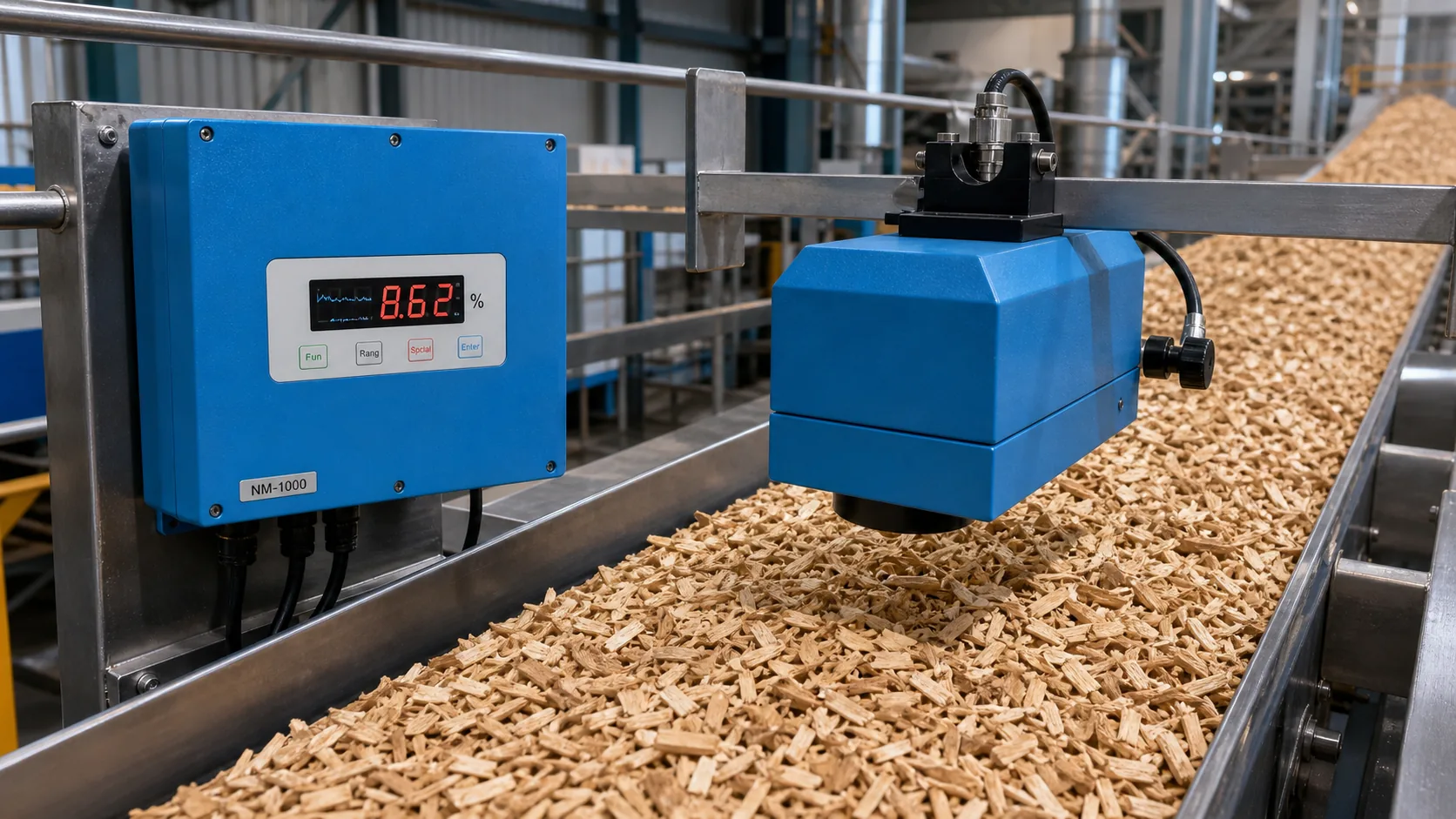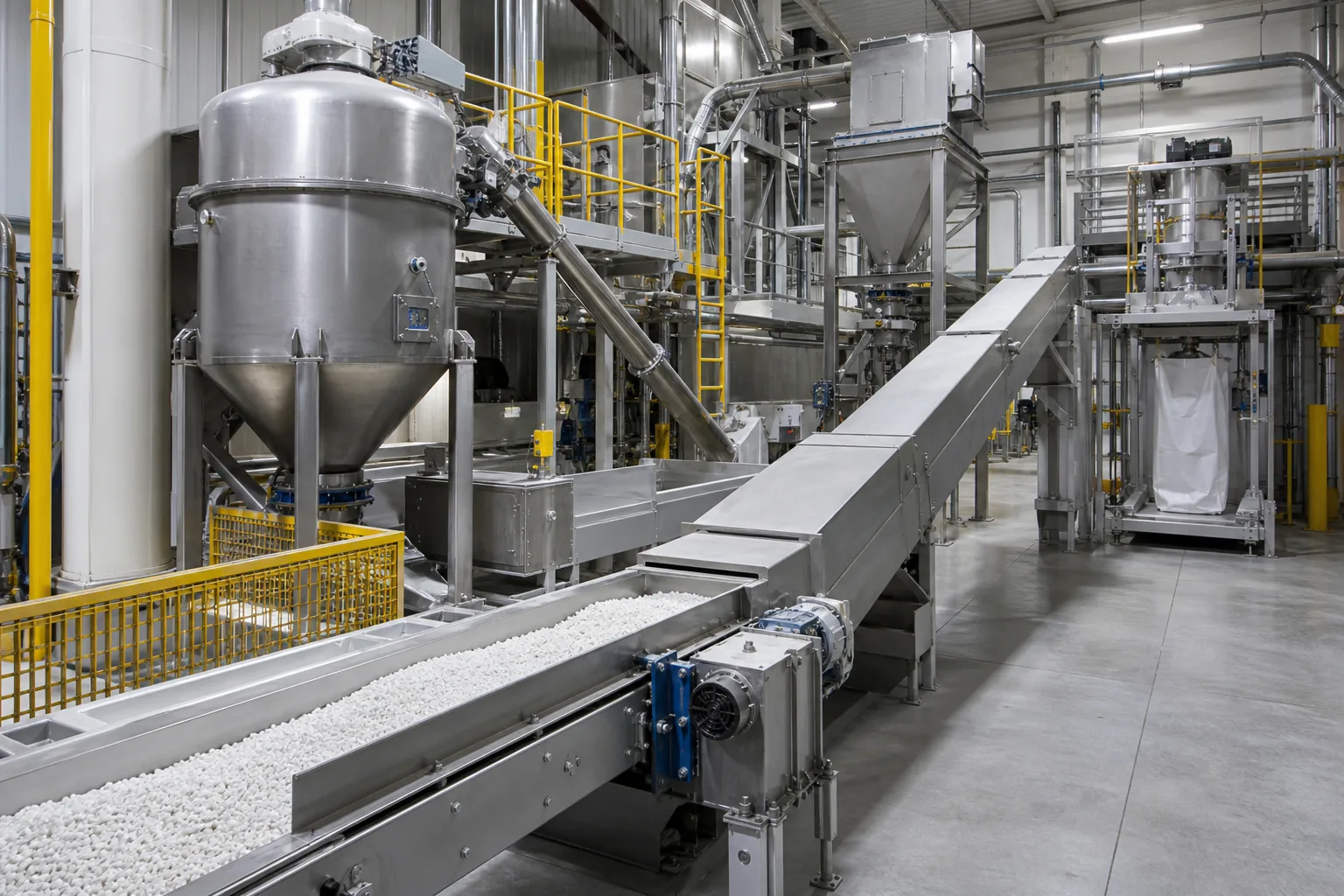
Performance depends on the material, reference method, operating range and installed configuration described in the project.
Production decision map
Gate powder-process action with presentation and site-safety evidence
For chemical and industrial powders, a valid moisture model and a safe installation are different approvals. Both must be complete before the value is used for automatic action.
Feed or dosing → conditioning → transfer → packing
Preserve product grade, batch, transfer route and destination. Record transitions and cleaning because residual material can create mixed presentation.
Density, aeration, fines, temperature and build-up can mimic water change
Abrasion, corrosion, dust and hazardous-area conditions also affect whether a measurement route can be installed and maintained safely.
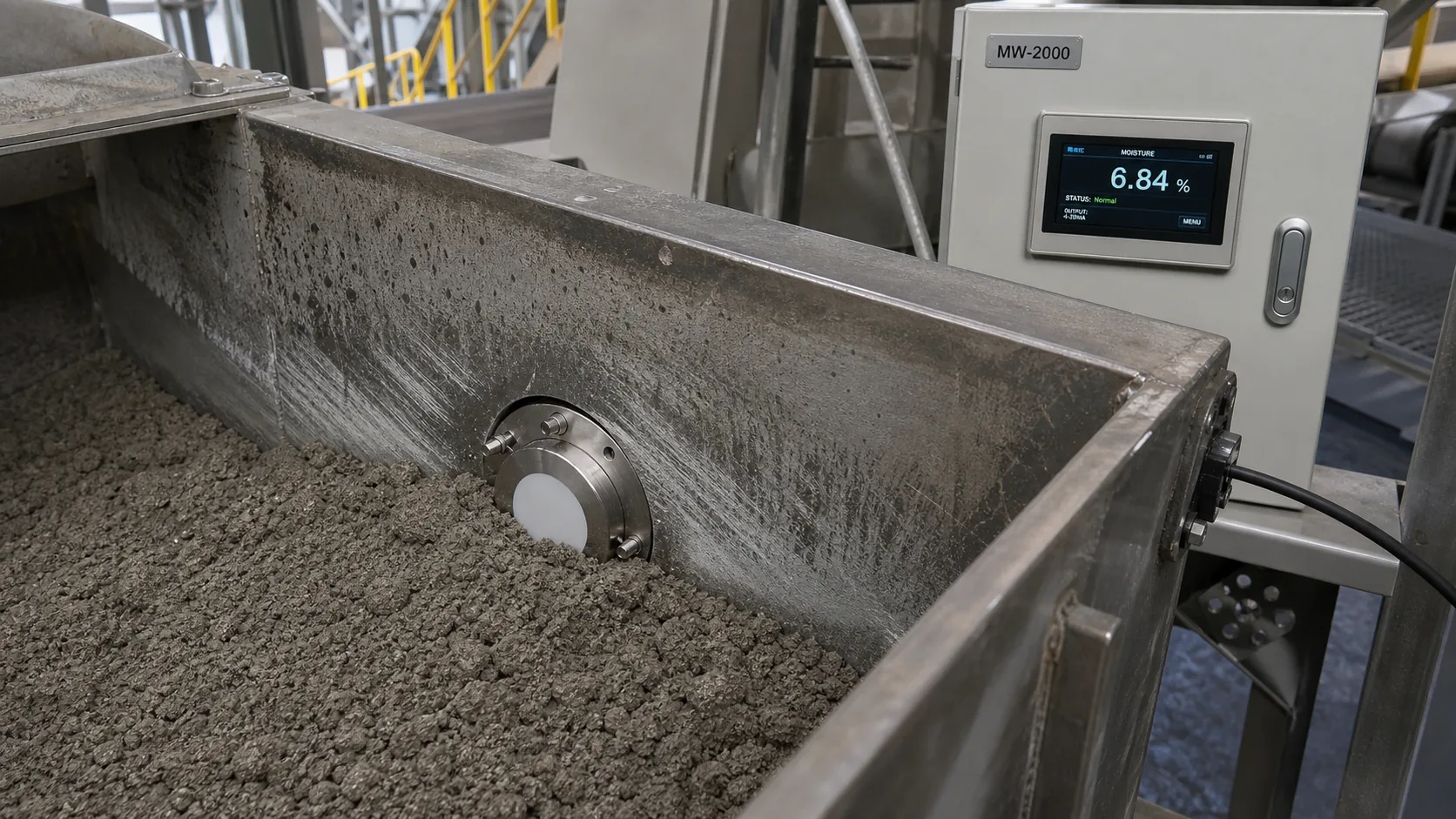
Choose stable flow with controlled coverage or path length
Document layer depth, distance, contact materials and low-load states. Provide safe paired sampling and keep the sensing zone clear of unassessed metal effects.
Condition, divert or alarm only with a valid quality state
Apply grade-specific, bounded rules and manual fallback. Keep automatic output blocked during transition, fouling, maintenance or any safety interlock.
Validate product groups and close the safety gates separately
Test moisture performance across grade and presentation ranges. Independently approve area classification, earthing, wiring, guarding, cleaning and the exact supplied equipment.
Practical reference
Powder-project safety gates
| Gate | Site input | Required outcome |
|---|---|---|
| Material hazard | Dust/vapour data, temperature, corrosiveness | Documented design constraints |
| Area classification | Zone/class and local rules | Exact equipment review |
| Installation | Earthing, barriers, wiring, guarding | Approved drawings and checks |
| Operation | Cleaning, fouling, inspection, invalid states | Assigned procedure and owner |
Start with composition and safety
Record chemical family, grade, solvent or volatile risk, dust classification, temperature, corrosiveness and cleaning requirements. Confirm hazardous-area and product-contact obligations separately.
Select the right interaction
NIR can suit a representative surface, contact microwave a stable process interface, and transmission microwave a controlled bed path. Do not choose before defining contact and coverage.
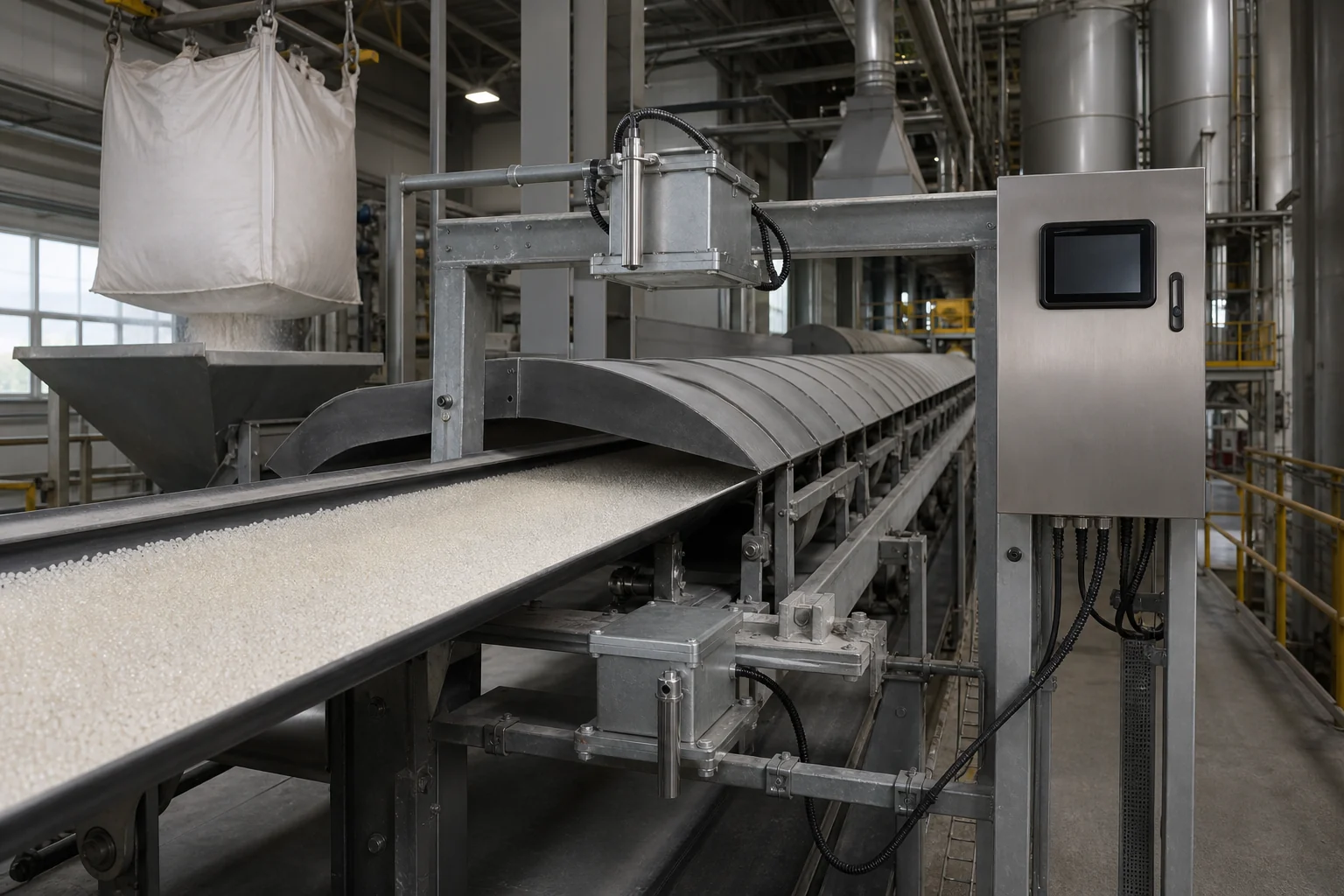
Stable presentation supports measurement; it does not prove suitability for a classified area. The exact enclosure, wiring, barriers and certificates require project review.
Manage density, particle and build-up
Bulk density, aeration, particle size, coating, colour and deposits may change response. Include realistic ranges and maintenance states in validation.
Define the reference and recipe decision
Approve sample handling and laboratory method for the actual material, including volatile components. Link the value to dryer, blender, alarm or release logic with valid states and change control.
Keep hazardous-area approval as a separate gate
The site owner must provide zone/classification, dust or vapour properties, temperature class, ignition risks, earthing and cleaning constraints. Engineering must then verify the exact enclosure, barriers, wiring and certificates required. No technology article, route label or generic product description establishes explosion-protected suitability.
Before you act
Engineering checklist
- Classify chemical and dust hazards
- Define contact and volume
- Record density and aeration
- Plan cleaning and fouling checks
- Approve reference method
- Version recipe and alarm rules