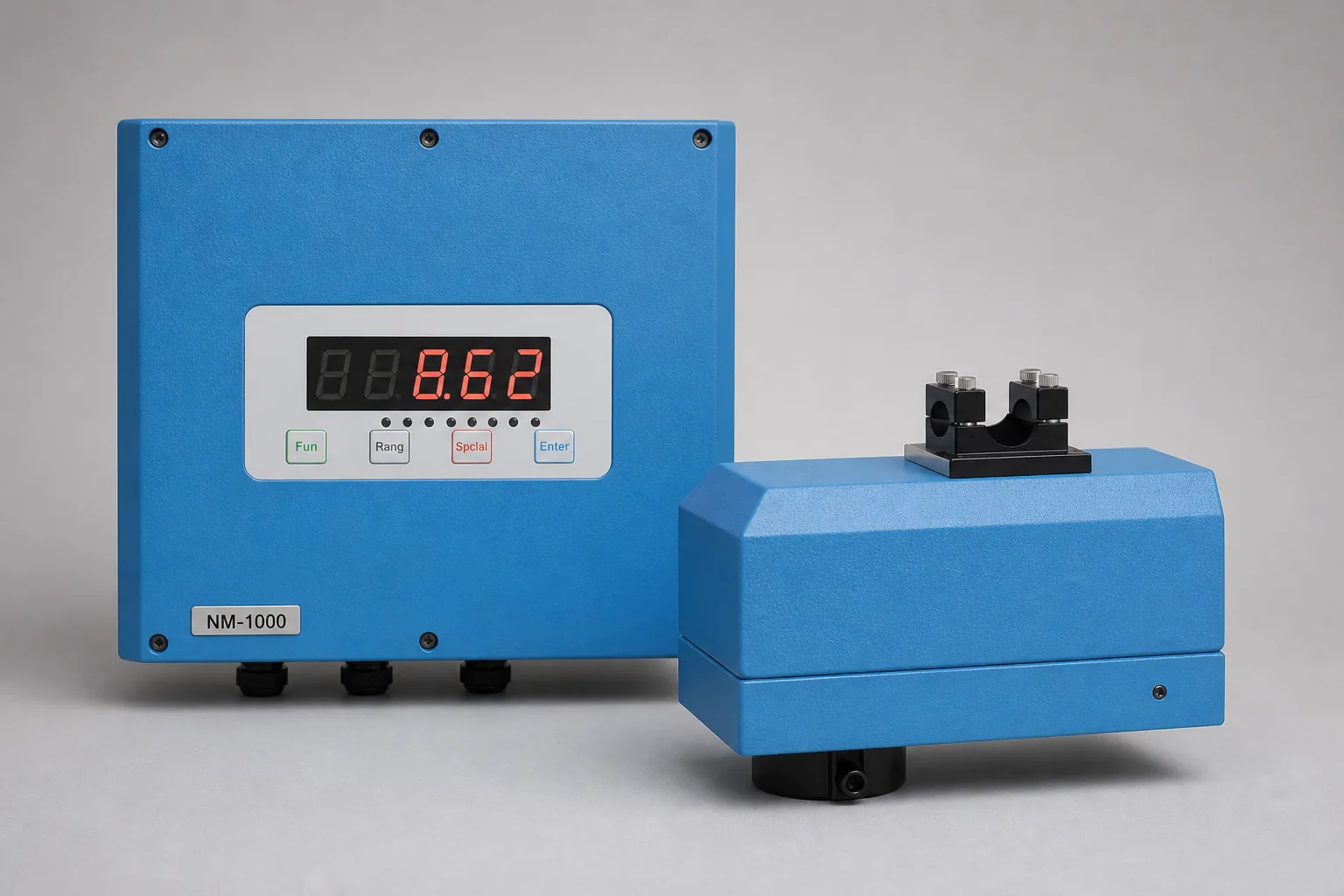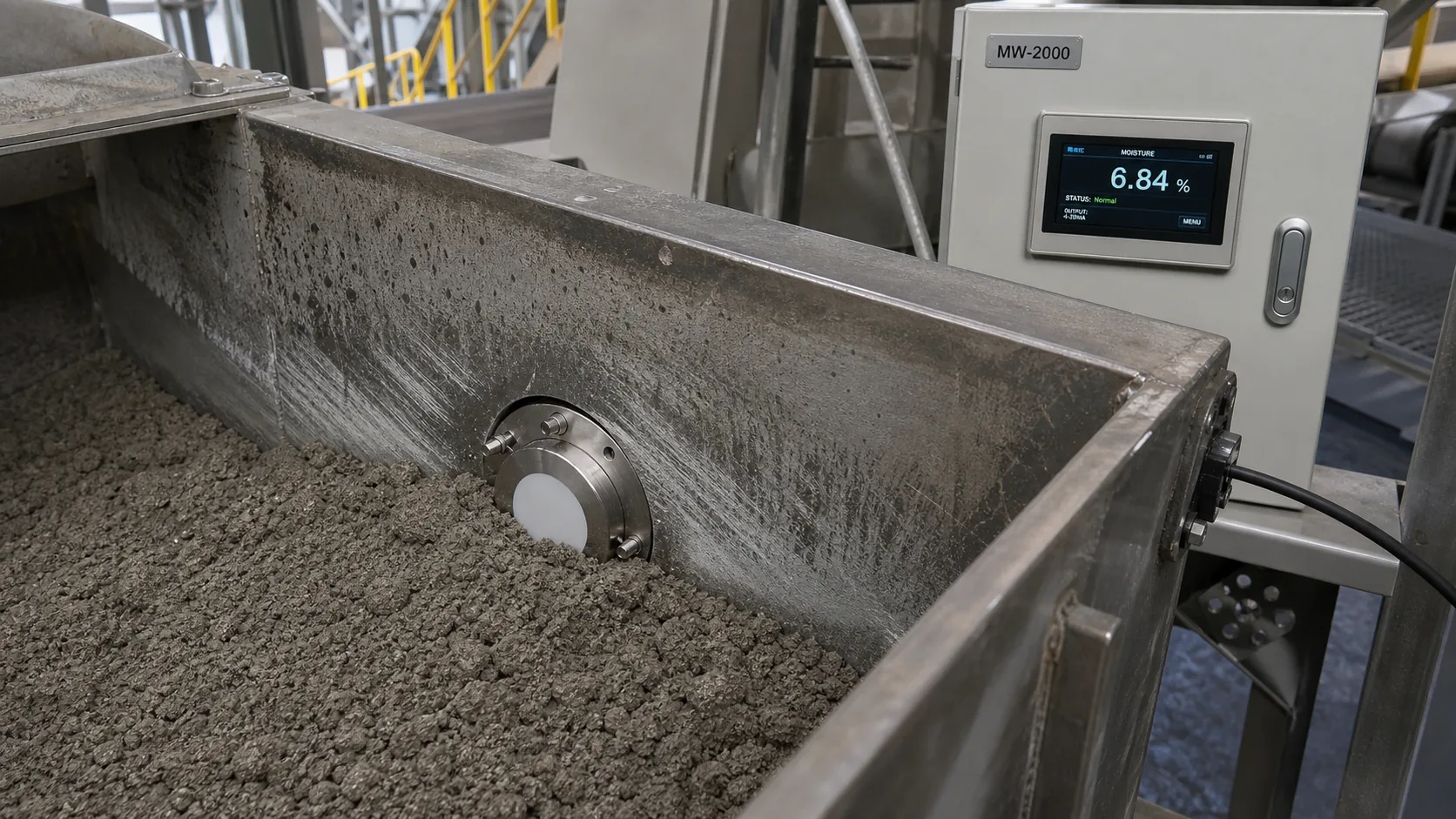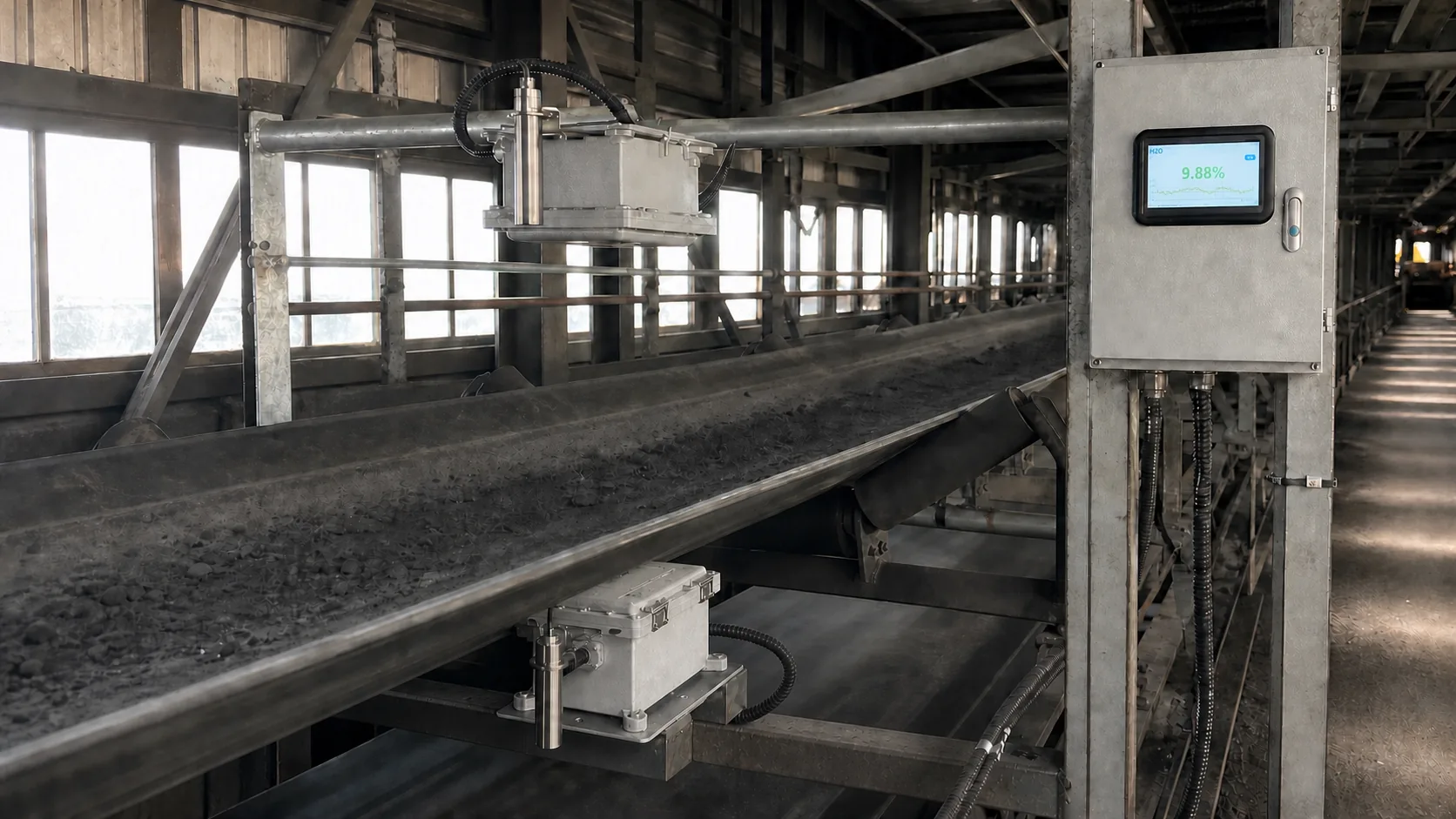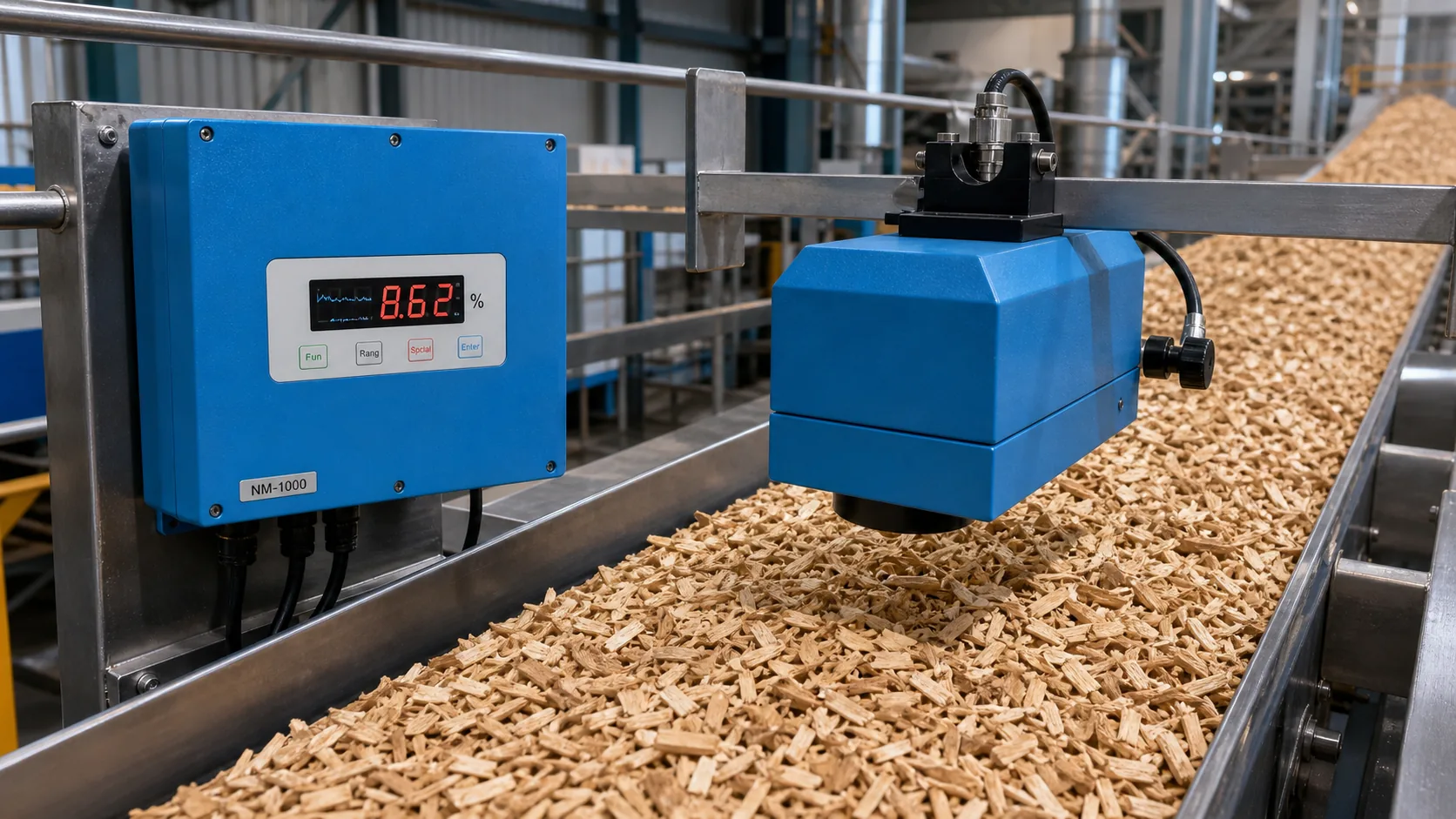
Performance depends on the material, reference method, operating range and installed configuration described in the project.
Understand what NIR observes
Near-infrared response comes from the illuminated surface and shallow optical interaction. It does not automatically represent a deep bed, bale core or complete batch.
Control the optical scene
Colour, texture, particle size, coatings, dust, ambient light, angle and working distance can change the relationship. Record the real production range and include it in calibration.
Use NIR where the surface is the process
Stable moving layers, powders, granules, chips and sheets can suit NIR when the visible surface is representative and can be kept clean, covered and at a controlled distance.
Validate by material group
Separate grades or recipes when optical properties change materially. Use paired reference samples and independent validation instead of carrying one calibration across untested materials.
Define optical invalid states before production use
Record minimum surface coverage, working-distance band, lens-contamination check, allowed colour/grade groups and signal-quality response. When any condition fails, hold or flag the value and use the approved fallback; an unverified NIR value must not silently drive closed-loop control, release or settlement.
Before you act
Engineering checklist
- Define surface versus bulk objective
- Record colour and grade range
- Stabilise distance and angle
- Manage dust and lens cleaning
- Pair samples with the observed surface
- Validate each approved material group