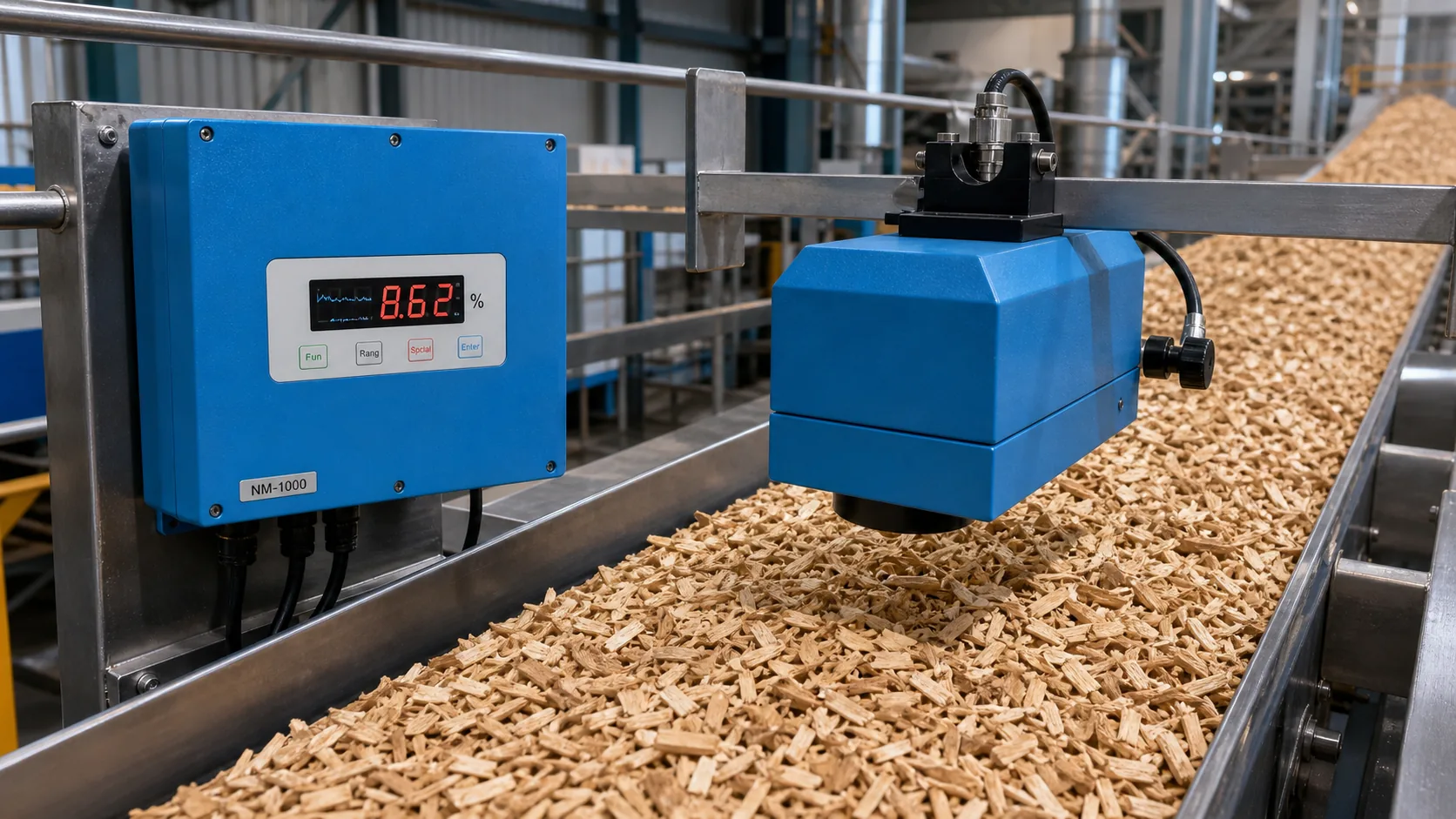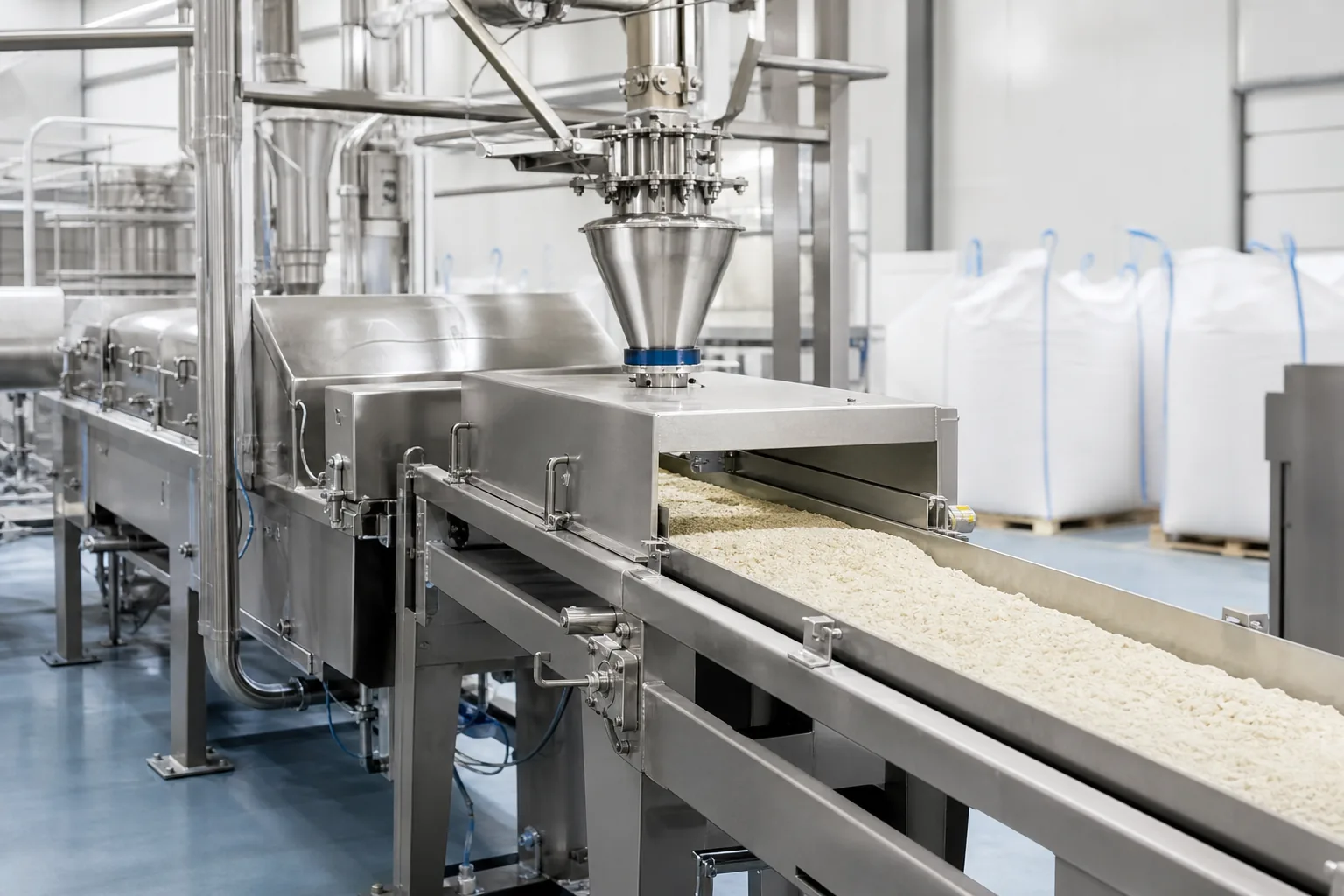
Performance depends on the material, reference method, operating range and installed configuration described in the project.
Production decision map
Separate process guidance from food-powder release authority
Online moisture can support blending, drying or packing decisions, but the measurement point, hygienic boundary and authorised release method must remain visible as separate project gates.
Ingredient feed → blending or drying → packing → release
Attach ingredient, recipe, allergen/changeover state, batch and destination to the moisture record.
Recipe, oil, colour, particle size and surface condition alter the response
Dust, build-up, cleaning residue or poor coverage can create an invalid value even when the displayed number appears stable.
Observe a consistently presented stream with safe sampling
Define distance or contact geometry, coverage, cleaning access and the product-contact boundary. Pair samples before material is mixed with another unidentified stream.
Use bounded process actions; preserve release separation
Trend, prompt an operator or adjust a verified process only in valid states. Do not allow an online value to bypass the approved batch-release procedure.
Challenge recipes, changeovers and cleaning states
Validate approved product families independently and compare against the authorised laboratory method. Retain material documents and inspection records for the supplied configuration.
Practical reference
Food-powder decision gates
| Gate | Record | Boundary |
|---|---|---|
| Product family | Recipe, allergen, oil, colour, particle size | Do not transfer calibration without evidence |
| Product contact | Surface, material document, finish, seals, cleaning | No compliance claim from route alone |
| Process control | Delay, valid state, actuator limit | Trend/control is not batch release |
| Quality release | Approved sample and laboratory method | Follow the authorised release procedure |
Define product families
Group products by formulation and properties that affect optical or dielectric response. Record allergens, colour, oil, particle size, temperature and rework content.
Choose a hygienic measurement point
Review product contact, cleanability, dust, condensation, access and cross-contamination. The point must remain representative after cleaning and changeover.
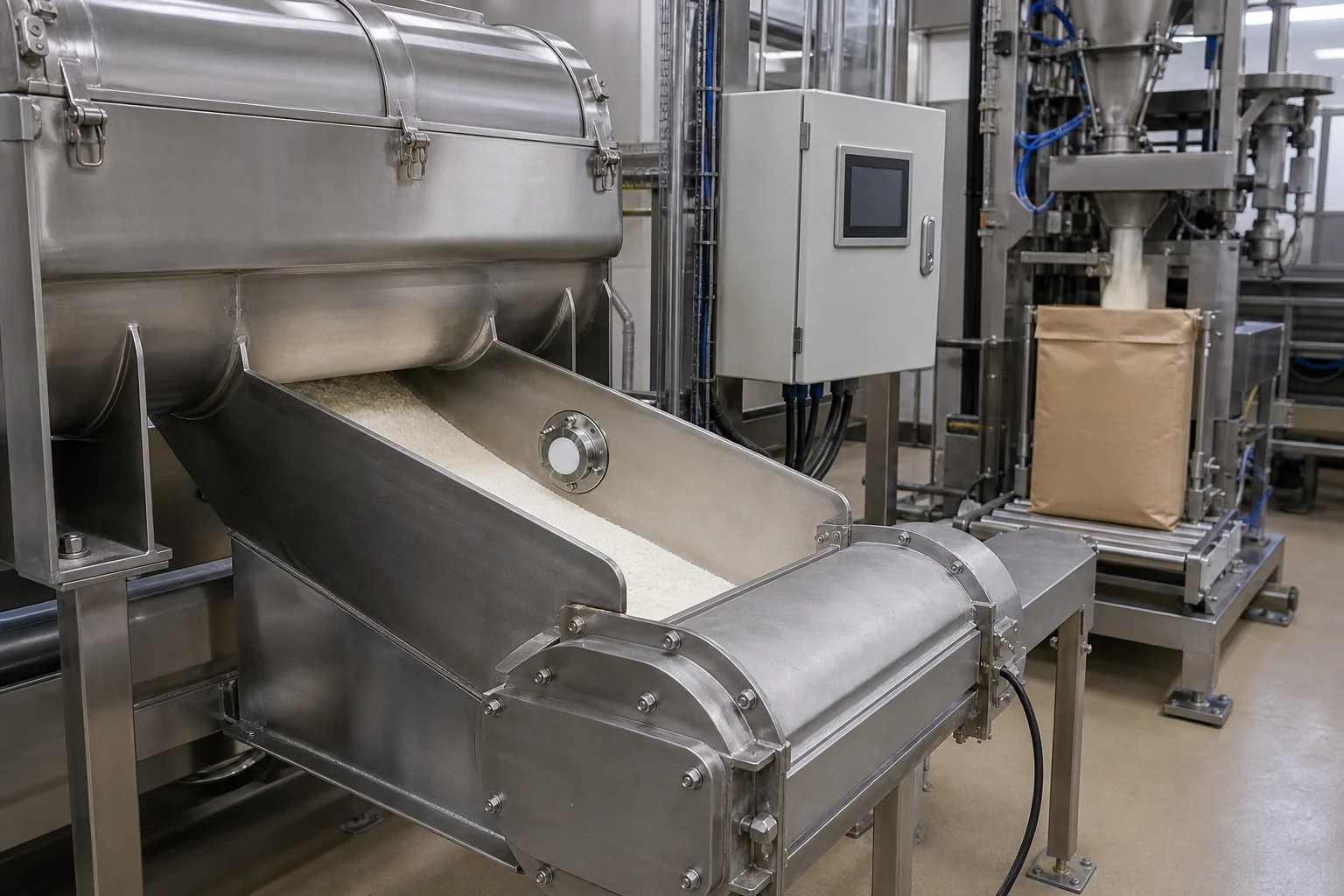
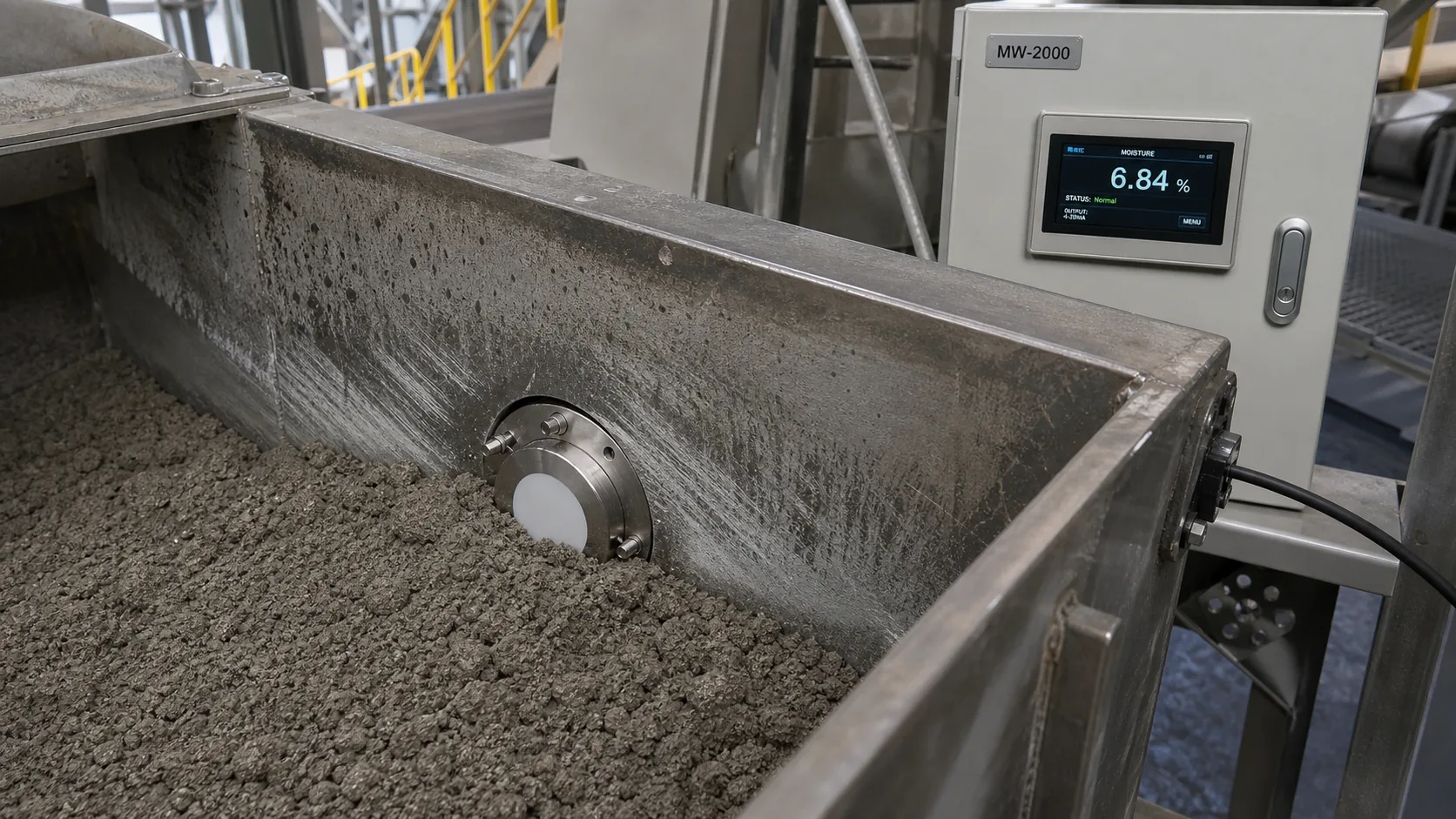
The scene illustrates a process decision point, not a claim of food-contact compliance. Materials, finish, seals, cleaning and release rules require configuration-specific documentation.
Align samples with residence time
Calculate delay through dryer, conveyor or blender. Seal samples quickly and trace line, recipe, batch, temperature and online window.
Validate release and control separately
A trend used for drying control and a laboratory result used for release have different responsibilities. Define how each is reviewed and what happens during invalid states.
Make food-contact and release boundaries explicit
List every product-contact surface, material certificate supplied for it, finish, seal, allergen/changeover risk, cleaning method and inspection record. The measurement project does not claim food-contact or hygienic compliance unless documented for the exact configuration, and online trends do not replace the approved laboratory release method.
Before you act
Engineering checklist
- Define product families
- Record oil, colour and particle size
- Review hygiene and cleaning
- Calculate residence time
- Seal samples quickly
- Separate control and release rules