← Back to all industries

Industries and materials

Food and processed ingredients

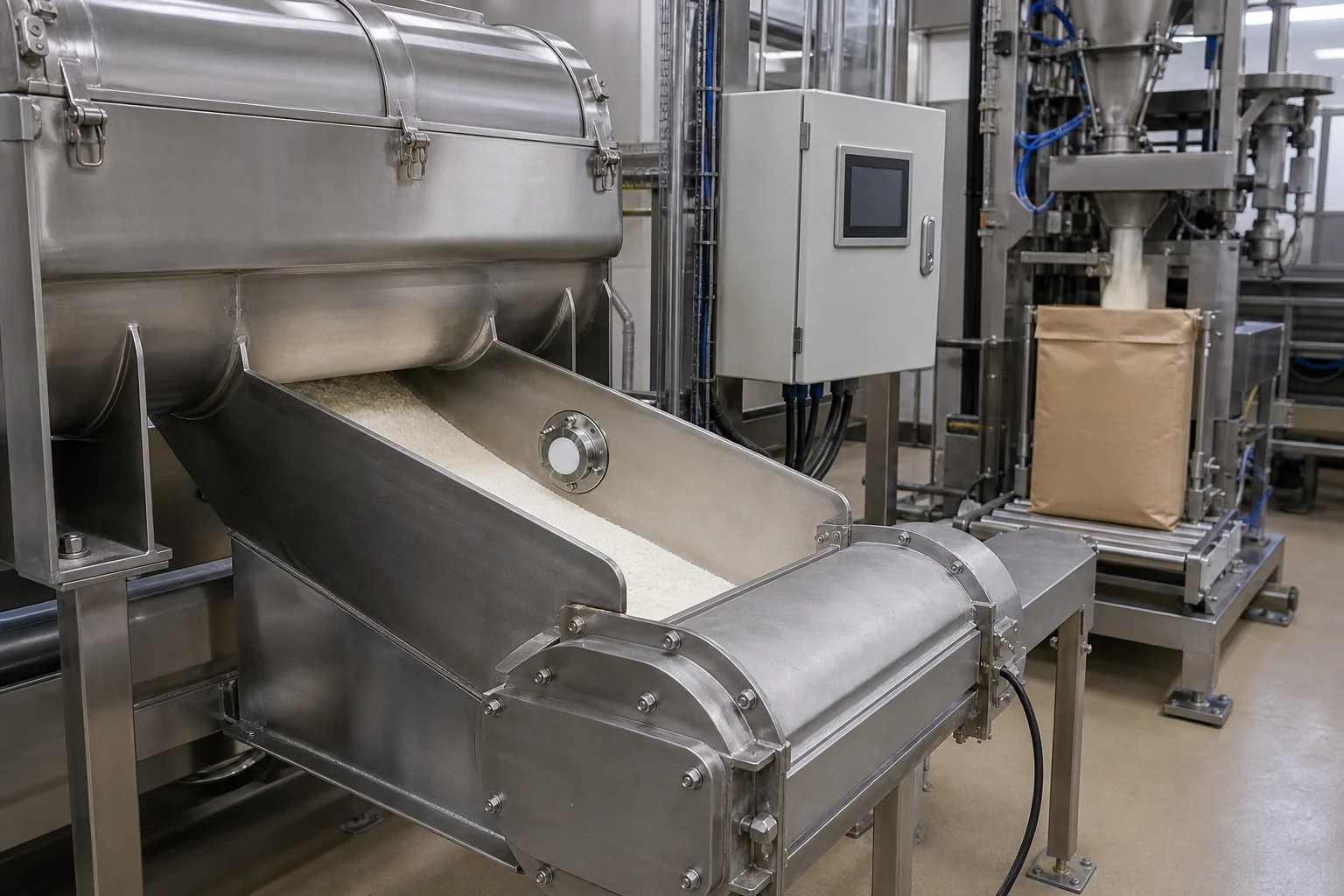
Flour, starch, sugar, cocoa and dry ingredients require product-specific calibration and clear traceability. Hygienic design, cleaning access and product-contact requirements must be confirmed for each project before the measurement supports a dryer, blending or release decision.

Contact an engineer
Food and processed ingredients

Process scenes and measurement points

Follow the material from moisture risk to control action

Each route starts with a real material flow. Define the risk, choose a representative measurement point and decide what the validated result will change.

Ingredient receiving
01Ingredient receiving

Ingredient receiving

Material
Flour, starch, sugar, cocoa and dry ingredients
Moisture risk
Incoming grade, temperature and moisture variation affect flow, mixing and later drying demand.
Measurement point
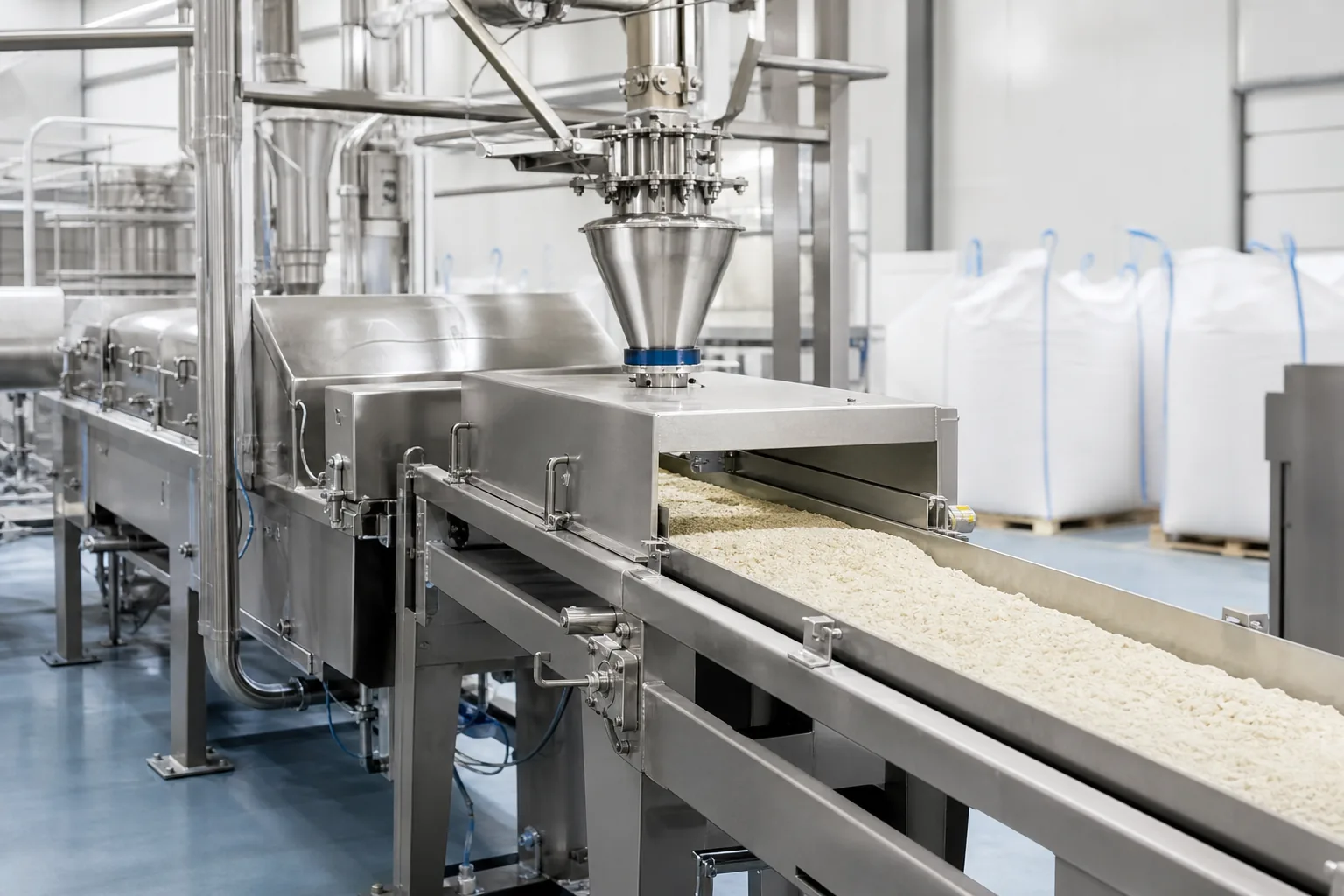
A stable stream with safe paired sampling after receiving; product-contact and cleaning boundaries remain project-specific.
Control action
Hold, route or approve ingredients under product-specific limits and validity rules.
Dryer discharge
02Dryer-outlet control

Dryer discharge

Material
Dried powders, granules and processed ingredients
Moisture risk
Under-drying threatens quality; over-drying wastes energy and can damage product attributes.
Measurement point
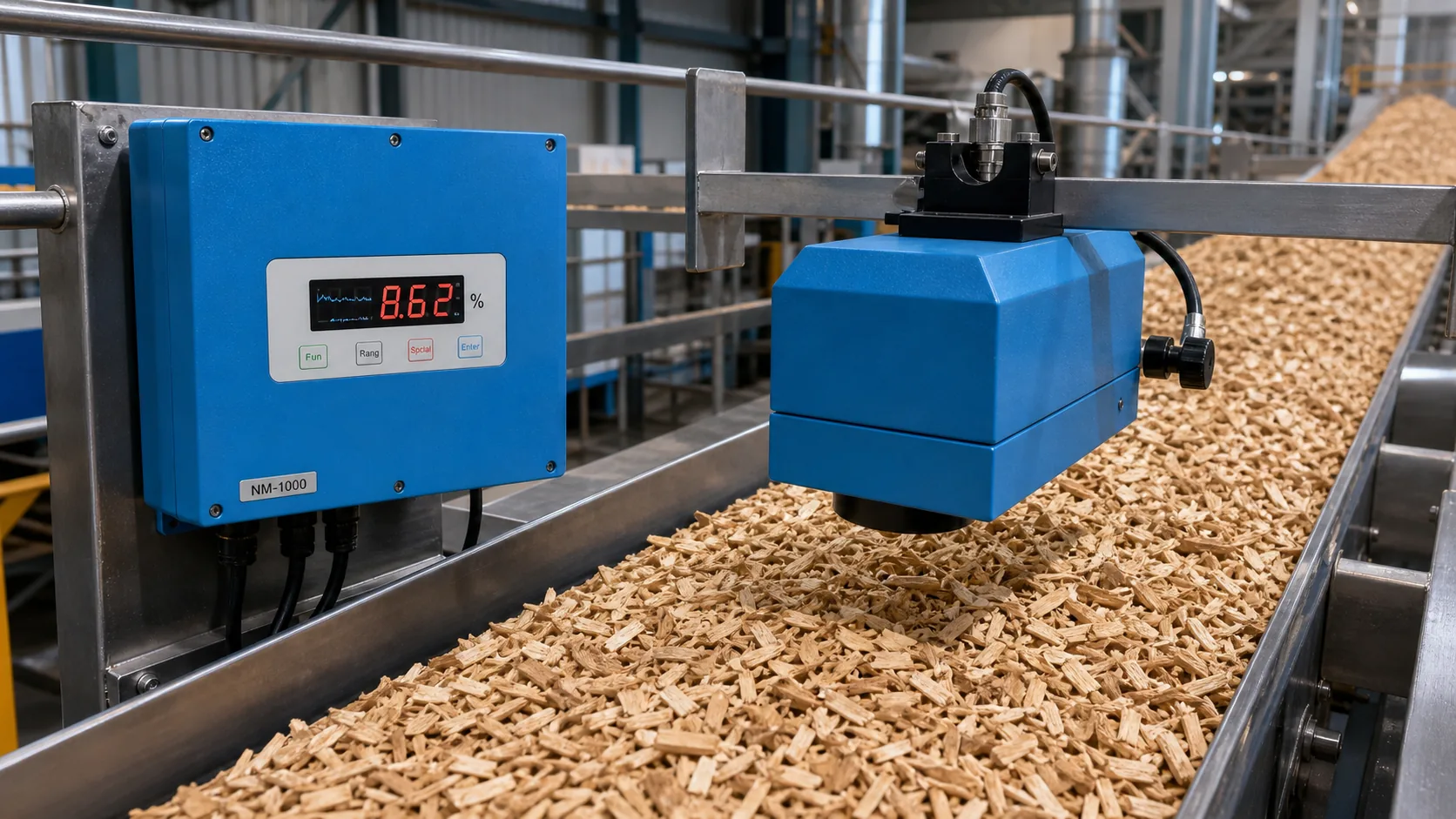
A sufficiently mixed outlet stream before packing, with residence time and sample delay documented.
Control action
Trial bounded dryer changes under operator control and verify reference moisture and quality.
Blending, packing and batch release
03Batch traceability and release

Blending, packing and batch release

Material
Blended food powders and finished ingredients
Moisture risk
Changeover, cleaning and invalid-flow data can contaminate the batch record or hide local variation.
Measurement point
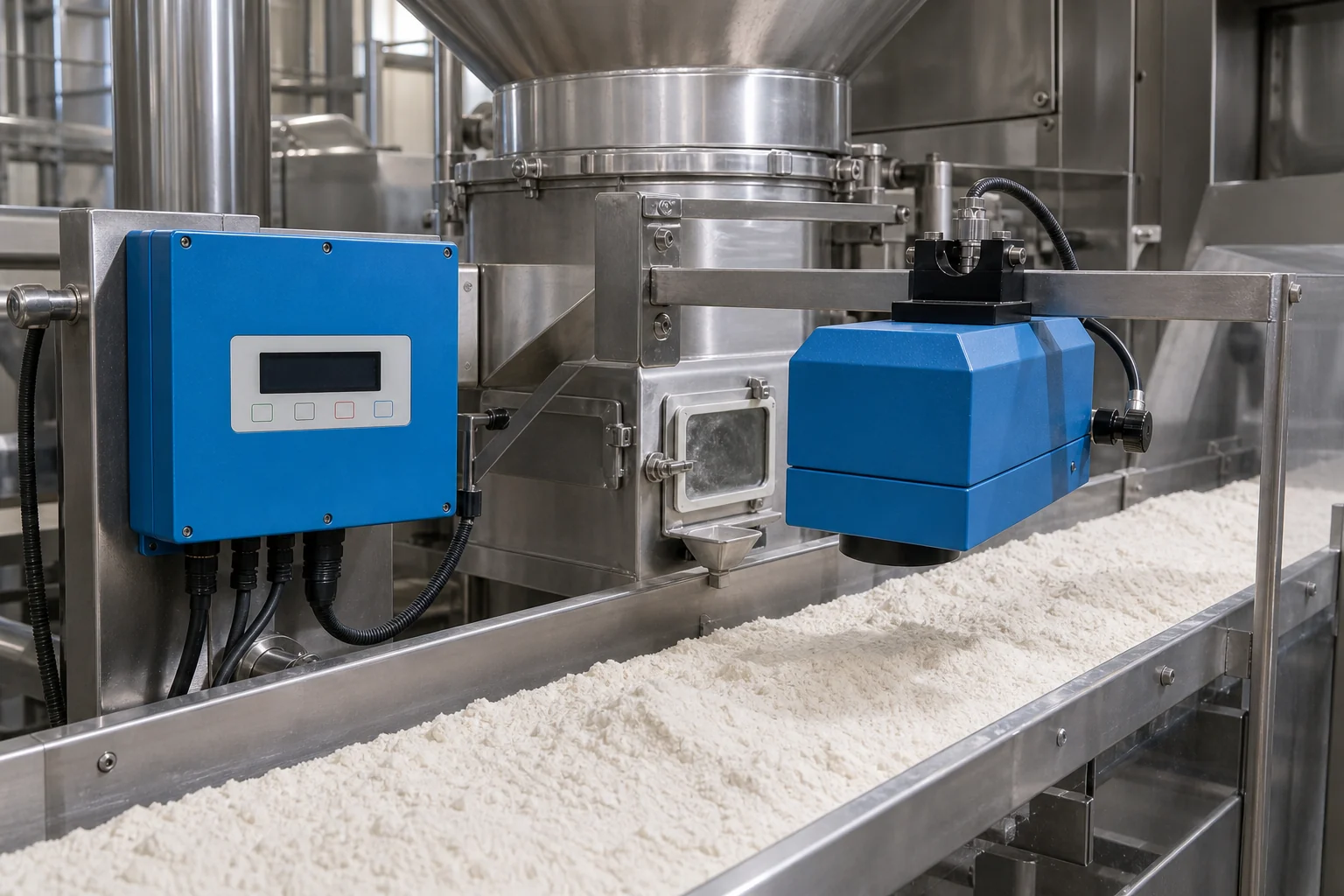
After blending or before packing, linked to product, recipe, batch and valid production state.
Control action
Create a traceable release record and isolate periods that require investigation or retesting.

Practical moisture testing

How to control moisture in food powders and processed ingredients

Flour, starch, sugar, cocoa and dry ingredients require product-specific calibration and clear traceability. Hygienic design, cleaning access and product-contact requirements must be confirmed for each project before the measurement supports a dryer, blending or release decision.

01

How do you measure moisture in flour, starch, sugar or food powder online?

Measure a consistently presented product stream and validate by ingredient and grade. Confirm hygienic design, cleaning access, foreign-material control and the product-contact boundary for the specific project; do not assume these requirements from the measurement principle alone.

How to do it
  1. Select a point with stable flow and safe paired-sampling access.
  2. Confirm sensor geometry, product-contact boundary, material compatibility and cleaning procedure for the project.
  3. Calibrate across normal ingredient, grade, temperature and moisture ranges.
Variables to control

Bulk density, particle size, colour, temperature, product changeover, build-up, cleaning state and project-specific contact requirements.

Use the result to

detect moisture changes continuously before blending, packing or release.

Read the full methodFood powder and ingredient moisture measurement in drying and blending
02

How do you control final moisture at the outlet of a food dryer?

Position the measurement after the product is sufficiently mixed to represent dryer output and account for the delay to the control action. Use product-specific targets; any automatic correction requires a separately verified site interface and food-quality response.

How to do it
  1. Map dryer zones, residence time, discharge mixing and sampling delay.
  2. Build target and warning bands by product and production rate.
  3. Trial bounded changes under operator control and verify reference moisture, quality attributes and downstream stability before automation.
Variables to control

Residence-time distribution, product temperature, start-up, changeover, throughput, sensor lag and control interlocks.

Use the result to

reduce over-drying and wet-product risk while maintaining product quality.

Read the full methodClosed-loop moisture control: move safely from trending to automatic action
03

Should food-powder moisture be measured at the surface or through the bulk?

The answer depends on whether surface condition or bulk composition drives the decision. NIR surface response and microwave measurement volumes respond differently to colour, density, thickness and material presentation.

How to do it
  1. Define the material volume represented by the quality decision.
  2. Document normal colour, density, layer depth and temperature variation.
  3. Compare candidate routes with the same paired reference dataset and acceptance criteria.
Variables to control

Colour and formulation, surface texture, layer depth, bulk density, temperature and optical contamination.

Use the result to

choose a technology route that represents the relevant product volume.

Read the full methodSurface moisture and bulk moisture: define the value before selecting a sensor
04

How do you validate online food moisture against a laboratory method?

Use time-aligned, sealed samples and one documented reference procedure for each product. Evaluate bias and residuals by ingredient and moisture range rather than relying on correlation alone.

How to do it
  1. Define the reference method, reporting basis and sample-handling time.
  2. Pair each sample with the correct online averaging window and batch identity.
  3. Reserve independent runs for validation and investigate residual patterns by product.
Variables to control

Evaporation, hot samples, conditioning, method-specific volatiles, basis conversion and laboratory repeatability.

Use the result to

quantify expected agreement and define when the online model must be reviewed.

Read the full methodHow to compare an online moisture system with laboratory results
05

How do you connect food moisture data to batch and quality records?

Transmit the value together with validity, time basis and configuration version. Tie readings to product, recipe and batch so quality teams can distinguish valid production data from cleaning, empty-flow or changeover periods.

How to do it
  1. Publish signal units, scaling, status codes and averaging rules.
  2. Synchronise timestamps and map values to recipe, batch and line states.
  3. Test invalid data, communication loss and audit retrieval during commissioning.
Variables to control

Clock drift, recipe transitions, filter delay, invalid-state mapping, user access and version control.

Use the result to

create traceable moisture records that can support release and process investigation.

Read the full methodFrom moisture sensor to PLC and MES: design the complete data chain

Project success factors

Build a reliable measurement result

Share your material, moisture range and process conditions to receive a focused measurement recommendation.

  • A clearly defined material and process objective
  • A suitable sensor route and installation geometry
  • A representative reference method and calibration plan
  • Environmental and compliance requirements
  • Validation under real operating conditions

Application pathway

Place the measurement where it can change the process

Flour, starch, sugar, cocoa and dry ingredients require product-specific calibration and clear traceability. Hygienic design, cleaning access and product-contact requirements must be confirmed for each project before the measurement supports a dryer, blending or release decision.

01

Locate the variation

Map where moisture enters, separates, dries or is mixed before choosing an accessible measurement point.

02

Choose the representative point

Match surface, contact, transmission or scanning coverage to the material flow and the decision that follows.

03

Connect the reference

Align representative samples, method, calculation basis and laboratory time with the online measurement window.

04

Define the production action

Assign valid states, alarm limits, manual response, control authority and a review method for abnormal material.

Sources of moisture variation

Sources of moisture variation

Recipe, oil, sugar, particle size, rework, temperature and cleaning state can change powder response even when appearance is uniform.

Reference and operating response

Reference and operating response

Select a hygienic point after mixing or drying with representative flow and safe cleaning access. Seal samples quickly, trace recipe and batch, and keep process-control trends separate from laboratory release responsibilities.

Begin with an observation period that records the online value, reference samples, product identity and operating state. Use the combined record to set material groups and valid limits. Then introduce alarms, operator guidance or bounded control in stages, with a manual fallback and a documented response for off-specification or unmeasured material.

Discuss your material, process point and control objective

Share a few process details and our application team will recommend a suitable technology, installation concept and validation plan.

Contact an engineer
WhatsApp