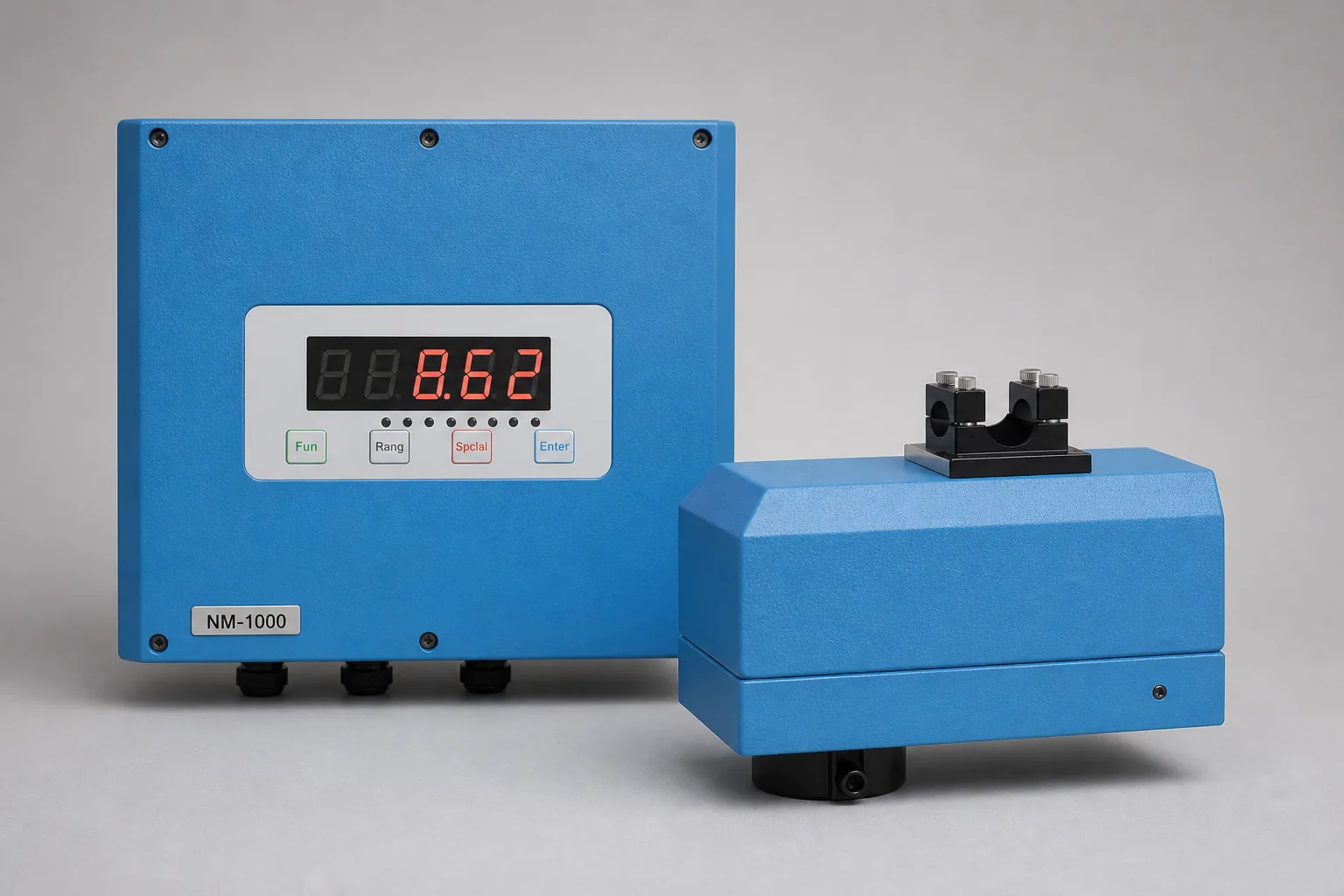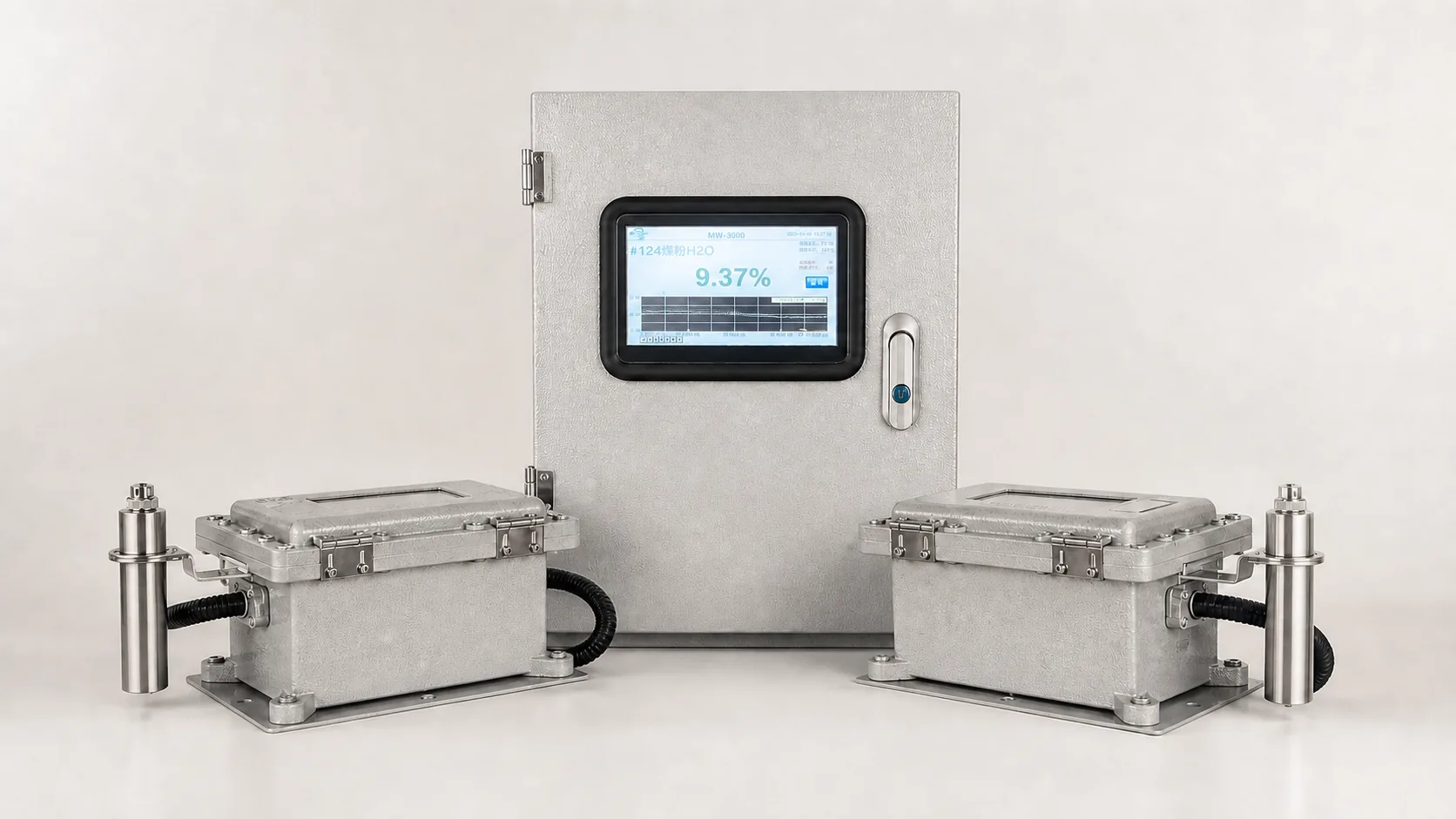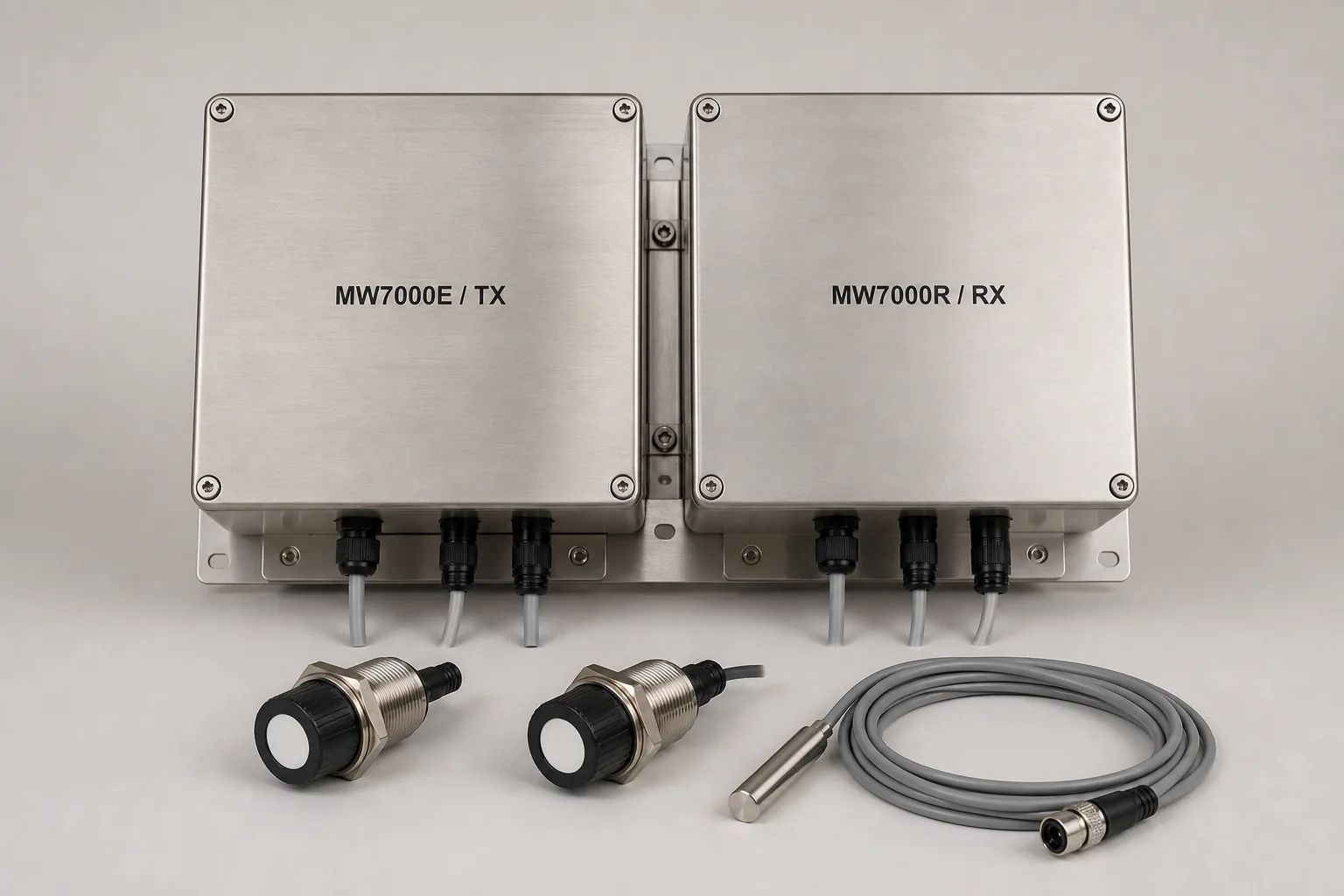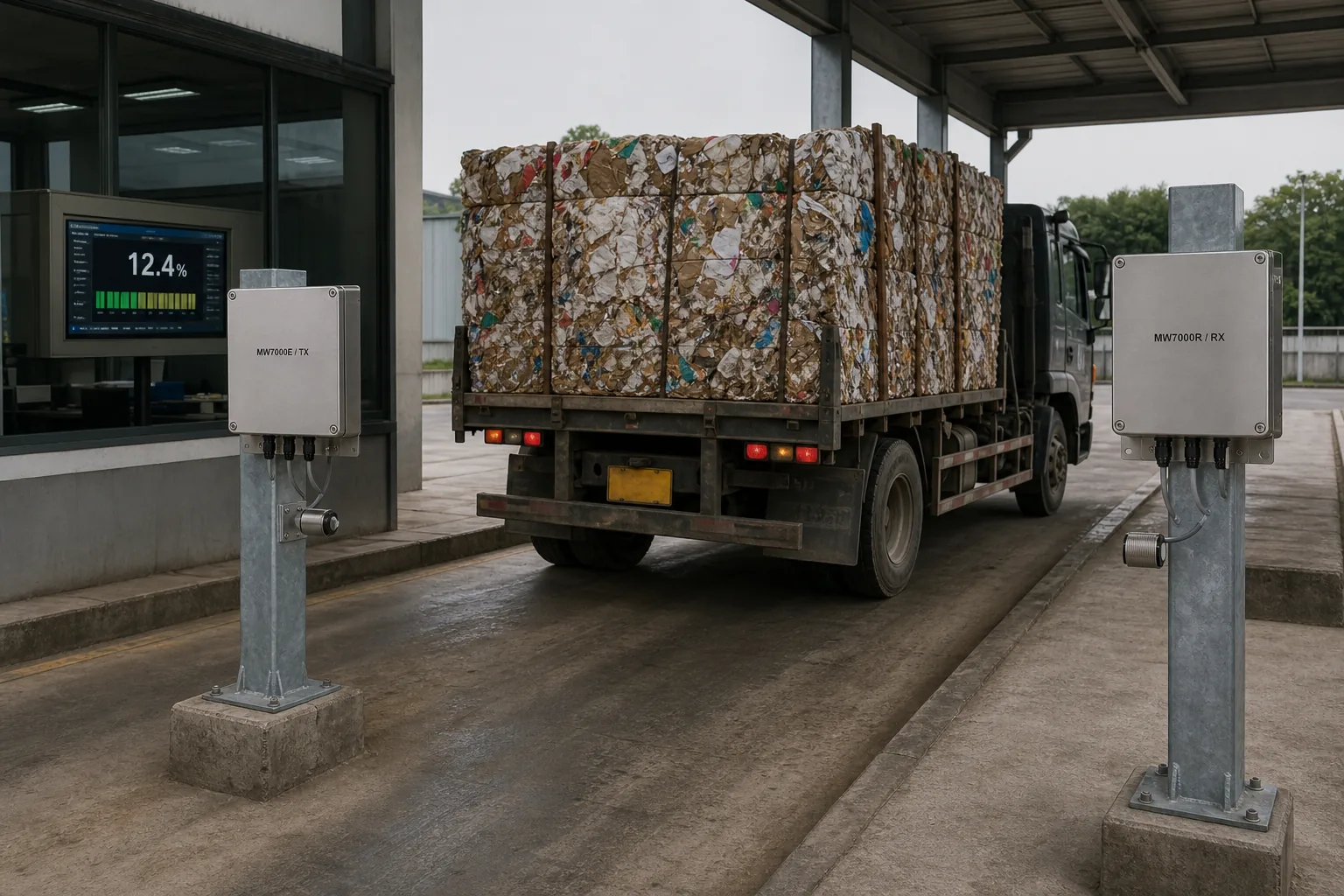
Performance depends on the material, reference method, operating range and installed configuration described in the project.
Production decision map
Keep moisture decisions aligned from receiving through drying and blending
Grain and feed plants need stage-specific records because the representative point, process action and release authority change between receiving, drying, storage and formulation.
Receiving → storage → drying → milling or blending → release
Carry crop, supplier, silo, batch and formula identity forward. Do not merge readings from different stages into one unexplained average.
Variety, density, fines, temperature and segregation change the relationship
Surface drying or a single probe location may not represent a deep load or the material entering the next process.
Measure the stream immediately before the decision
Use documented load coverage at receiving, a formed flow before or after drying, or a stable ingredient stream before blending. Pair samples in the same time window.
Route, dry or blend under stage-specific limits
Use valid states and delay-aware, bounded actions. Keep quality release under the authorised sampling and laboratory procedure rather than substituting an online trend.
Validate crops, formulas, seasons and changeovers
Compare independent reference results by material group and stage. Record cleaning state, contact boundary, calibration version and the owner of each decision.
Define the material group
Record crop, variety, supplier, formulation, particle size, oil or additives, bulk density and temperature. Do not transfer a calibration across materially different products without evidence.
Select coverage by process stage
Receiving loads may need multiple sections; conveyor beds may suit transmission; a stable representative surface can suit NIR. Match the route to intake, drying, milling or blending.
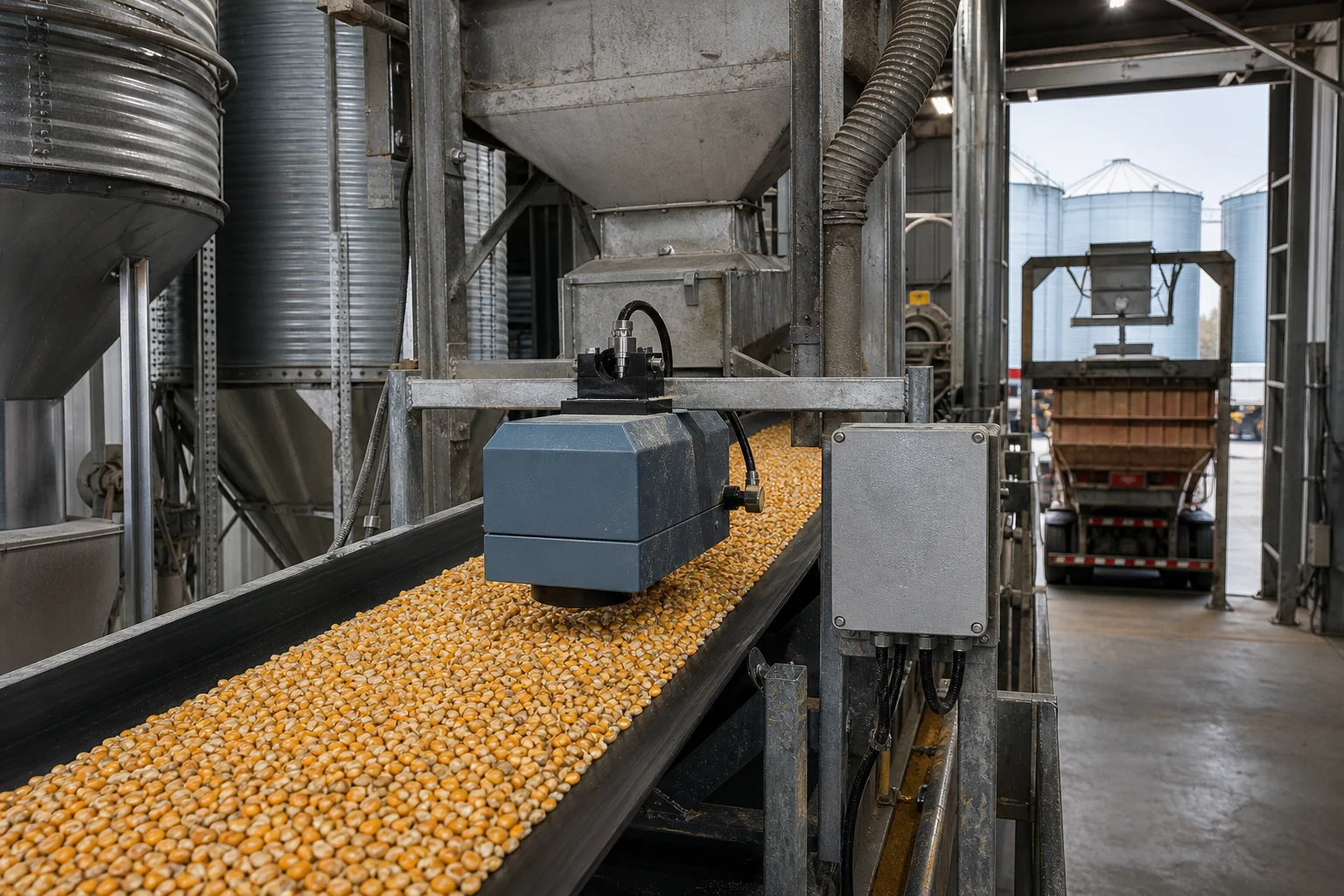
A clearly formed grain bed can reveal change early when coverage and crop or formula identity are stable. Product-contact and hygiene suitability must be confirmed for the actual configuration.
Use the correct reference method
Confirm the applicable cereal or feed method, wet/dry basis, grinding, drying and sample handling. Pair increments with the online time window.
Close the operational loop
Use valid states and process delay for dryer or blender decisions. Store supplier, silo, recipe and batch identity with the value.
Use a stage-specific decision record
For receiving, drying and blending separately record crop/formula, silo or batch, moisture basis, reference method, coverage, delay, valid-state rule and decision owner. Food/feed-contact, hygiene and regulatory release obligations must be checked for the exact process and configuration rather than inferred from the measurement principle.
Before you act
Engineering checklist
- Identify crop or formulation
- Record density and temperature
- Choose load or process coverage
- Confirm reference method
- Align sample timing
- Track silo, recipe and batch