← Back to all industries

Industries and materials

Agriculture and feed

Receiving, storage, grinding, mixing and pelleting ask different moisture questions. Reliable results depend on representative sampling, clear wet- or dry-basis reporting and calibration for the actual crop or feed grade.

Contact an engineer
Agriculture and feed

Process scenes and measurement points

Follow the material from moisture risk to control action

Each route starts with a real material flow. Define the risk, choose a representative measurement point and decide what the validated result will change.

Vehicle or intake receiving
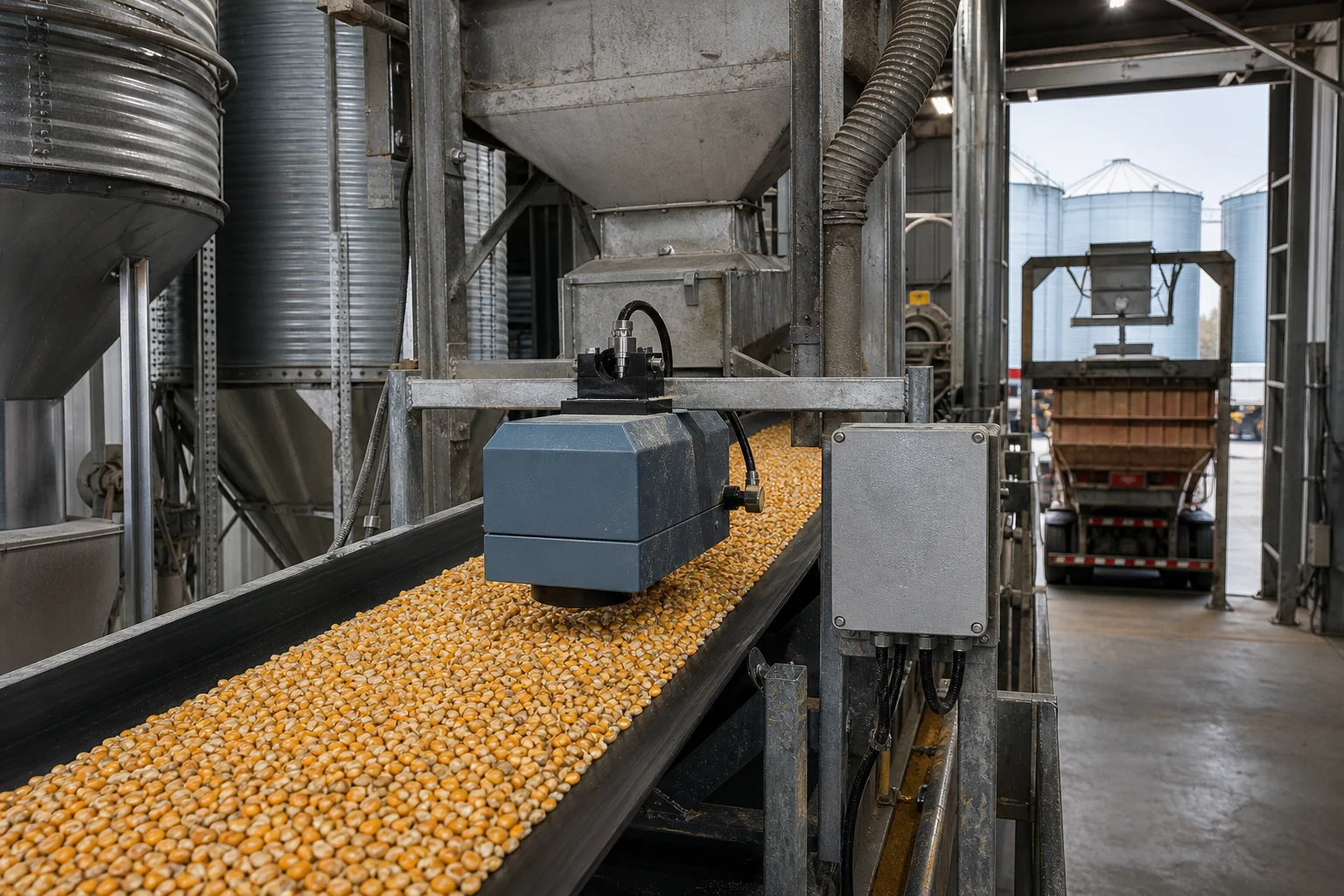
01Grain and ingredient receiving

Vehicle or intake receiving

Material
Grain, oilseed, feed ingredients and pellets
Moisture risk
Variety, temperature, fines and load stratification affect storability and commercial acceptance.
Measurement point
A representative intake stream or planned multi-position load sample tied to supplier and lot.
Control action
Accept, dry, segregate or route the lot to the correct storage bin.
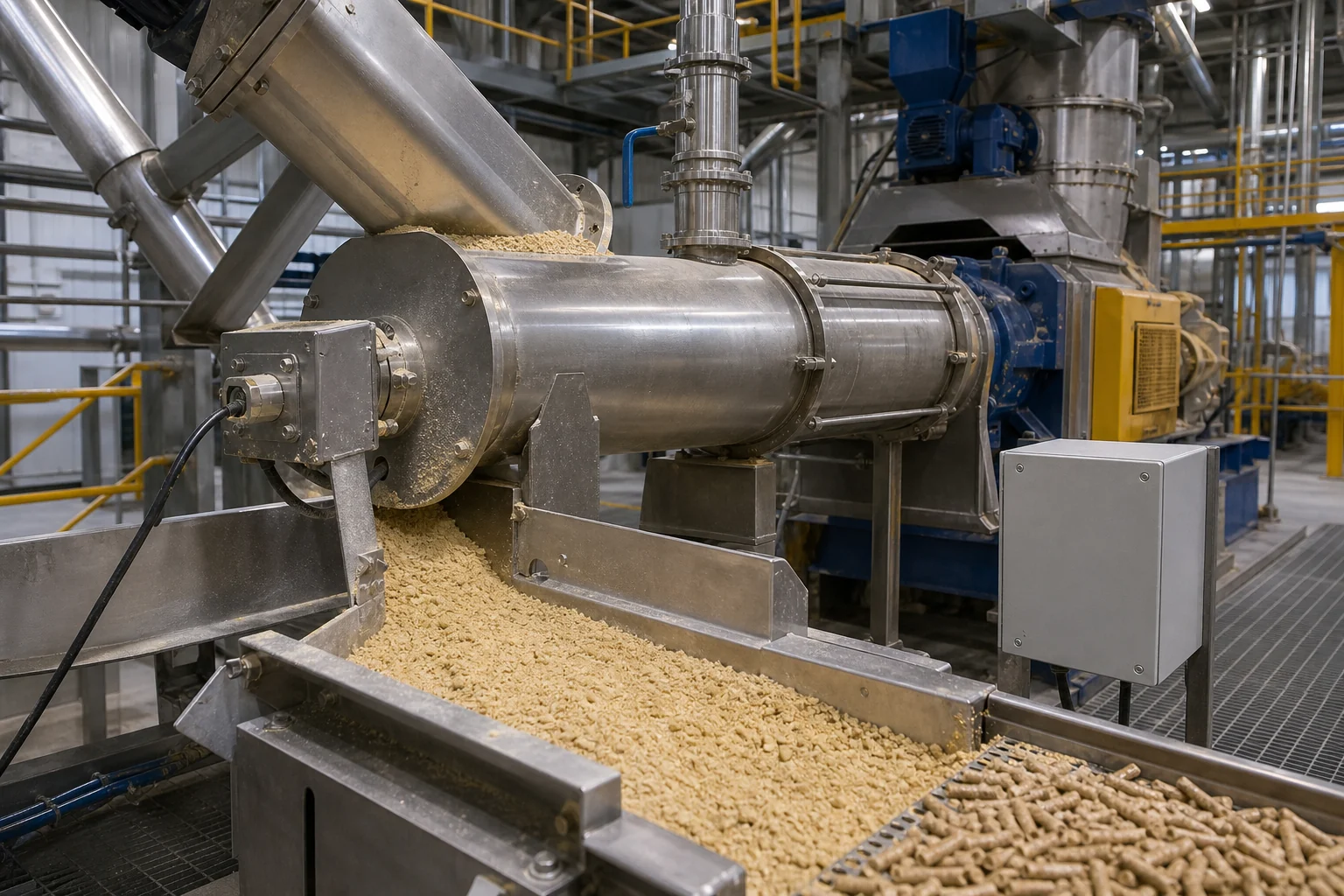
Conditioner and pellet-mill feed
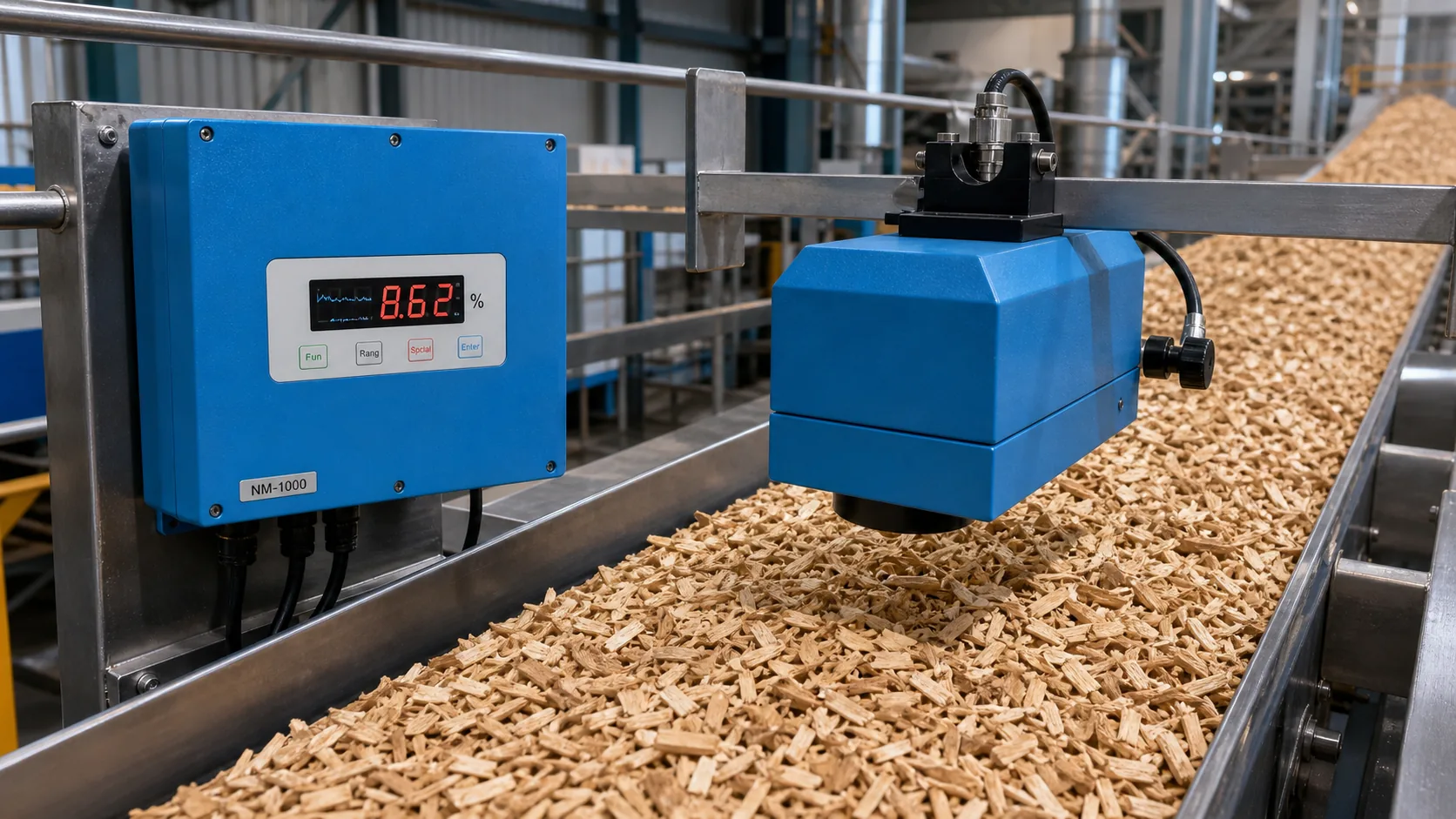
02Conditioning and pelleting control

Conditioner and pellet-mill feed

Material
Ground grain, mixed feed and conditioned meal
Moisture risk
Recipe and steam changes can shift moisture, energy use, pellet quality and cooling response.
Measurement point
Before the conditioner or at a validated downstream point with the material delay mapped.
Control action
Adjust steam or process review within recipe-specific limits and verify pellet response.
Storage transfer and dispatch
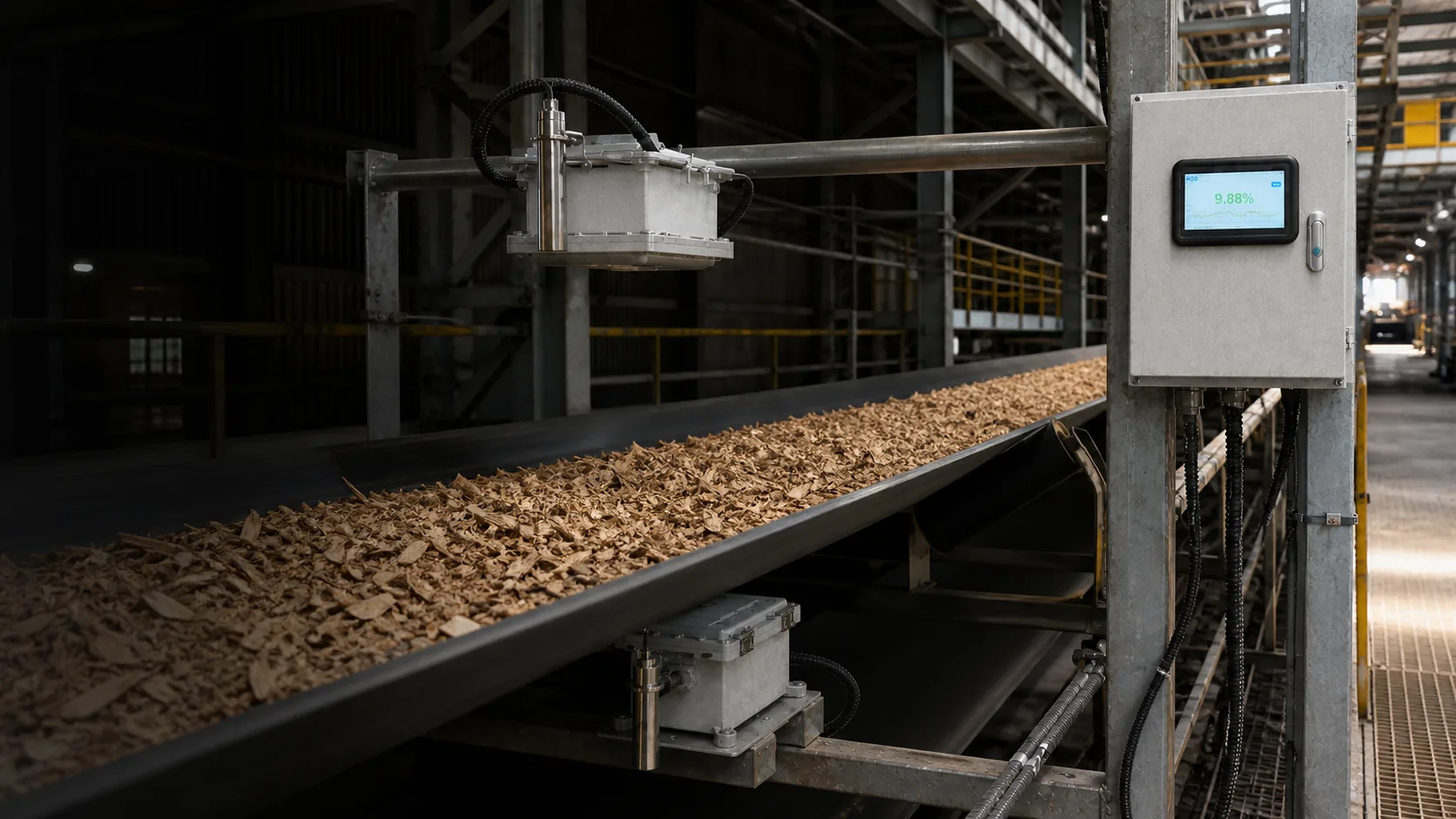
03Storage and release

Storage transfer and dispatch

Material
Stored grain, meal and finished pellets
Moisture risk
Residual moisture, hot spots and condensation raise spoilage, caking and release risk.
Measurement point
A representative silo transfer or packing stream paired with a sealed lot sample.
Control action
Hold, aerate, segregate or release the lot with the moisture basis recorded.

Practical moisture testing

How to test moisture in grain, feed and agricultural materials

Receiving, storage, grinding, mixing and pelleting ask different moisture questions. Reliable results depend on representative sampling, clear wet- or dry-basis reporting and calibration for the actual crop or feed grade.

01

How do you measure grain or feed moisture at receiving?

Measure a representative flow or a planned set of load positions and keep crop, supplier and lot identity with the result. Use a reference method suited to the material and intended commercial or process decision.

How to do it
  1. Define the lot and where increments or online readings represent it.
  2. Record commodity, grade, temperature and visible condition with every result.
  3. Validate routine measurement against sealed, time-aligned reference samples.
Variables to control

Kernel or pellet size, fines, temperature, variety, density, surface water and load stratification.

Use the result to

route, accept, dry or segregate incoming material using traceable evidence.

Read the full methodGrain and feed moisture measurement from receiving to drying and blending
02

How do you control moisture through grinding, mixing and pelleting?

Measure before the step where action can still change the process and account for transport delay. Use recipe-specific bands because grain blends and feed formulations do not share one universal response.

How to do it
  1. Map moisture inputs and delays from bins through conditioner and pellet mill.
  2. Establish baselines by recipe, throughput and season.
  3. Trial alarms or bounded corrections and verify energy, pellet quality and cooling response.
Variables to control

Recipe composition, steam addition, retention time, throughput, fines and sensor-to-product delay.

Use the result to

stabilise conditioning and product quality without overcorrecting normal recipe variation.

Read the full methodGrain and feed moisture measurement from receiving to drying and blending
03

How do you take a representative grain or feed moisture sample?

Collect multiple increments across time or load position and protect them immediately. Fines, broken kernels and hot material can separate or lose moisture before the laboratory test.

How to do it
  1. Define the sampling frame and increment frequency for the lot.
  2. Combine and reduce the sample without discarding fines or exposed fractions.
  3. Seal, label and test within a controlled time using the agreed reference method.
Variables to control

Segregation, sample temperature, evaporation, condensation, sample mass and preparation method.

Use the result to

compare routine and reference measurements without letting sampling dominate the difference.

Read the full methodRepresentative sampling: connect the laboratory sample to the online value
04

What is the difference between wet-basis and dry-basis moisture for grain and feed?

Wet basis divides water mass by total wet mass; dry basis divides water mass by dry solids. The same material therefore has different numerical percentages, and the basis must be stated in every limit, calibration and record.

How to do it
  1. Confirm the basis used by the reference method, contract and production system.
  2. Use the correct conversion formula when systems report different bases.
  3. Label units and basis in the PLC, report and alarm configuration.
Variables to control

Unlabelled percentages, spreadsheet formulas, rounding and mixed contract conventions.

Use the result to

prevent basis conversion errors in drying, formulation and settlement.

Read the full methodWet-basis vs dry-basis moisture: why the percentages differ
05

How do you set grain or feed moisture alarms for storage and production?

Use commodity-specific requirements, site risk controls and validated process capability. Separate a product warning from sensor fault, empty-flow and out-of-range states.

How to do it
  1. Build distributions by commodity, supplier, season and storage route.
  2. Link each warning or action band to a documented operator response.
  3. Test alarm persistence, process delay and fallback behaviour before use.
Variables to control

Temperature, storage duration, commodity grade, sampling uncertainty and seasonal shifts.

Use the result to

trigger drying, segregation or process review at the point where action remains possible.

Read the full methodClosed-loop moisture control: move safely from trending to automatic action

Project success factors

Build a reliable measurement result

Share your material, moisture range and process conditions to receive a focused measurement recommendation.

  • A clearly defined material and process objective
  • A suitable sensor route and installation geometry
  • A representative reference method and calibration plan
  • Environmental and compliance requirements
  • Validation under real operating conditions

Application pathway

Place the measurement where it can change the process

Receiving, storage, grinding, mixing and pelleting ask different moisture questions. Reliable results depend on representative sampling, clear wet- or dry-basis reporting and calibration for the actual crop or feed grade.

01

Locate the variation

Map where moisture enters, separates, dries or is mixed before choosing an accessible measurement point.

02

Choose the representative point

Match surface, contact, transmission or scanning coverage to the material flow and the decision that follows.

03

Connect the reference

Align representative samples, method, calculation basis and laboratory time with the online measurement window.

04

Define the production action

Assign valid states, alarm limits, manual response, control authority and a review method for abnormal material.

Sources of moisture variation

Sources of moisture variation

Crop, variety, harvest condition, silo, temperature, fines and formulation cause rapid changes from receiving through drying and blending.

Reference and operating response

Reference and operating response

Separate material groups and measure at the decision point: multi-section receiving, controlled conveyor bed or representative surface. Keep wet/dry basis, grinding, sample sealing and residence time consistent with the reference method.

Begin with an observation period that records the online value, reference samples, product identity and operating state. Use the combined record to set material groups and valid limits. Then introduce alarms, operator guidance or bounded control in stages, with a manual fallback and a documented response for off-specification or unmeasured material.

Discuss your material, process point and control objective

Share a few process details and our application team will recommend a suitable technology, installation concept and validation plan.

Contact an engineer
WhatsApp