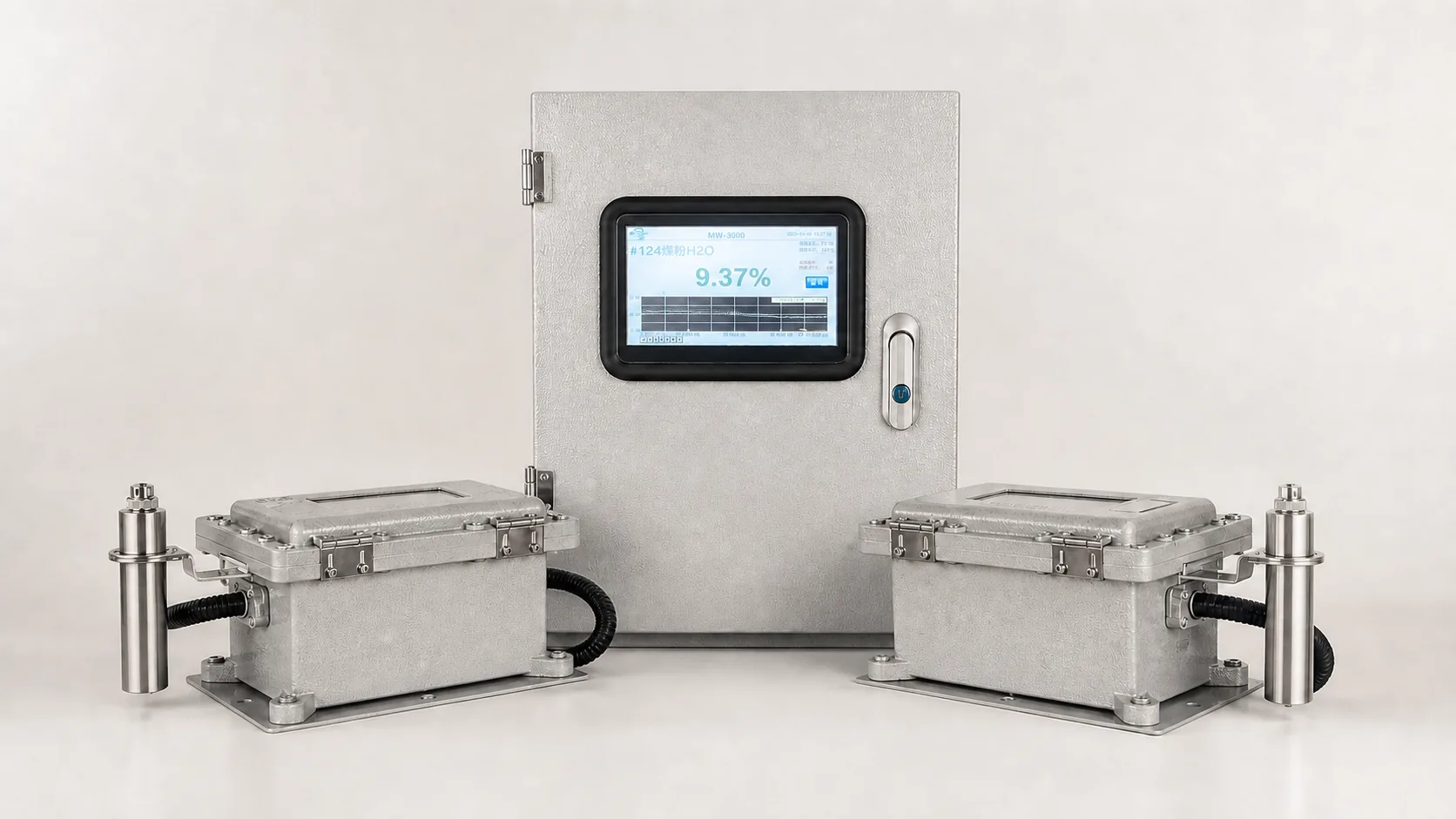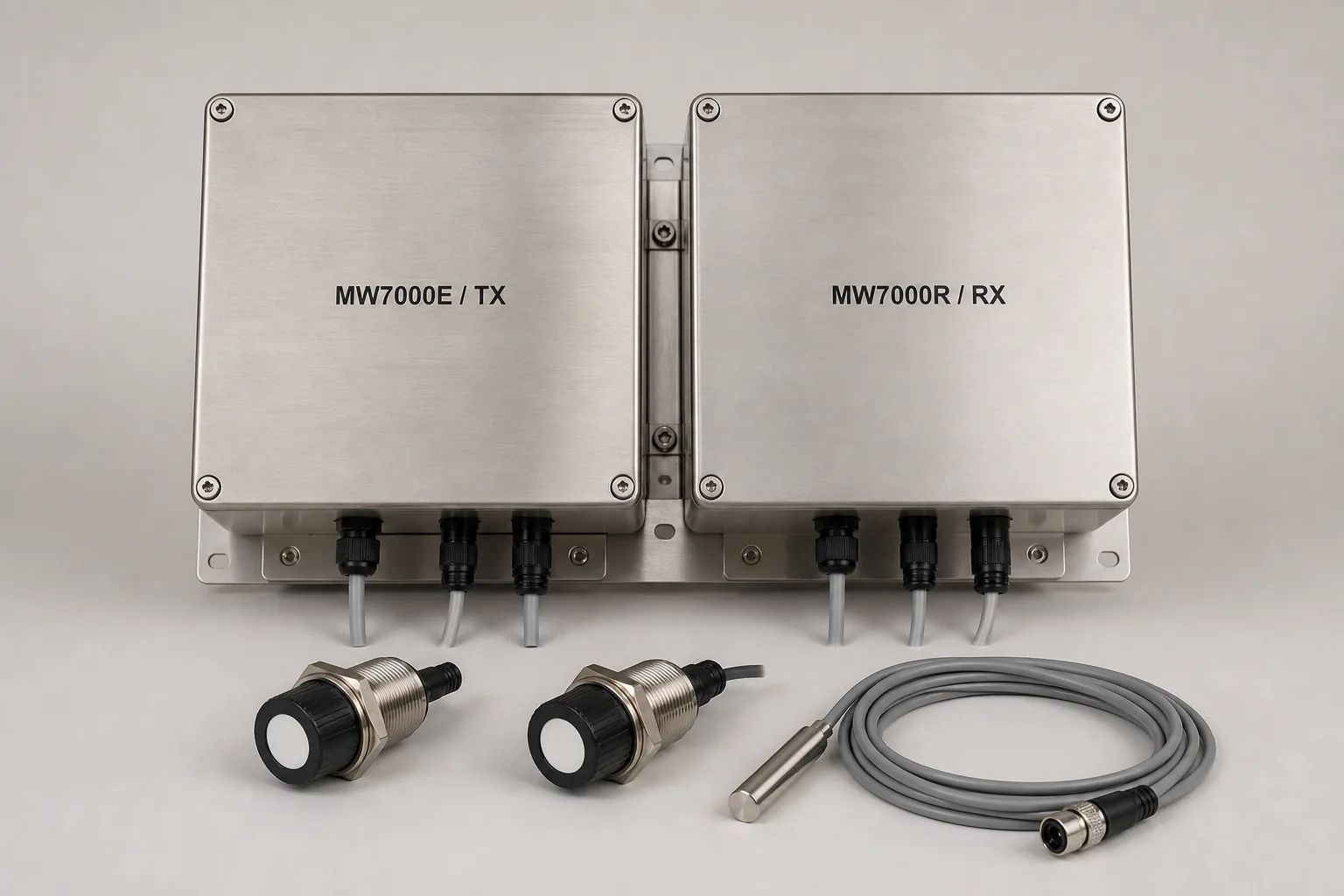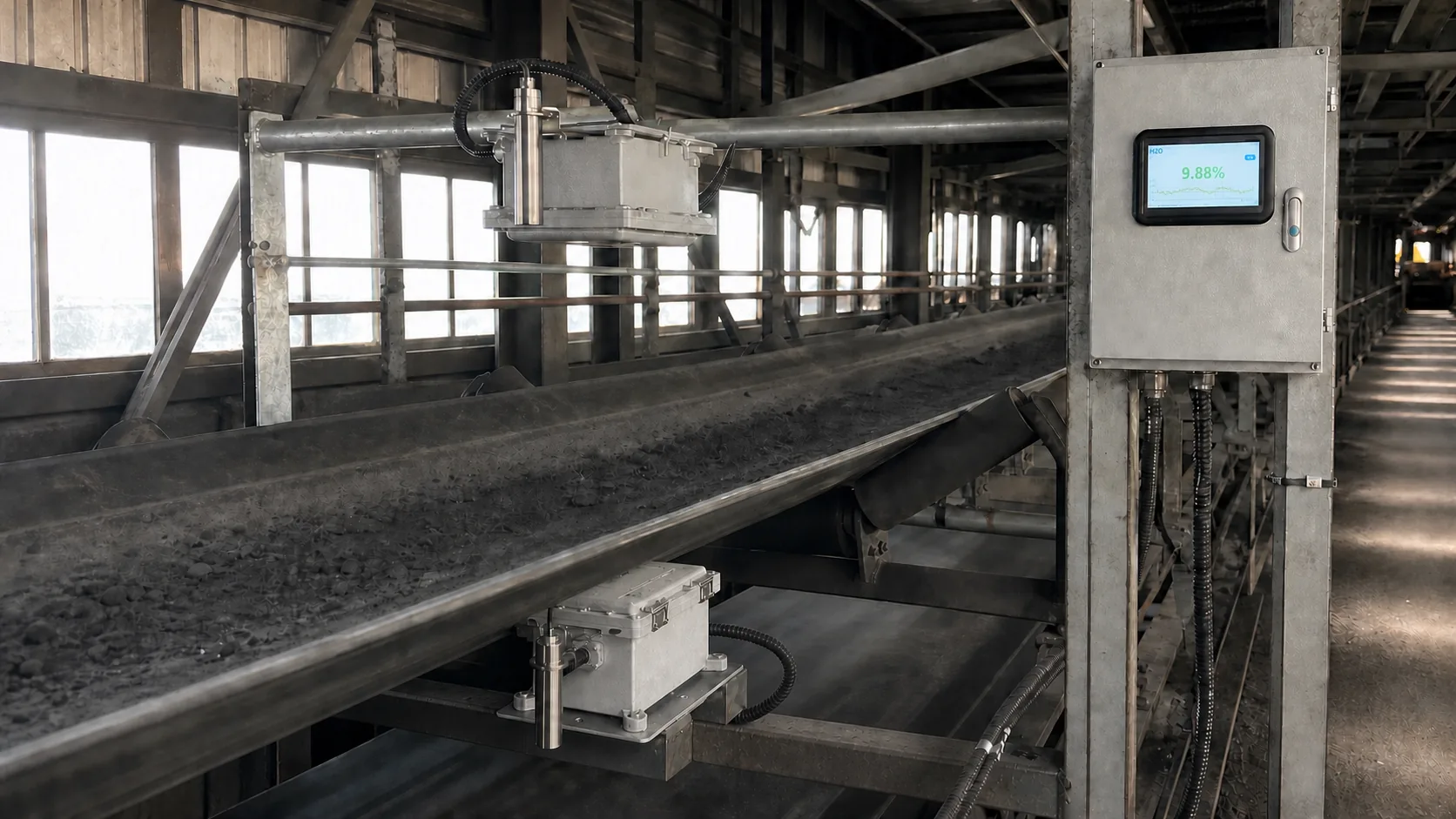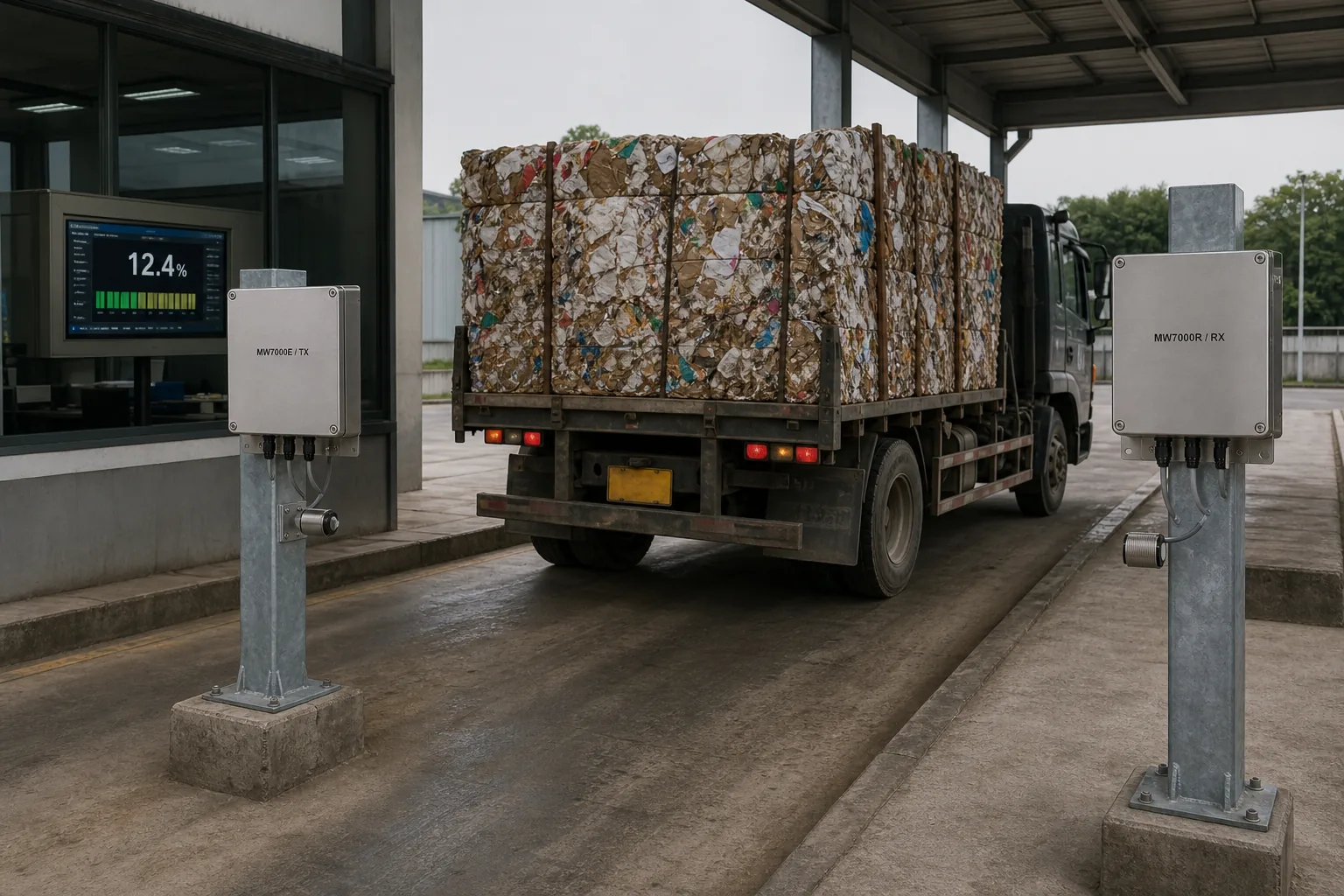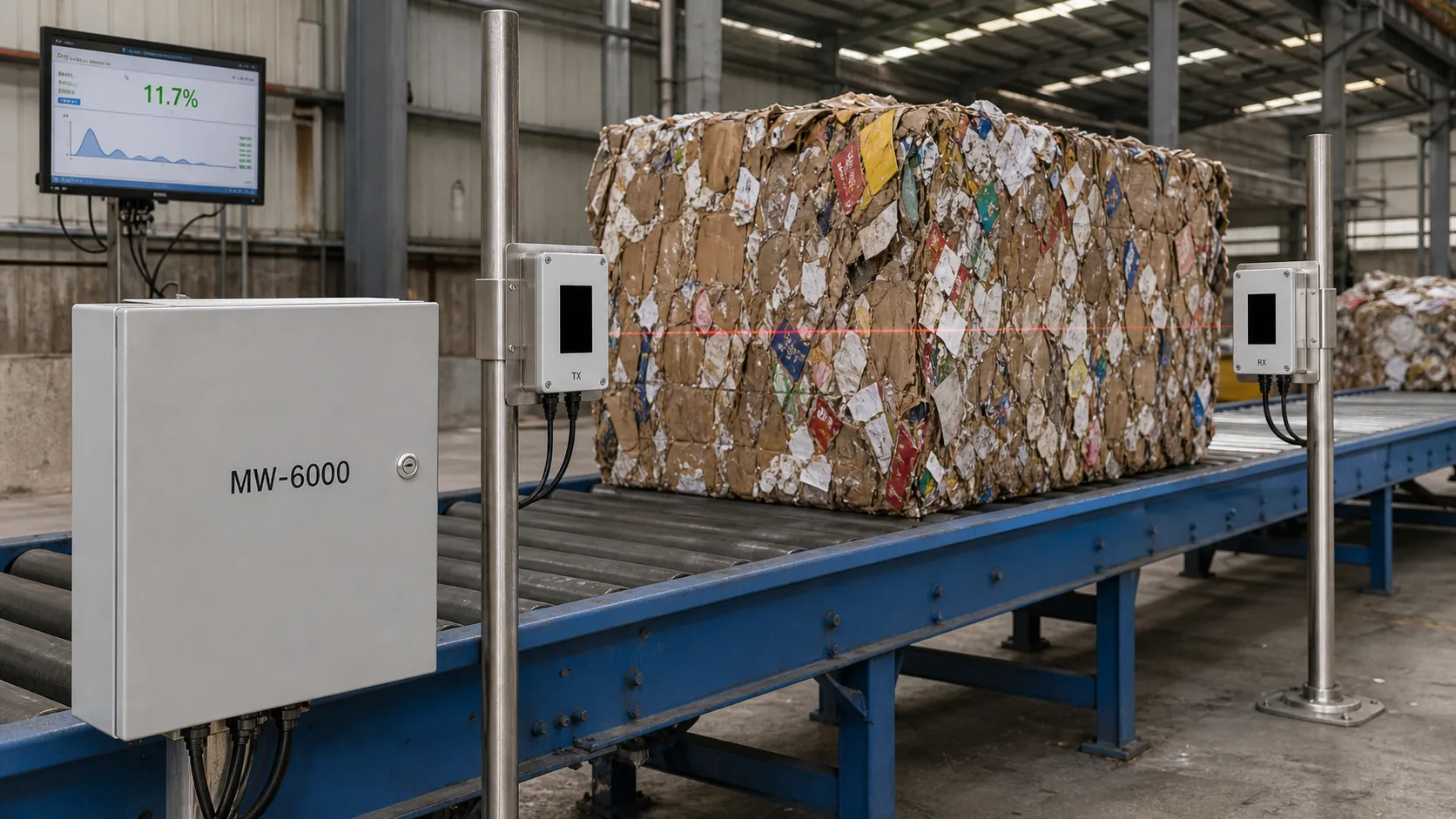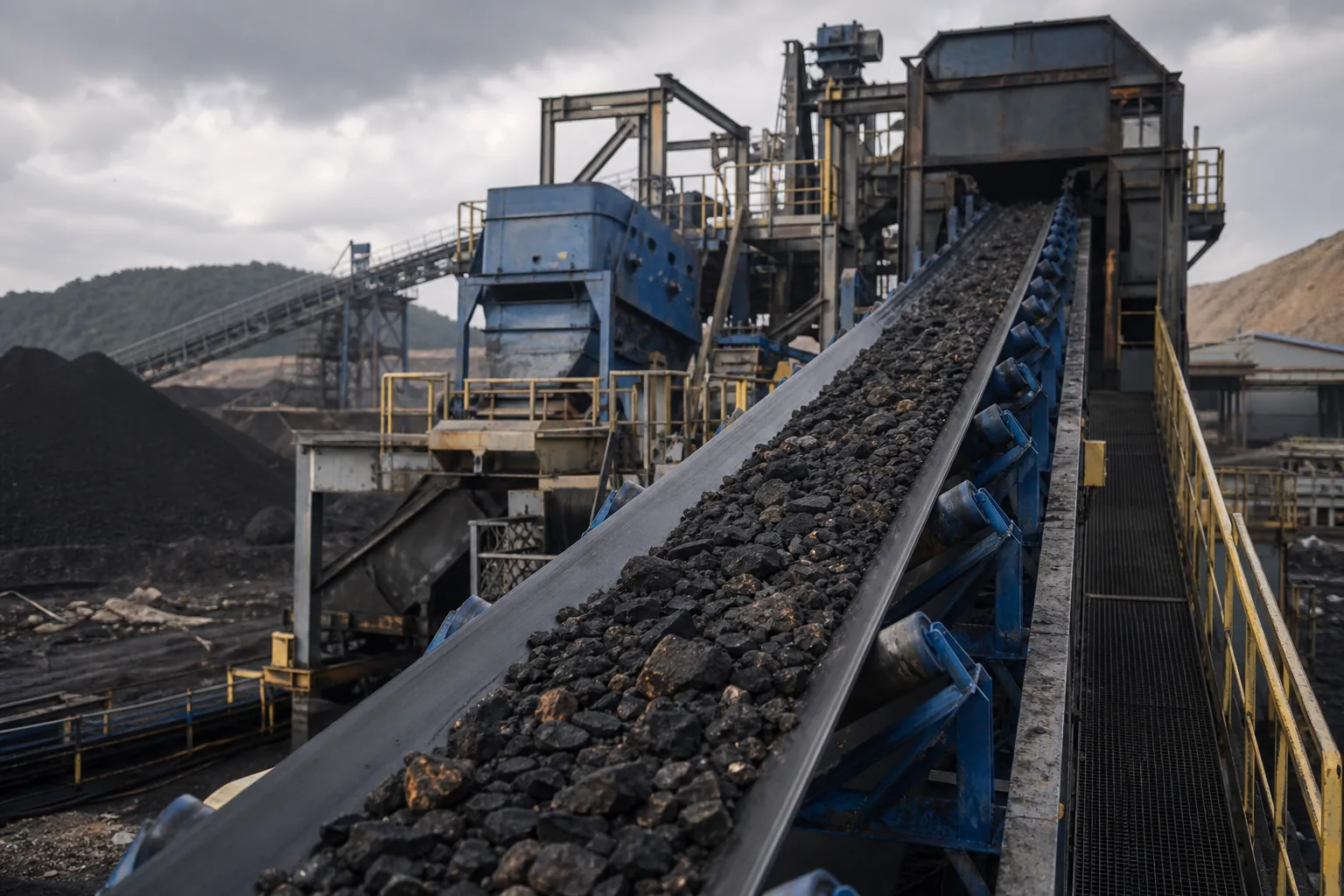
Performance depends on the material, reference method, operating range and installed configuration described in the project.
Production decision map
Make conveyor moisture usable without losing geometry and safety context
Bulk-mineral measurement must separate actual water change from depth, density and particle-size effects while keeping sampling access, guarding and commercial boundaries explicit.
Feed → conveyor → stockpile or process → lot record
Preserve material grade, source, belt, time window and destination so the result follows the same stream to its decision.
Depth, density, segregation and wear can look like moisture change
Partial loading, large particles, vibration, build-up and metal near the sensing zone can move the measurement outside its verified geometry.
Use a stable, well-covered section with safe sampling
Document bed-depth and loading limits, sensor distance and invalid states. Collect timed increments from the same moving stream, not a convenient stationary pile.
Adjust, divert or flag only inside the validated envelope
Send moisture with a quality state. Block control or commercial use during low coverage, grade transition, maintenance or out-of-range geometry.
Test materials and geometry independently
Validate by grade, size distribution, depth, density and temperature. Review guarding, abrasion, access and any hazardous-area requirement as separate acceptance gates.
Choose a representative flow
Inspect loading, belt profile, edge loss, segregation, fines and intermittent coverage. Select a point that represents the material used for the downstream decision.
Design for abrasion and geometry
Protect the measurement system without blocking the path. Record bed depth, density, particle size, speed, vibration and alignment and define maintenance inspection.
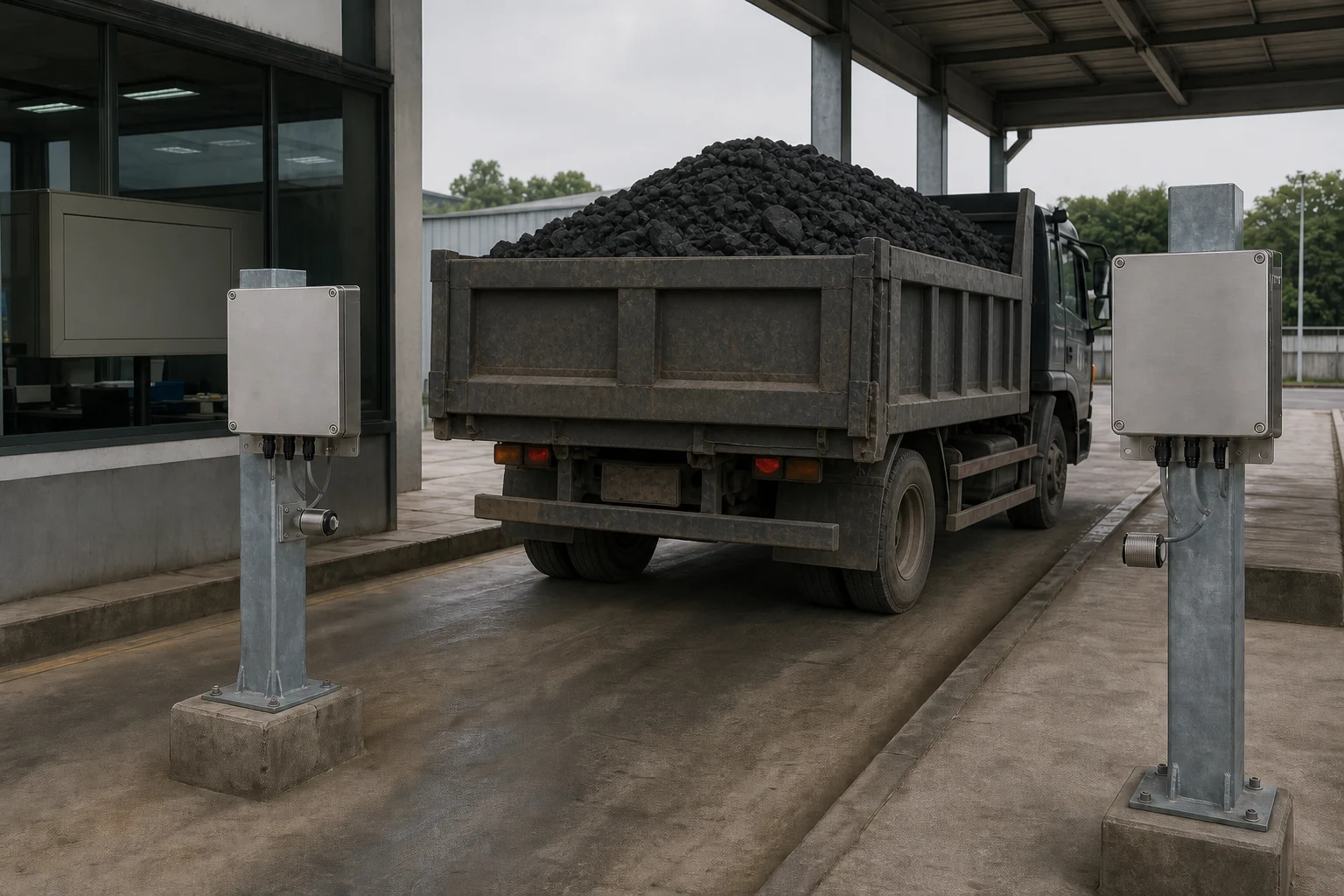
A receiving scan needs planned vehicle sections, verified coverage and a reference procedure for the same load. Paired measurement posts do not by themselves establish hazardous-area approval.
Cover operating and ore variability
Include ore type, source, wet-weather events, fines fraction, temperature and throughput. Flag conditions outside the verified geometry.
Match the reference safely
Use a safe multi-increment sampling plan and align it with belt delay or truck sections. Record sample reduction and laboratory method.
Treat safe access and wear as acceptance conditions
Document guarding, sampling access, abrasion protection, inspection interval, vibration and minimum coverage with the site safety owner. Hazard classification and explosion protection require review of the actual site and supplied equipment; a moisture route or protective housing alone is not evidence of approval.
Before you act
Engineering checklist
- Map belt profile
- Record size and density
- Define minimum coverage
- Plan wear protection
- Include wet-weather range
- Align safe reference samples