← Back to all industries

Industries and materials

Mining and bulk minerals

Coal, concentrates, ore and industrial minerals can change in particle size, density and bed geometry. Measurement must distinguish those effects from moisture before it is used for process control or commercial settlement.

Contact an engineer
Mining and bulk minerals

Process scenes and measurement points

Follow the material from moisture risk to control action

Each route starts with a real material flow. Define the risk, choose a representative measurement point and decide what the validated result will change.

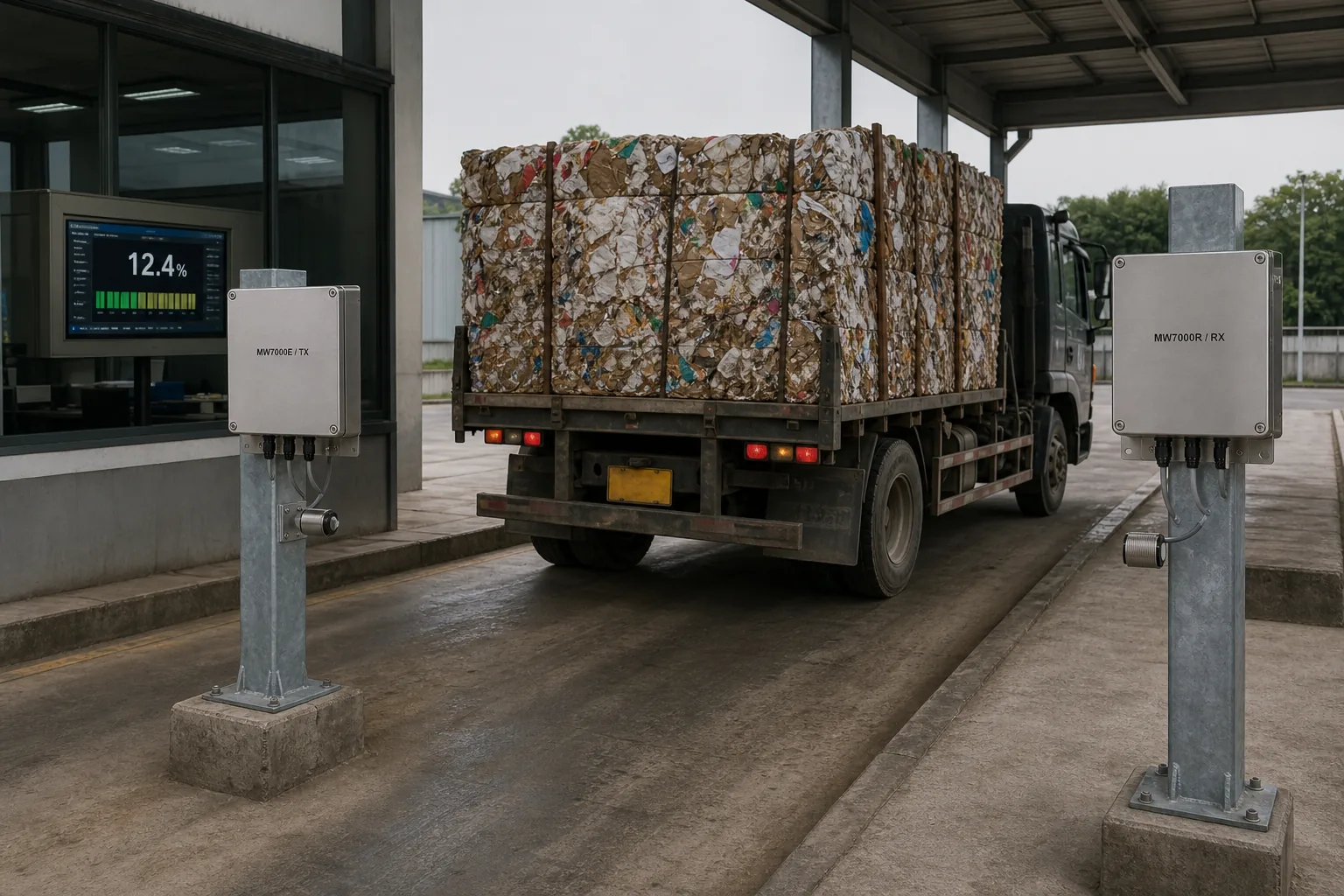
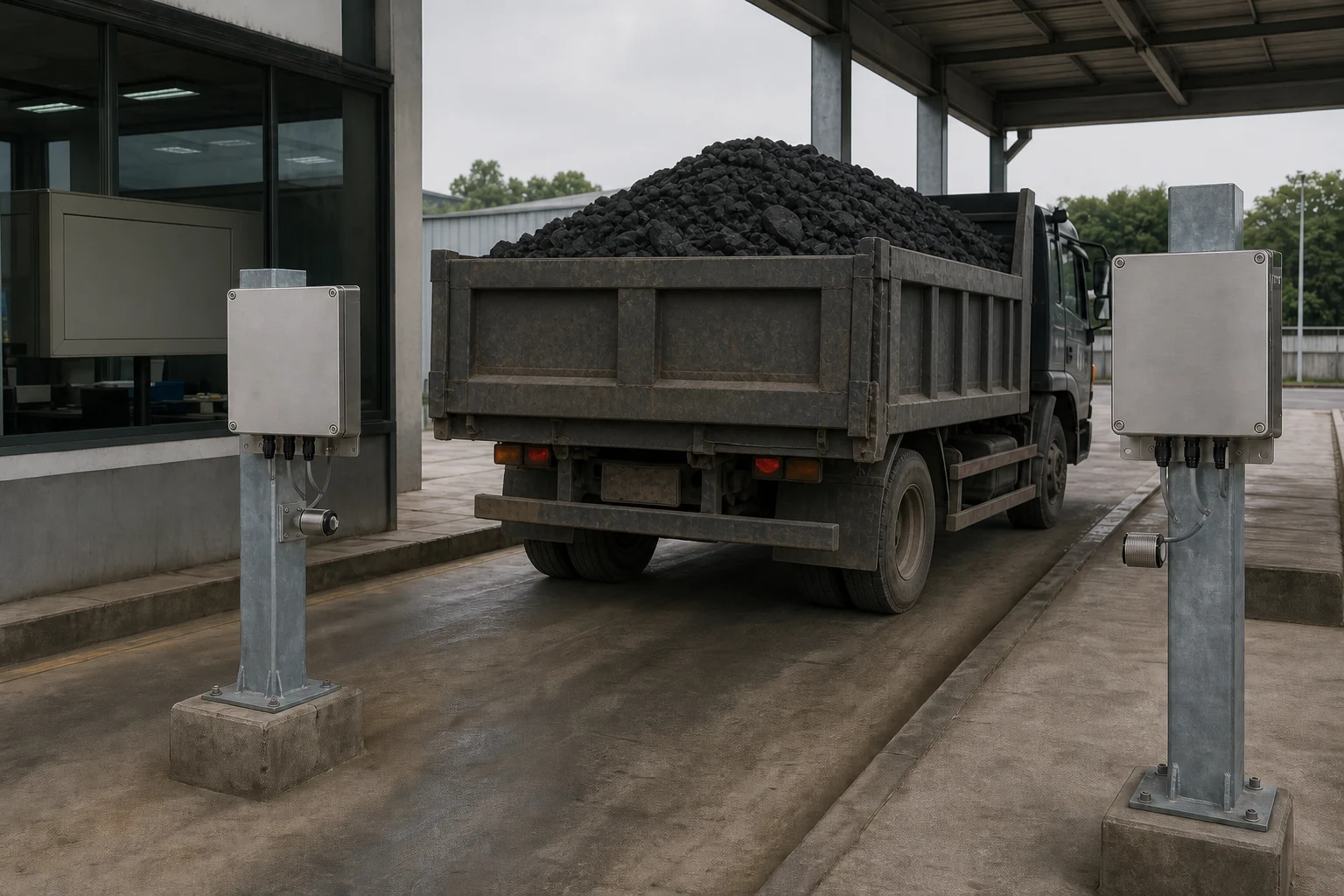
Vehicle receiving and stockpile routing
01Receiving and stockpile control

Vehicle receiving and stockpile routing

Material
Coal, ore, concentrate and bulk minerals
Moisture risk
Rain, crusting and particle segregation can bias a surface reading and payable dry mass.
Measurement point
Planned vehicle sections or a formed conveyor stream before the stockpile decision.
Control action
Accept, hold, segregate or start reference verification near commercial limits.
Dewatering or crushing discharge
02Dewatering and crushing response

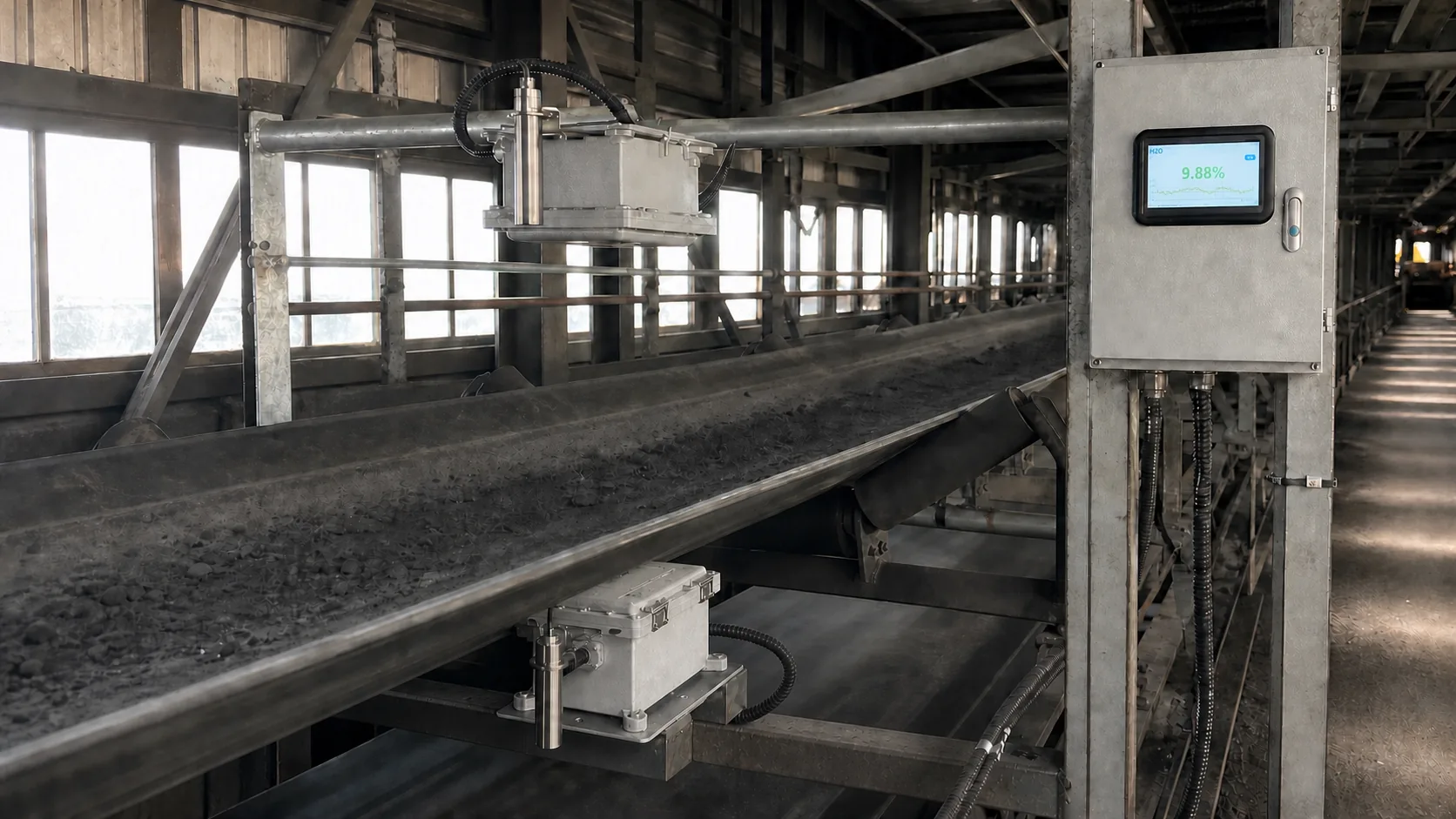
Dewatering or crushing discharge

Material
Filter cake, crushed ore and mineral feed
Moisture risk
Water-solid separation, surges and spray water can make a transient point unrepresentative.
Measurement point
Downstream of the process after flow has stabilised, but before blending or stockpiling removes the option to act.
Control action
Review dewatering, blending or process settings using time-aligned reference evidence.
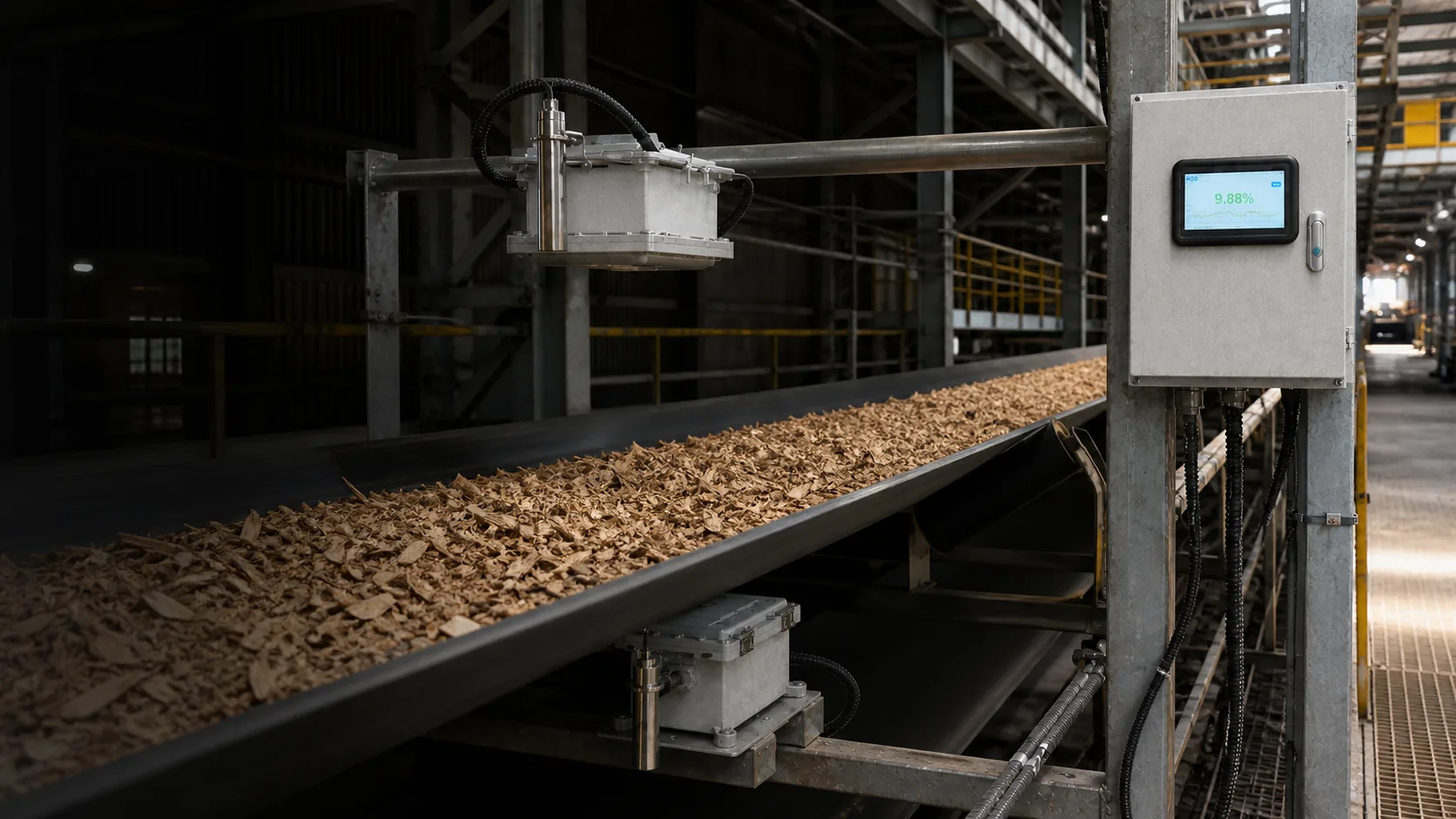
Conveyor transfer and loadout
03Loadout and dry-mass decisions

Conveyor transfer and loadout

Material
Coal, ore and processed mineral products
Moisture risk
Depth and density changes can appear as false moisture excursions and distort dry-tonnage decisions.
Measurement point
A level, sufficiently covered belt section with explicit empty, low-load and abnormal-profile states.
Control action
Control drying or blending and calculate dry mass only inside the validated load envelope.

Practical moisture testing

How to measure moisture in mining and bulk-mineral handling

Coal, concentrates, ore and industrial minerals can change in particle size, density and bed geometry. Measurement must distinguish those effects from moisture before it is used for process control or commercial settlement.

01

How do you measure coal or ore moisture on a conveyor belt?

Choose a belt section with stable loading, controlled geometry and access to the same stream for reference sampling. Record signal validity when the belt is empty, underfilled or carrying an abnormal profile.

How to do it
  1. Survey loading profile, burden depth, size distribution and belt condition.
  2. Install after the flow is formed and before the required control decision.
  3. Pair time-aligned sensor averages and reference increments across representative production.
Variables to control

Bed depth, bulk density, large lumps, segregation, belt structure, speed and temperature.

Use the result to

monitor process moisture without confusing load geometry with water content.

Read the full methodBulk mineral moisture measurement on conveyors and incoming loads
02

Where is the best moisture measurement point after dewatering or crushing?

Place the measurement after the process has created a representative stream but early enough for corrective action. Avoid transient discharge zones where water and solids separate or where surges change the measured volume.

How to do it
  1. Map each process step and the delay to the control actuator or stockpile.
  2. Compare candidate points during steady flow, start-up and expected upset conditions.
  3. Confirm sampling safety, maintenance access and mechanical protection before installation.
Variables to control

Drainage, carryback, spray water, surge bins, segregation, abrasion and process delay.

Use the result to

select a point that measures the material affected by the intended process decision.

Read the full methodHow the measurement point determines representativeness
03

How do you compensate for bulk density and burden-depth changes?

First reduce unnecessary geometry variation through loading control or levelling. Then measure or model the remaining range and block values when material coverage falls outside the validated envelope.

How to do it
  1. Record depth, density, size distribution and temperature beside moisture references.
  2. Test whether auxiliary measurements or grade-specific models reduce residual error.
  3. Define validated limits and send a quality state whenever the load leaves them.
Variables to control

Void fraction, compaction, particle size, path length, temperature and sensor distance.

Use the result to

prevent density or depth changes from being reported as false moisture excursions.

Read the full methodWhy density, bed depth, distance and temperature change moisture readings
04

How do you inspect truckload moisture in bulk minerals?

Use a documented multi-position plan and keep each result tied to the vehicle, material and load section. A truck-level decision should not be based on one accessible surface point.

How to do it
  1. Divide the load into sections that can be measured safely and repeatedly.
  2. Quantify within-truck variation during the pilot and set routine coverage.
  3. Use a separate escalation and reference-sampling process near commercial limits.
Variables to control

Load shape, crusted or rain-wet surface, hidden layers, access safety and material segregation.

Use the result to

screen loads consistently and identify those requiring additional verification.

Read the full methodTruckload moisture inspection: make multiple sections represent the incoming load
05

How do you validate moisture data used for mineral settlement?

Use an agreed reference method, representative lot sampling and an independent validation set. Keep uncertainty, rounding and guard bands visible when the result affects payable dry mass.

How to do it
  1. Define lot identity, sampling increments, sample preparation and reporting basis.
  2. Compare routine-system results with independent reference results across suppliers and grades.
  3. Lock the approved model and retain raw data, validity states and revision history.
Variables to control

Sampling bias, particle segregation, sample preparation, wet/dry basis, rounding and contract limits.

Use the result to

support traceable dry-mass calculations and evidence-based dispute review.

Read the full methodCalibration is not validation: what independent validation should test

Project success factors

Build a reliable measurement result

Share your material, moisture range and process conditions to receive a focused measurement recommendation.

  • A clearly defined material and process objective
  • A suitable sensor route and installation geometry
  • A representative reference method and calibration plan
  • Environmental and compliance requirements
  • Validation under real operating conditions

Application pathway

Place the measurement where it can change the process

Coal, concentrates, ore and industrial minerals can change in particle size, density and bed geometry. Measurement must distinguish those effects from moisture before it is used for process control or commercial settlement.

01

Locate the variation

Map where moisture enters, separates, dries or is mixed before choosing an accessible measurement point.

02

Choose the representative point

Match surface, contact, transmission or scanning coverage to the material flow and the decision that follows.

03

Connect the reference

Align representative samples, method, calculation basis and laboratory time with the online measurement window.

04

Define the production action

Assign valid states, alarm limits, manual response, control authority and a review method for abnormal material.

Sources of moisture variation

Sources of moisture variation

Rain, stockpile position, fines, drainage, ore grade and handling can make bulk minerals highly heterogeneous.

Reference and operating response

Reference and operating response

Choose a well-mixed conveyor transfer or a defined incoming-load scan rather than an accessible but unrepresentative surface. Align increments with belt travel and apply values to blending, drying, inventory or settlement under explicit validity rules.

Begin with an observation period that records the online value, reference samples, product identity and operating state. Use the combined record to set material groups and valid limits. Then introduce alarms, operator guidance or bounded control in stages, with a manual fallback and a documented response for off-specification or unmeasured material.

Discuss your material, process point and control objective

Share a few process details and our application team will recommend a suitable technology, installation concept and validation plan.

Contact an engineer
WhatsApp