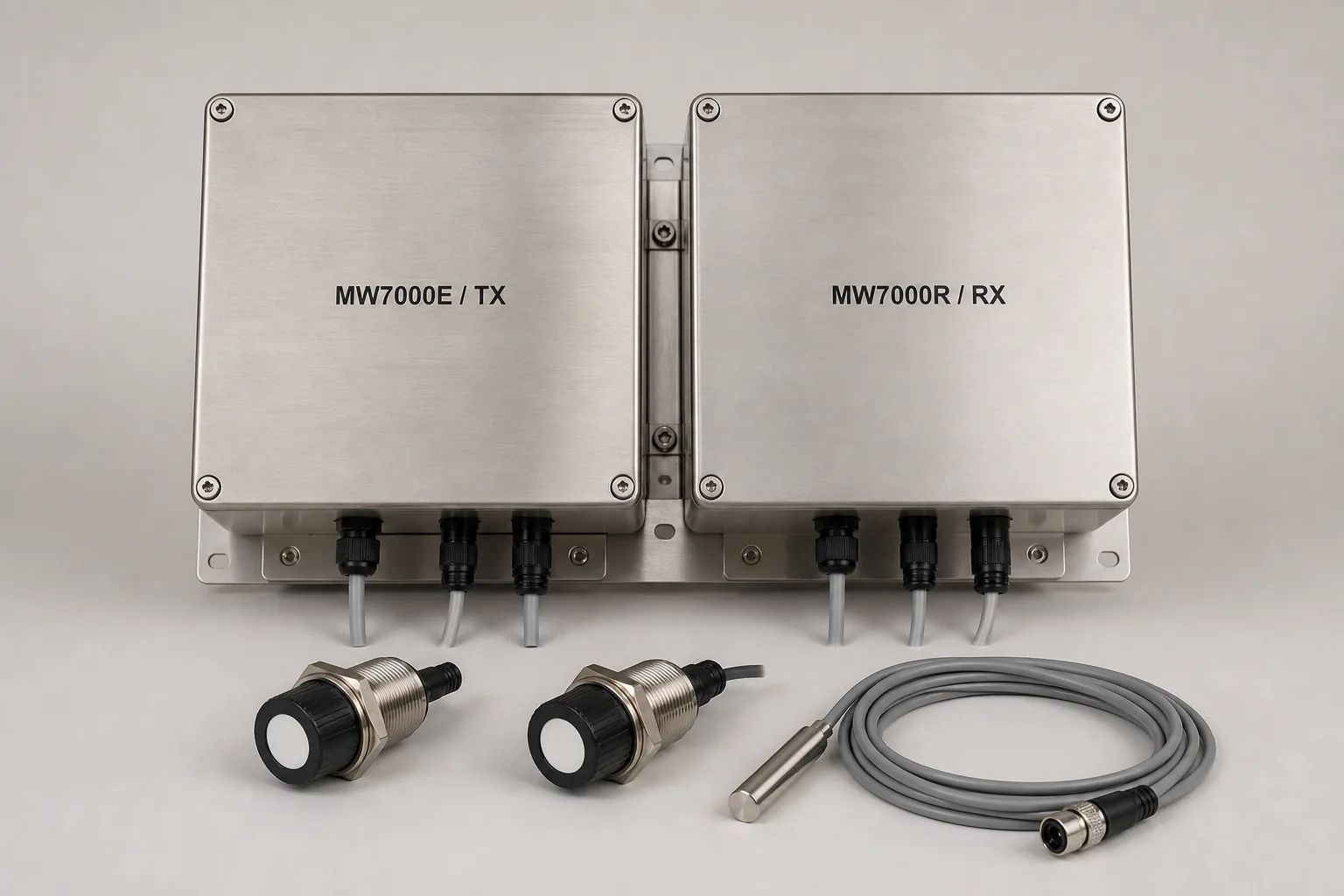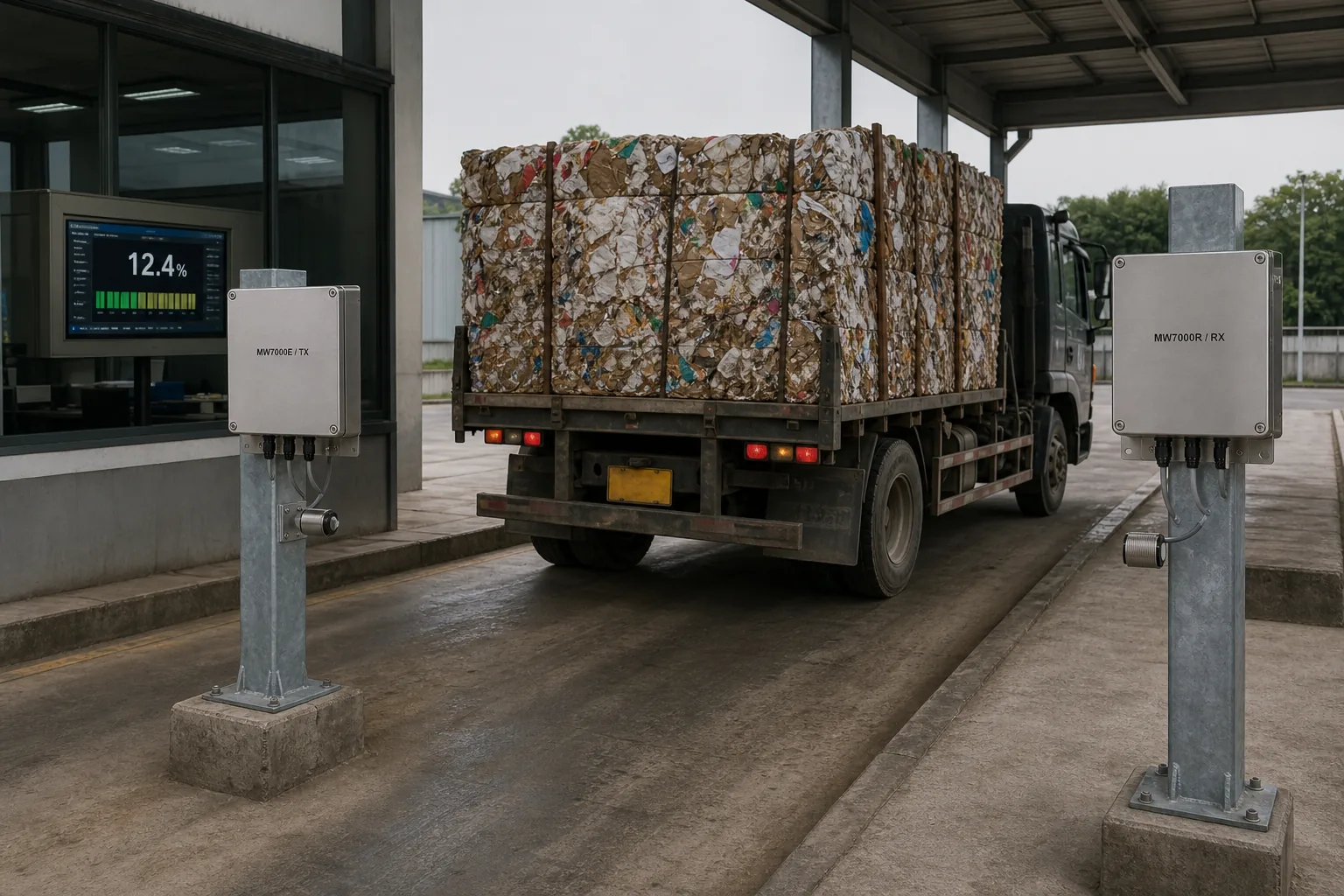
Performance depends on the material, reference method, operating range and installed configuration described in the project.
Production decision map
From unloading to a defensible bale disposition
Receiving control must show how much of each bale or load was inspected, where anomalous wet zones were found and which evidence supported the authorised disposition.
Unload → identify → scan → sample → disposition
Keep supplier, load, bale grade and bale ID attached to every scan and sample so results cannot migrate between lots.
Moisture and contamination are uneven inside compressed bales
Outer faces, gaps and a few high readings cannot by themselves describe the full bale. Compression and orientation also change what a scan covers.
Use repeatable positions that address likely wet zones
Define faces, heights, passes and minimum valid readings. Flag gaps, loose material and incomplete coverage before any bale or load summary is calculated.
Hold, route or sample under an authorised rule
Use scan evidence to trigger inspection actions, not an undisclosed automatic penalty. Preserve individual readings and the reason for every manual decision.
Compare coverage with a defined dry-matter reference
Link laboratory samples to the same bale or lot, test across grades and suppliers, and document the aggregation rule separately from ownership, discount or rejection terms.
Separate grades and load forms
Record paper grade, wrapping, bale size, compression, loose material, gaps and contamination. Use valid material groups rather than one relationship for every recovered-paper stream.
Measure coverage, not convenience
Choose bale or load sections that address likely wet zones. Preserve individual scan results and identify coverage failures before calculating a supplier summary.

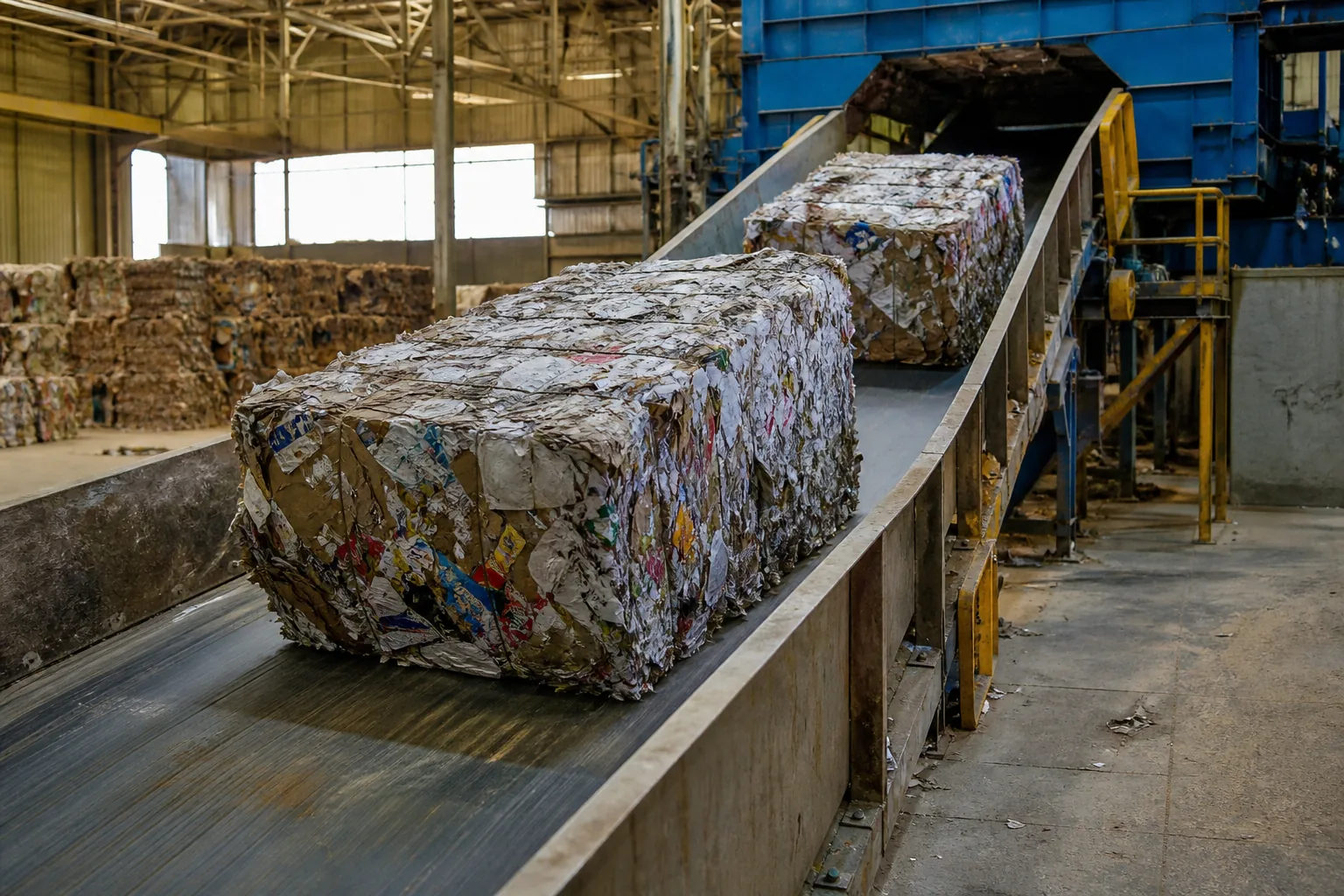
A bale-line scene clarifies the difference between scan coverage and a single convenient reading. Commercial disposition remains subject to the agreed receiving procedure.
Use a defined dry-matter reference
Confirm the applicable laboratory method and sample preparation with the quality team. Use multiple increments and protect samples from changing moisture.
Build a fair receiving workflow
Set recheck, quarantine, visual inspection, supplier notification and approval rules. Keep sensor evidence separate from contract authority.
Separate evidence from supplier disposition
The receiving record should preserve supplier/load/bale IDs, visible condition, scan coverage, abnormal wet zones, reference samples, rule version and authorised disposition. Moisture observations support inspection, but ownership, deductions, rejection and dispute handling follow the agreed commercial procedure, not an unstated sensor threshold.
Before you act
Engineering checklist
- Identify paper grade
- Record compression and wrapping
- Define scan coverage
- Collect multiple increments
- Confirm dry-matter method
- Approve supplier workflow