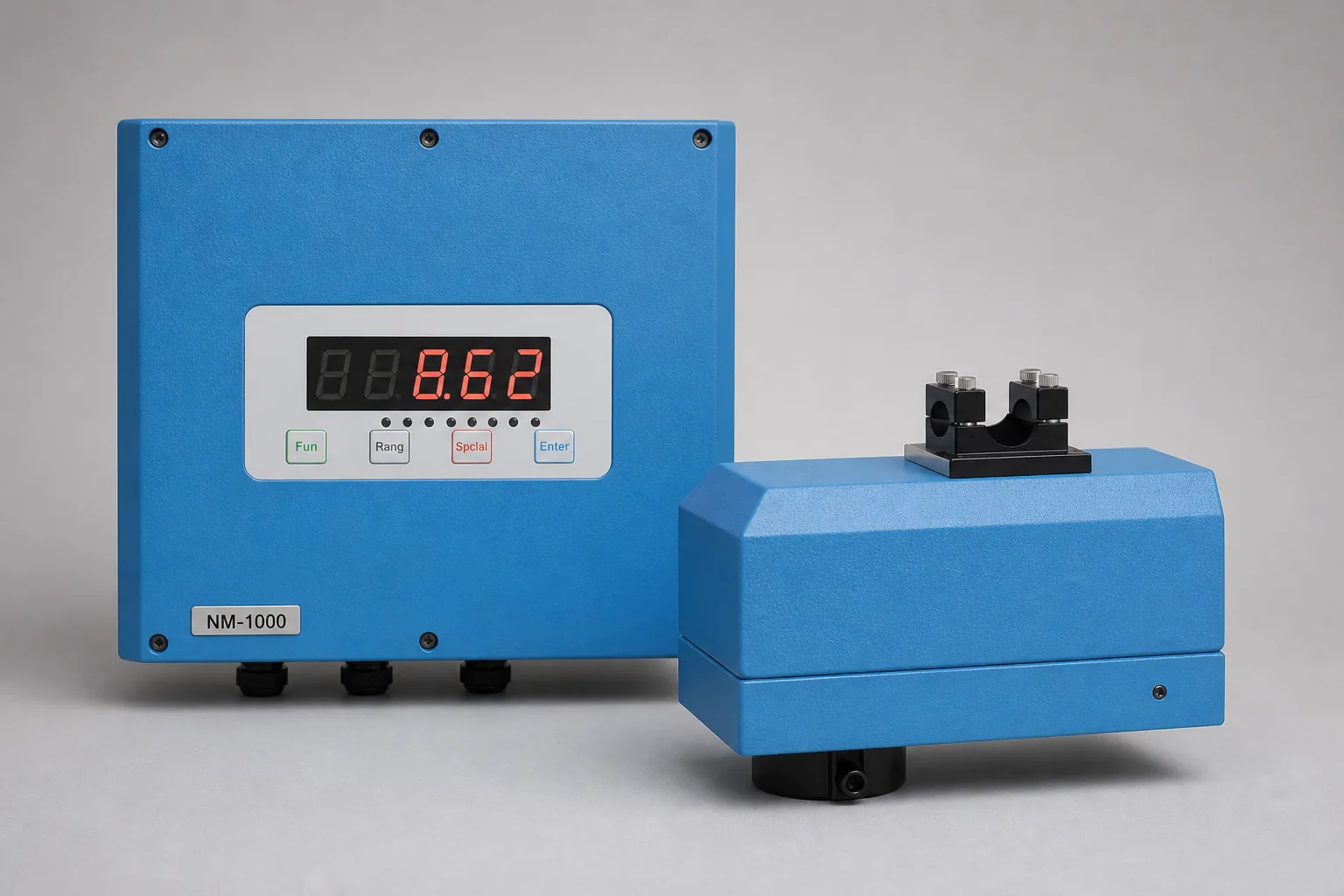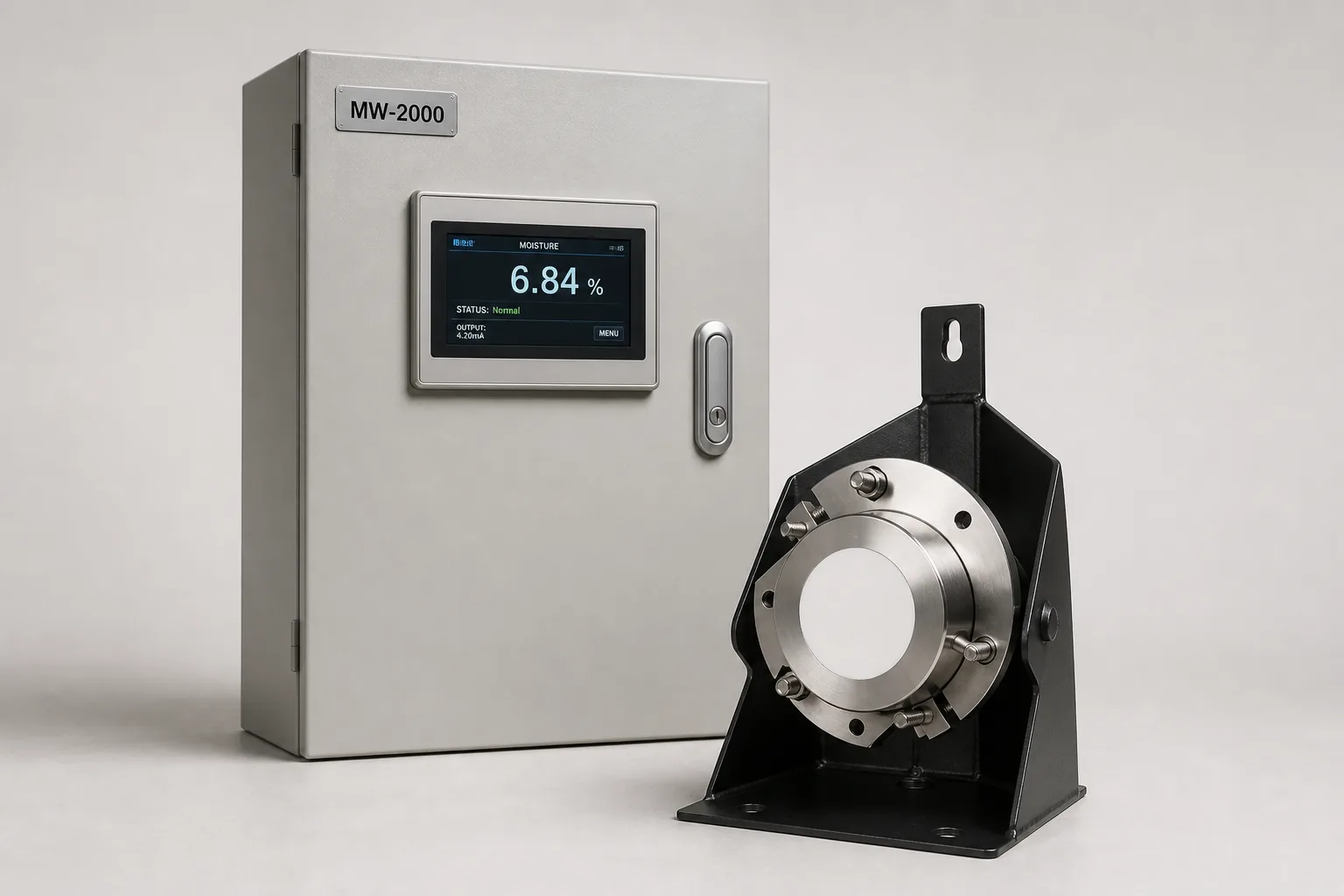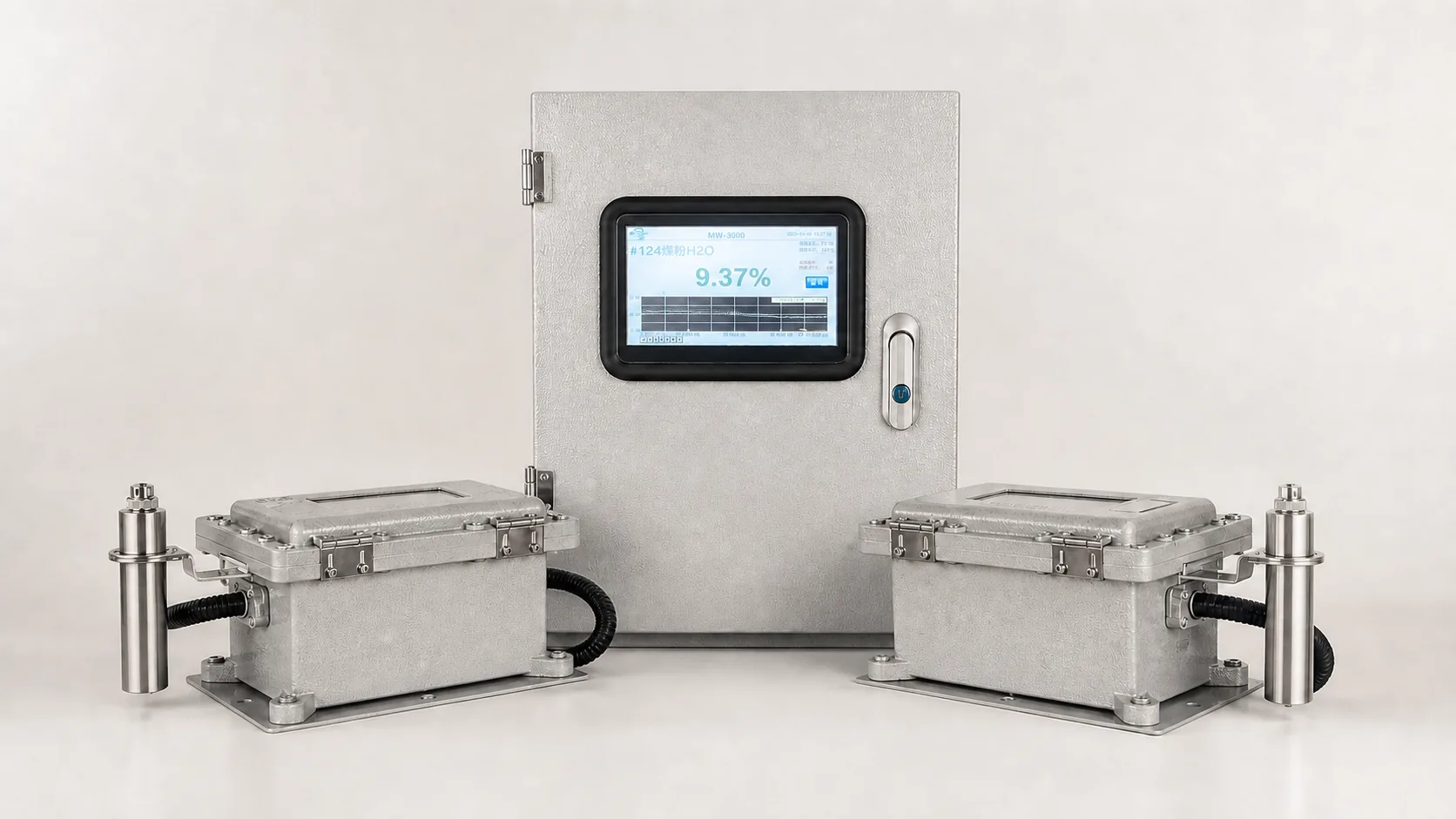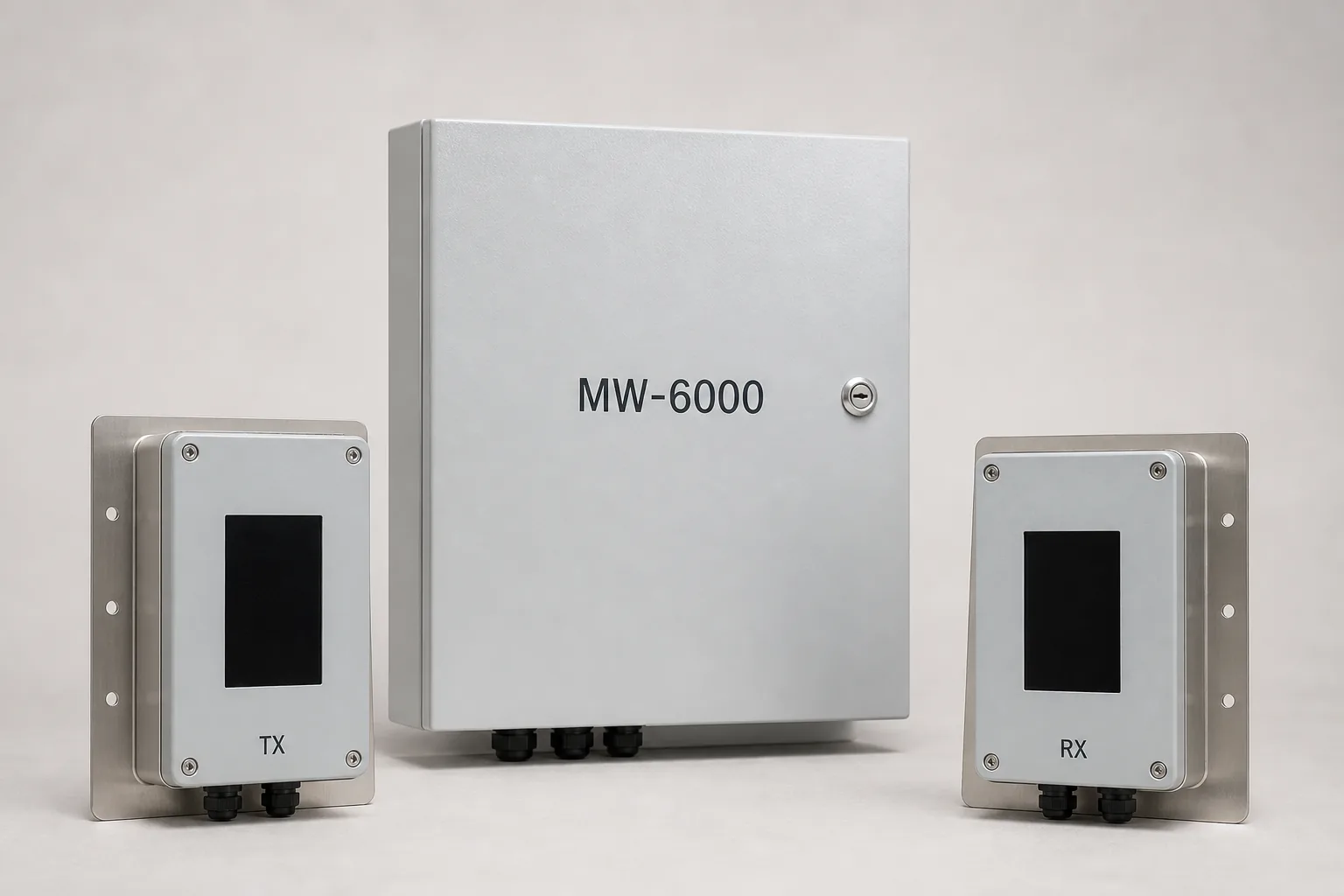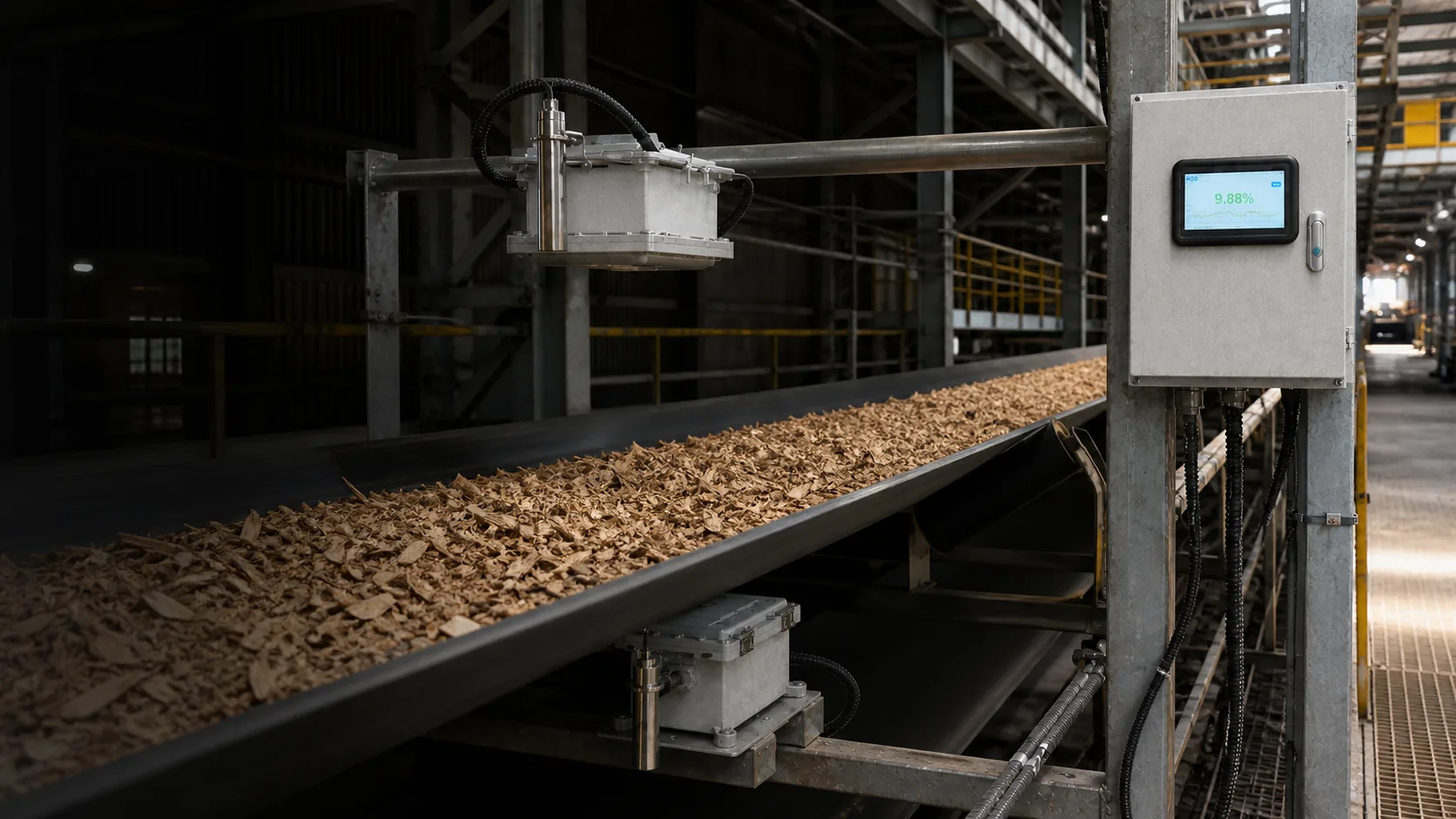
Performance depends on the material, reference method, operating range and installed configuration described in the project.
Separate value, status and action
Transmit the current value together with valid, empty, maintenance, out-of-range and fault states. The PLC should decide whether control is permitted instead of treating every numeric value as valid.
Define time and scaling
Document engineering units, wet or dry basis, 4–20 mA scaling or register format, sampling period, filtering, averaging and process delay. Verify each conversion during commissioning.
Preserve batch identity
Associate values with batch, recipe, supplier, vehicle or board identity. Use synchronised timestamps and record when data are estimated, substituted or excluded.
Assign control and audit responsibility
Define who can change scaling, alarm limits, calibration, filtering and control parameters. MES records should retain configuration version and quality state, not only a rounded percentage.
Deliver a signal dictionary and exception test
For each PLC/MES field record tag, description, engineering unit and basis, raw/scaled range, update rate, quality/status, averaging, timestamp source, invalid code, alarm owner and historian destination. Witness loss of signal, stale data, manual mode and recipe change before allowing the value into control or release logic.
Before you act
Engineering checklist
- Publish a signal dictionary
- Map all invalid states
- Verify end-to-end scaling
- Synchronise timestamps
- Define averaging and delay
- Track configuration versions
- Test loss of communication