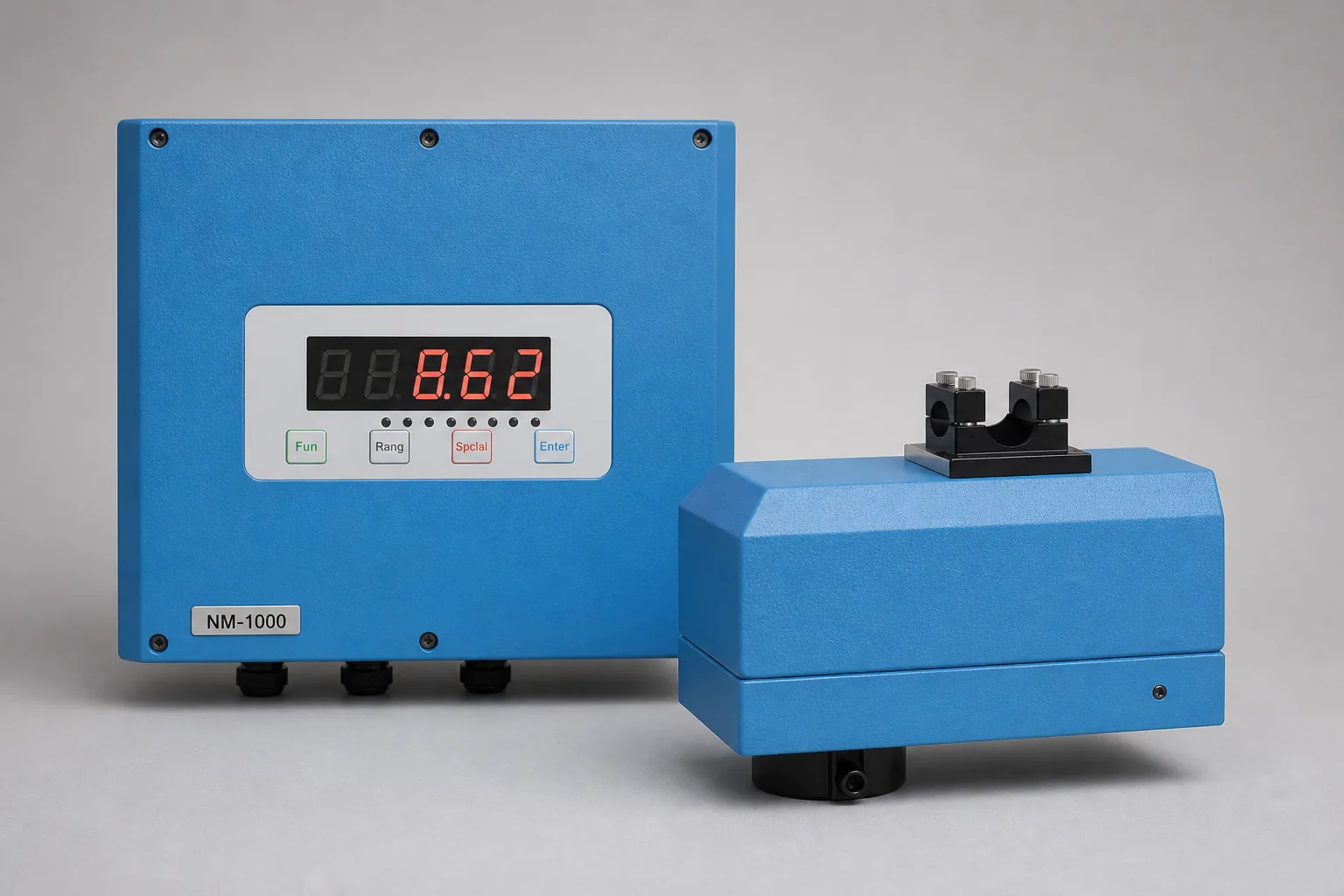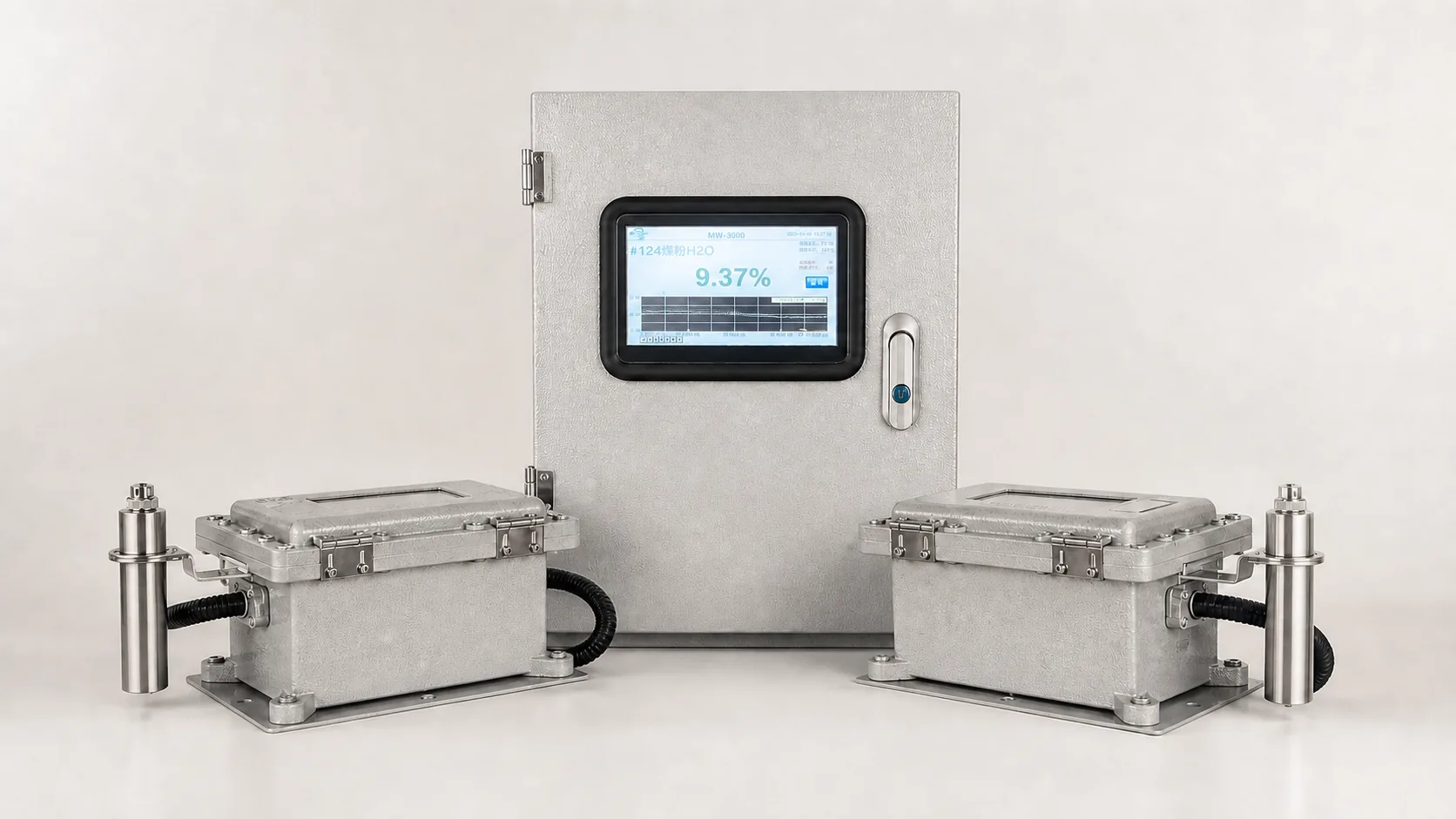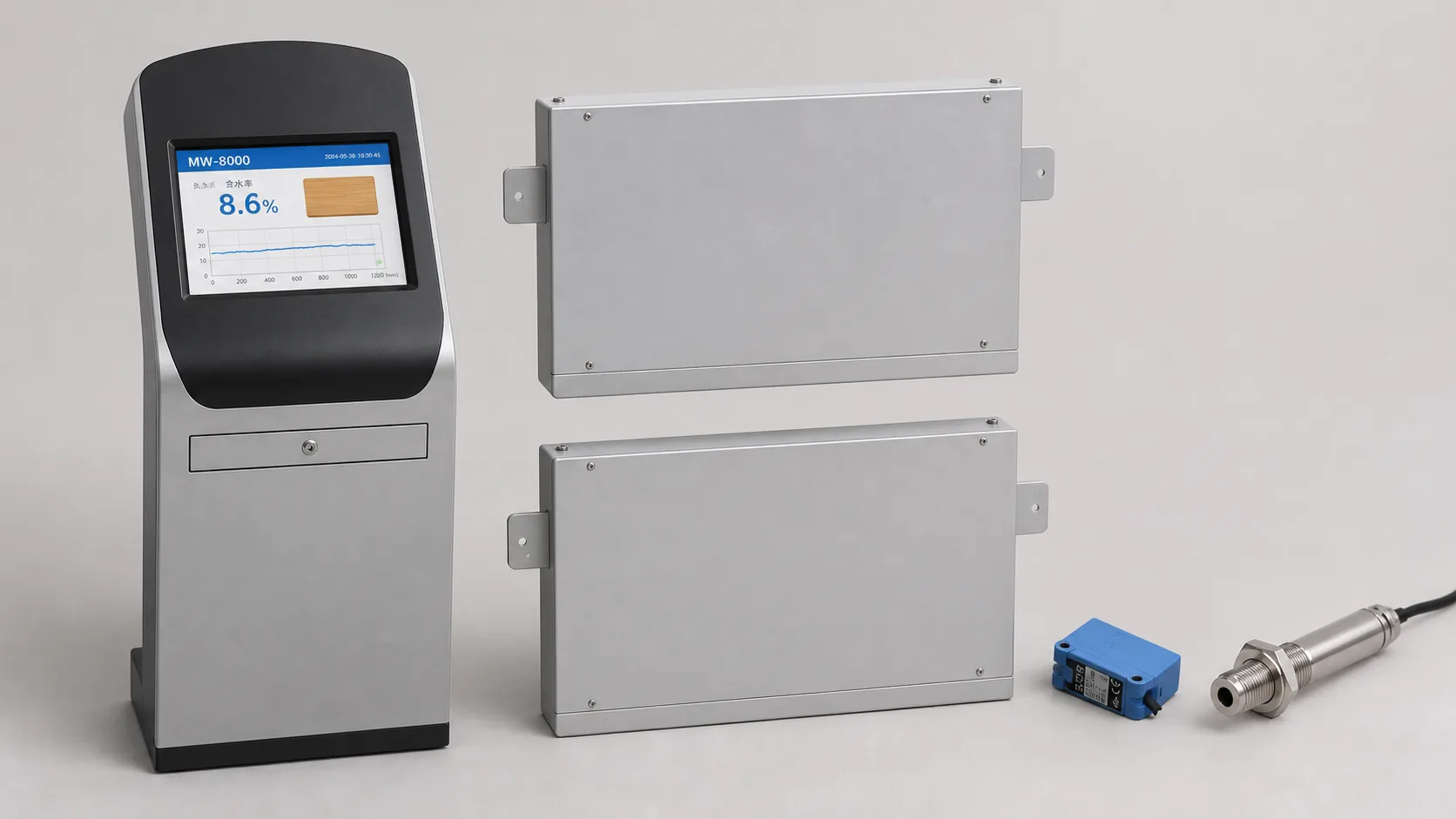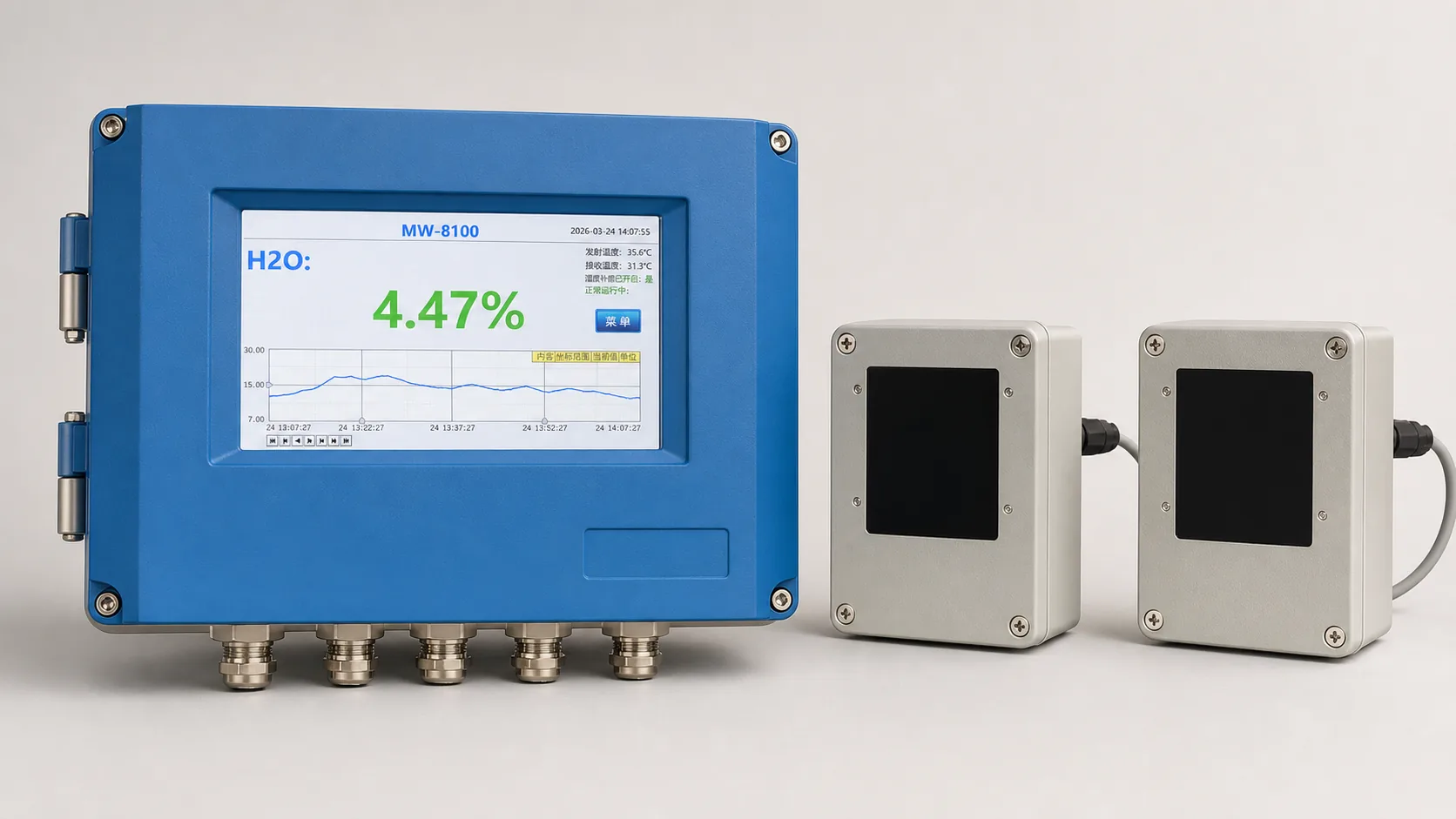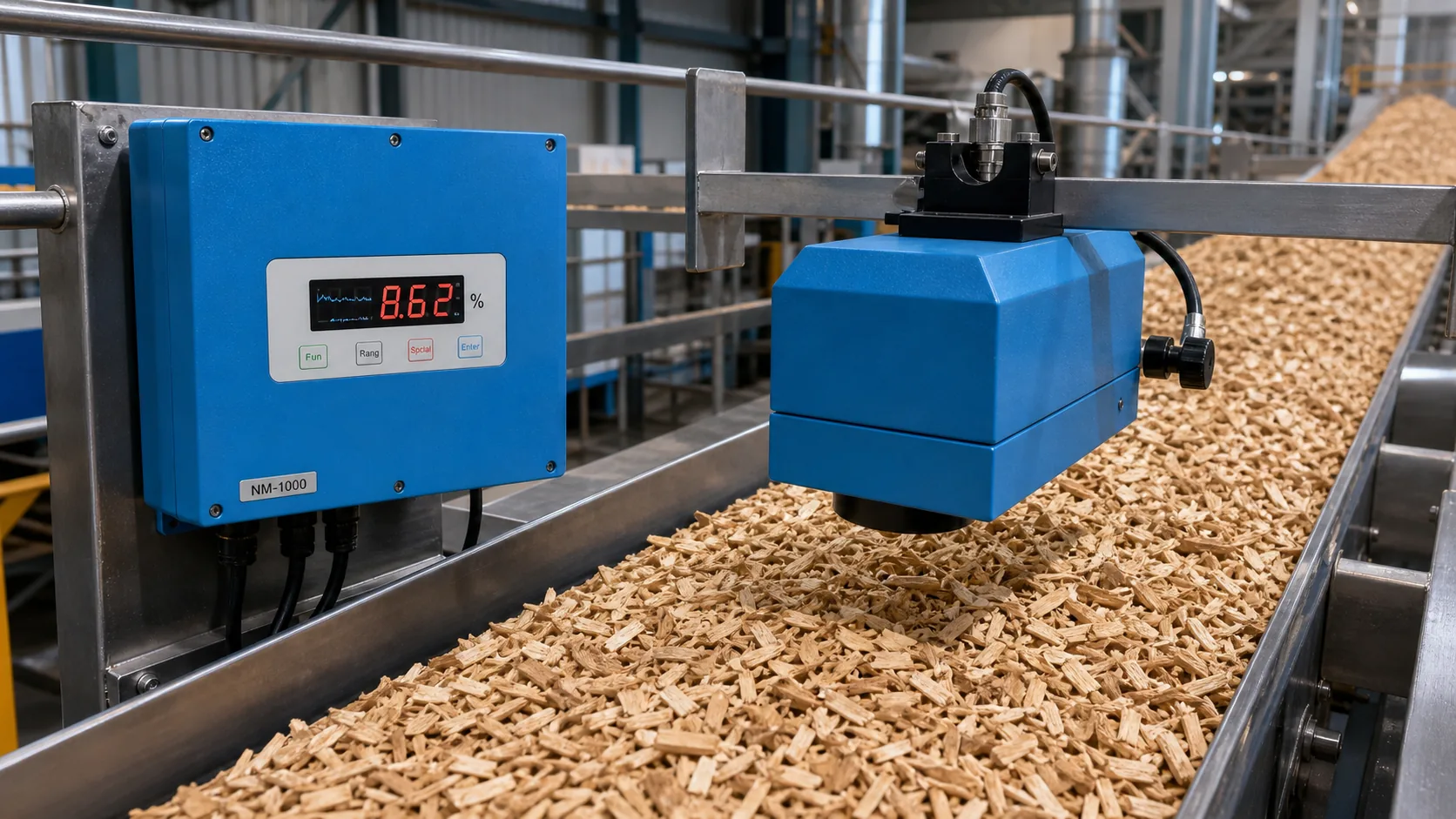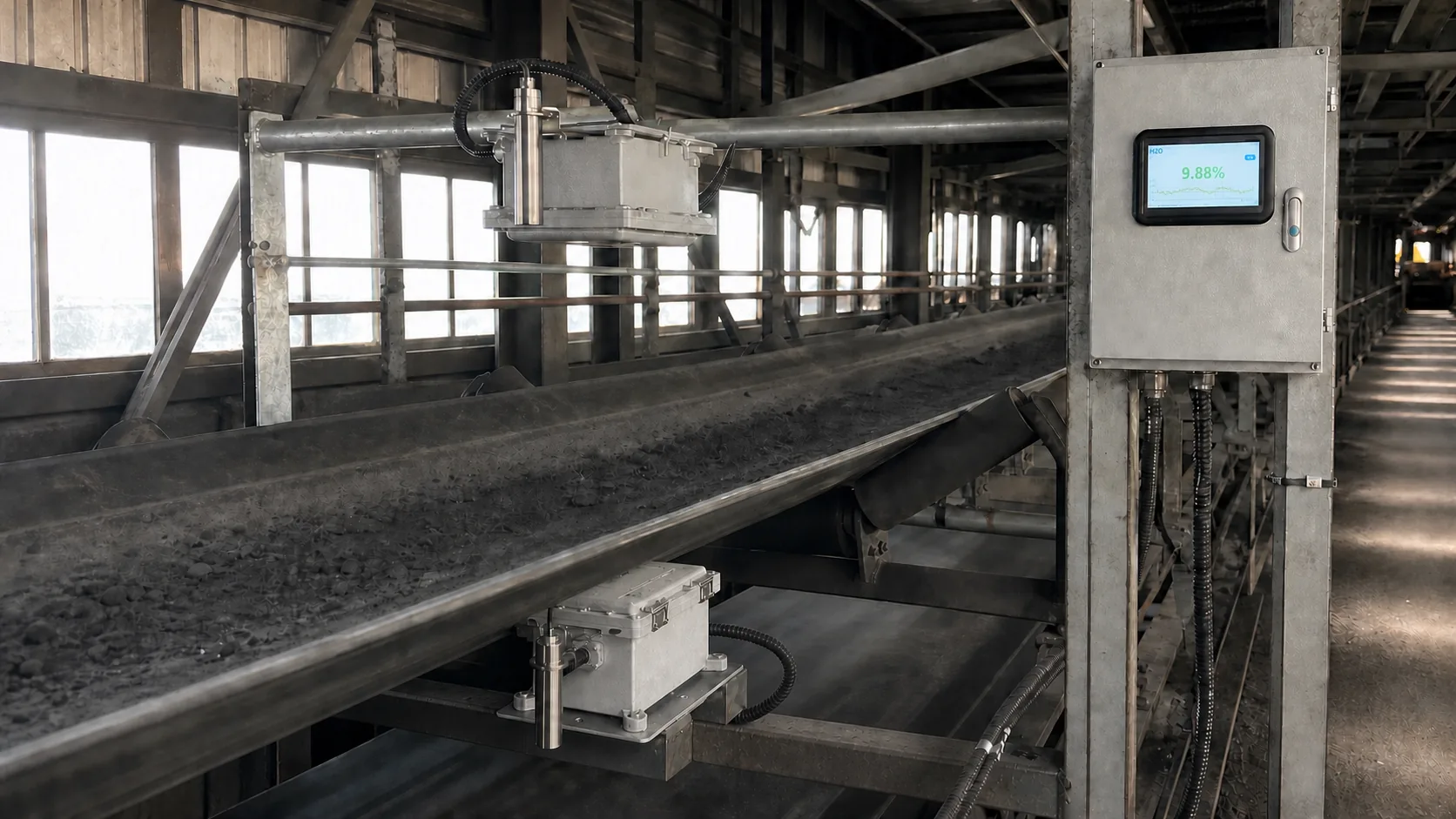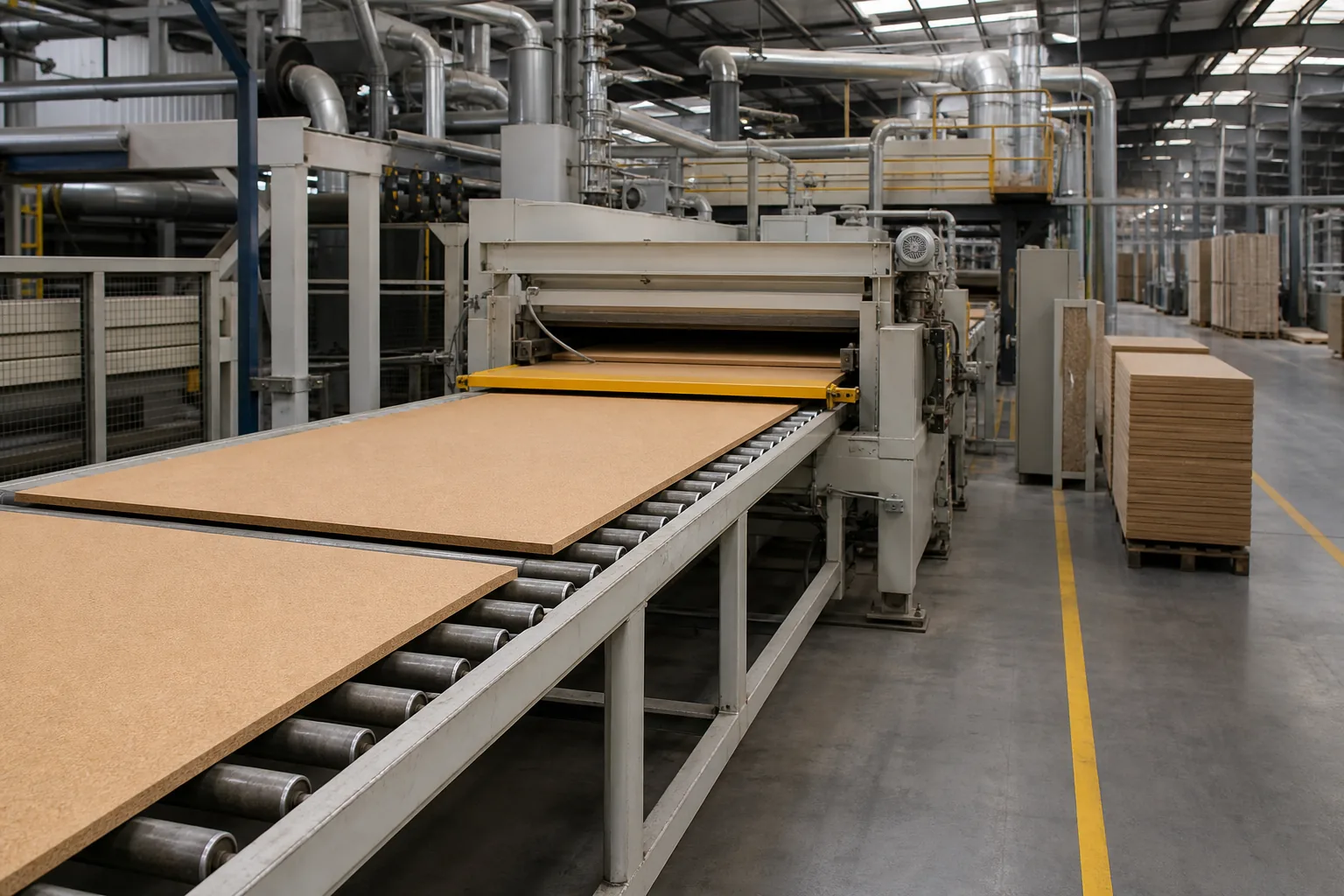
Performance depends on the material, reference method, operating range and installed configuration described in the project.
Production decision map
Turn furnish and board moisture into a traceable process response
The useful signal is the one linked to the correct furnish or board zone, its travel delay and an actuator or quality decision capable of responding to that zone.
Furnish preparation → drying → blending → pressing → inspection
Track species or recipe, furnish geometry, dryer condition, resin addition and board ID across the line.
A global average can hide a wet edge or a changing furnish zone
Density, particle size, temperature and recipe changes may shift the response even when moisture is unchanged.
Measure before the action and preserve zone identity
Choose a stable furnish stream for feed-forward control or scan board width with position and timestamp retained. Account for transport and press delay.
Adjust the process that can affect the identified zone
Use recipe-specific limits for drying or blending and hold automatic action on changeover, low coverage or invalid state. Route local defects to the appropriate quality response.
Link the signal to reference samples and finished-board results
Validate across species, recipes, line rates and width zones. Confirm that any correction improves the defined product property without hiding another defect.
Define the decision at each stage
Incoming chips, dryer outlet, blended furnish, mat and finished board represent different volumes and control opportunities. Assign a measurement objective to each candidate point.
Manage wood and recipe variability
Species, bark, particle geometry, resin, wax, colour, temperature and bulk density can change optical or dielectric response. Use approved material groups and validation ranges.
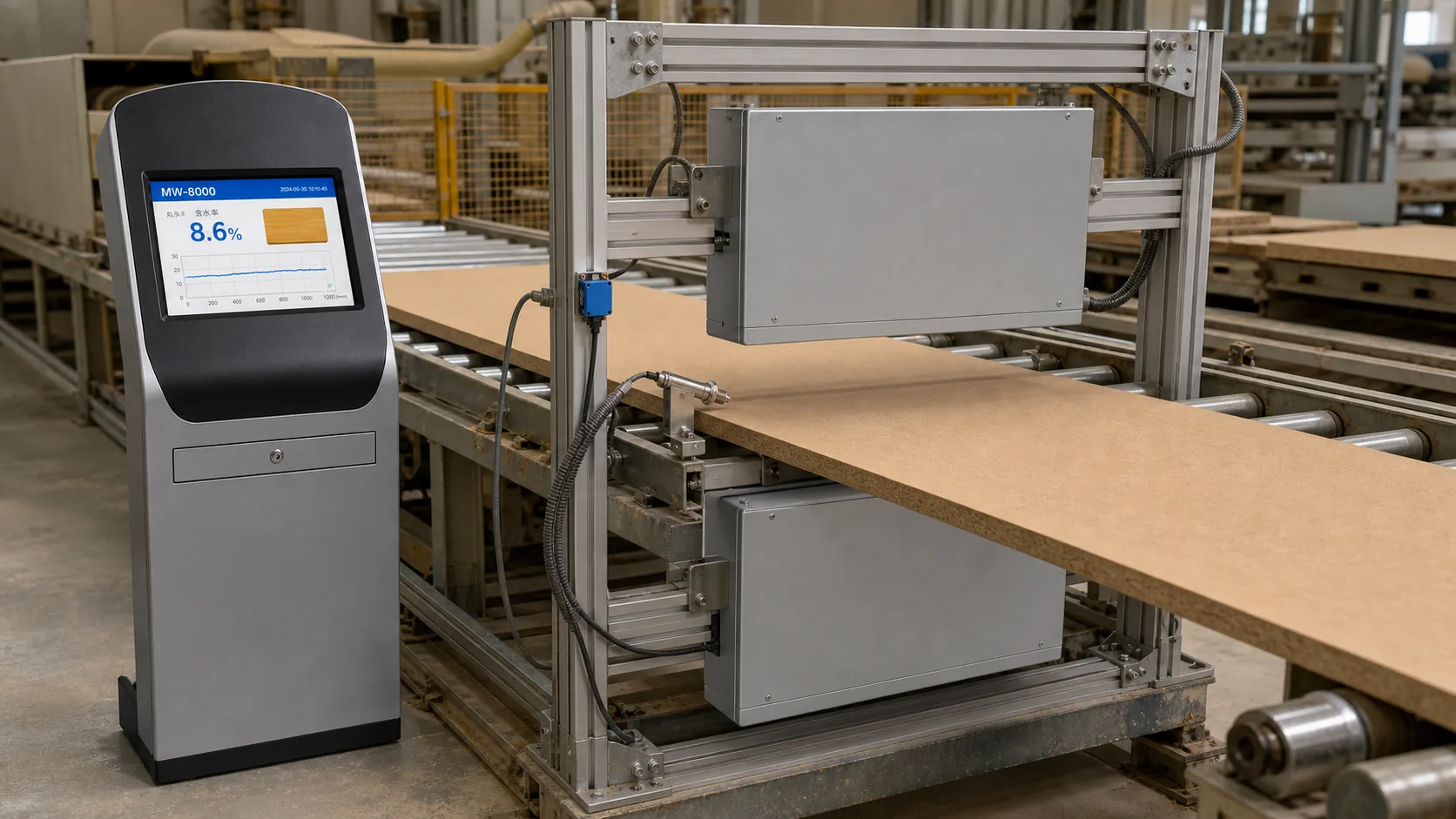
Across-sheet position and machine-direction time are different dimensions. Preserve both before deciding whether to change drying, blending or a downstream quality check.
Connect moisture to line timing
Track material from measurement to dryer, blender, forming, press or stack. Align averages and alarms with residence time, recipe and product ID.
Verify board-level quality
Use representative furnish samples or labelled board cuts as appropriate. Review cross-width, edge/centre and grade behaviour rather than relying on one overall statistic.
Connect each zone to one controllable action
Map mat or board position, scan lane, press/dryer delay, recipe and board ID to the actuator or operator decision that can respond. Define edge exclusions, grade-change hold, invalid-state fallback and quality checks. A global average must not hide a local profile defect that the process cannot correct the same way.
Before you act
Engineering checklist
- Map each process stage
- Define surface or bulk target
- Group species and recipes
- Record density and temperature
- Calculate process delay
- Verify edge and centre